

"We enable it to think. It can perceive the environment. It will think step-by-step and then finish this multi-step task." This statement from Jie Tan, Senior Staff Research Scientist at Google DeepMind, encapsulates the profound leap forward represented by Gemini Robotics 1.5. Unveiled in a recent demonstration, this new family of models signals a pivotal moment in the development of physical AI agents, moving beyond rote execution to embody genuine reasoning and adaptability in the physical world. The showcase, featuring contributions from key researchers including Tan, Principal Software Engineer Kanishka Rao, Staff Research Scientist Coline Devin, and Senior Director and Head of Robotics Carolina Parada, highlighted how these advancements promise to redefine the utility and scalability of robotic systems.
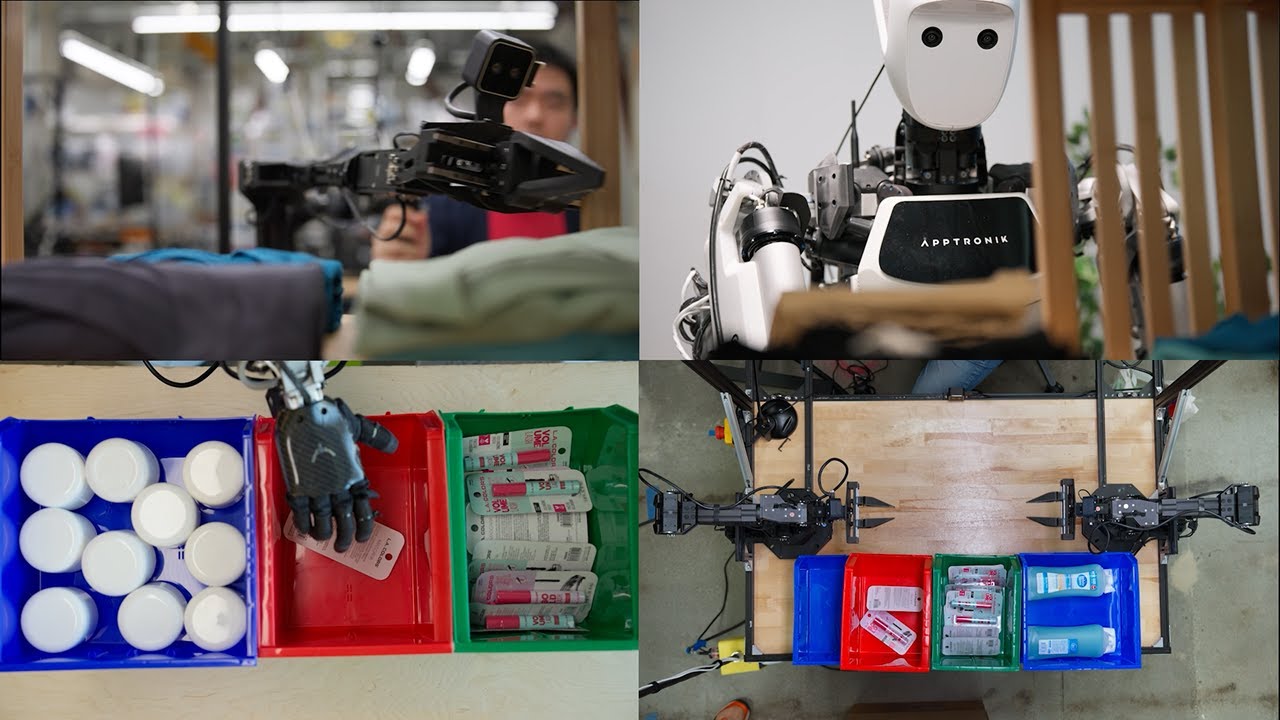
For years, robotic systems, while impressive in their precision, remained largely confined to executing pre-programmed, singular tasks. The previous iteration of Gemini Robotics, for instance, could be trained to perform an action like placing a banana into a bowl, but only through extensive, repetitive instruction for that specific action. As Jie Tan noted, "Previously, Gemini Robotics version, it has been tested over and over and over again to put this banana into the bowl. This is a very simple task." This approach, while effective for highly controlled industrial environments, presented a significant bottleneck for real-world deployment where variability is the norm. Gemini Robotics 1.5 fundamentally shifts this paradigm, empowering robots to tackle longer, multi-step challenges that demand dynamic decision-making and continuous environmental perception.
The core innovation lies in the model’s ability to "think while acting." This means the robot isn't merely following a static script; it actively processes its surroundings, plans its next move, and adjusts its actions in real-time based on new information. This capability was vividly demonstrated as a robot, instructed to sort fruits by color, autonomously identified the objects, understood the color-matching rule, and executed the sequence of picks and placements without explicit step-by-step programming. Such dynamic reasoning is crucial for navigating unstructured environments and responding to unforeseen changes, marking a significant stride towards more autonomous and versatile machines.
Further enhancing its real-world applicability, Gemini Robotics 1.5 introduces advanced embodied reasoning. This allows the model to develop a more nuanced understanding of its environment, interpreting object states and relationships to infer necessary actions. In one compelling example, a human operator subtly altered a desk setup by opening a laptop, moving a pen, and opening a glasses case. The robot, without prior instruction for these specific changes, was then asked to "reset the scene." It accurately identified the alterations and systematically reversed them, closing the laptop, replacing the pen, and closing the glasses case. This adaptability is critical for robots operating in dynamic human environments. The demonstrator emphasized that even if objects were entirely new or swapped, "that wouldn't matter at all to Gemini. It understands generalizing to the open world of objects and scenes." This capacity for broad generalization to novel objects and scenes underscores a robust intelligence that transcends rigid pre-training.
Beyond physical manipulation and environmental understanding, Gemini Robotics 1.5 also boasts new agentic capabilities, integrating external knowledge into its decision-making process. This allows robots to leverage information beyond their immediate visual perception, such as data from the internet. A robot was tasked with sorting trash according to San Francisco's specific recycling, composting, and landfill guidelines. Coline Devin, Staff Research Scientist, highlighted that "New agentic capabilities mean Gemini Robotics 1.5 can use the internet to answer questions and solve problems." The robot queried local waste disposal rules and then accurately sorted various items into the correct bins, showcasing a powerful fusion of physical dexterity and informational intelligence. This opens avenues for robots to perform tasks requiring context-specific knowledge, moving them closer to being truly helpful assistants in diverse settings.