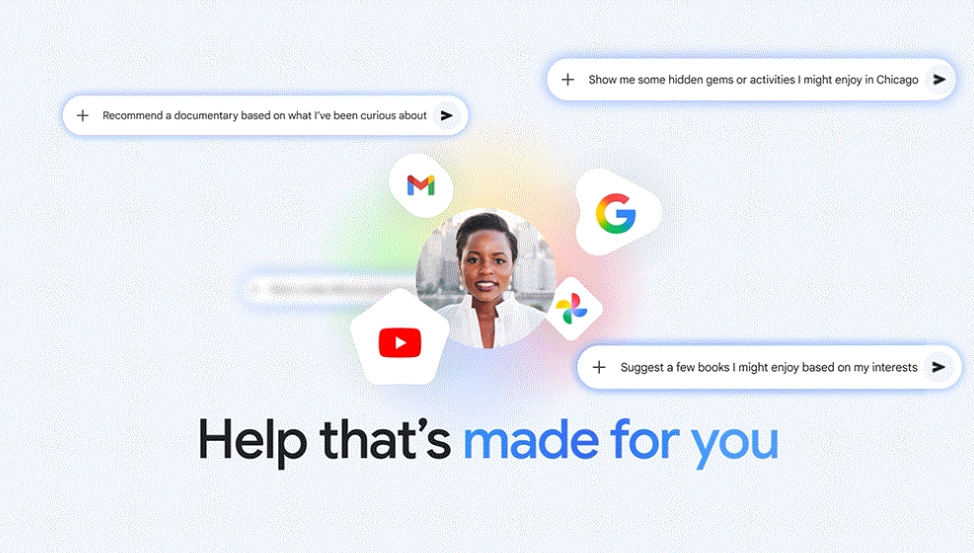
Google has officially launched Gemini Personal Intelligence, a significant architectural shift that transforms its flagship AI from a powerful general-purpose chatbot into a deeply personalized digital agent. This new capability allows Gemini to securely connect and reason across a user’s private data stored in Google apps like Gmail, Photos, YouTube, and Search, delivering context-aware answers that no external model can match. The move, currently rolling out as a beta to AI Pro and AI Ultra subscribers in the U.S., signals Google’s decisive play to leverage its massive data ecosystem to dominate the personal AI space. This integration is not merely a feature addition; it is the foundational step toward the truly proactive, memory-enabled AI assistant that the industry has long promised.
The immediate competitive advantage of Gemini Personal Intelligence lies in its ability to access and synthesize information from the user’s existing digital life without requiring data migration or complex third-party APIs. While competitors like OpenAI struggle with secure, real-time access to deeply personal data streams, Google simply flips a switch on its own servers, instantly providing Gemini with years of contextual history. According to the announcement, this allows the model to perform complex reasoning, such as cross-referencing a family road trip itinerary found in Gmail with visual evidence of vehicle usage in Google Photos to recommend specific all-weather tires, complete with pricing and ratings. This seamless, multi-modal retrieval capability fundamentally changes the utility of the AI, moving it from a search tool to a decision-support system capable of handling complex, real-world logistics.
The success of Personal Intelligence hinges entirely on user trust, making Google’s privacy framework the most critical component of this launch. The company emphasizes that connecting apps is strictly opt-in and off by default, giving users granular control over which data sources Gemini can access. Crucially, Google states that the raw data, such as the contents of a Gmail inbox or the images in Photos, is referenced to generate a reply but is not directly used to train the underlying Gemini model. Instead, training occurs on limited information, specifically the prompts and the model’s responses, only after steps are taken to filter or obfuscate personal data. This distinction is essential for mitigating user fears that their most sensitive information will be used to perpetually refine the core AI, though the technical complexity of effective obfuscation remains an area for ongoing industry scrutiny.
The Agentification of Search
The introduction of Personal Intelligence represents the final stage in the agentification of Google Search, where the traditional blue links are replaced by tailored, actionable advice. The ability to retrieve a license plate number from a photo or identify a specific vehicle trim from an old email while standing at a service counter demonstrates a level of situational awareness previously confined to science fiction. This personalized retrieval capability is set to integrate directly into AI Mode in Search soon, confirming that Google views the personalized agent as the future interface for accessing information, whether public or private. The challenge now shifts from finding information to managing the AI’s propensity for "over-personalization," where the model might draw incorrect conclusions about user preferences based on incomplete or nuanced data, such as confusing attendance at a golf course with a genuine love for the sport.
Google’s strategic decision to launch Personal Intelligence exclusively for its premium AI Pro and AI Ultra subscribers validates the subscription model for advanced AI features. This approach ensures that the resource-intensive, high-context reasoning required for PI is initially subsidized by a dedicated user base, allowing Google to refine the system before a broader rollout to the free tier. This tiered access also serves as a powerful incentive for users to upgrade, as the value proposition of a truly personalized, proactive assistant far exceeds that of a standard chatbot. The early feedback from this limited group will be vital for addressing the model’s current limitations, particularly its struggle with temporal nuance and complex relationship changes, areas that require continuous human correction and refinement.