

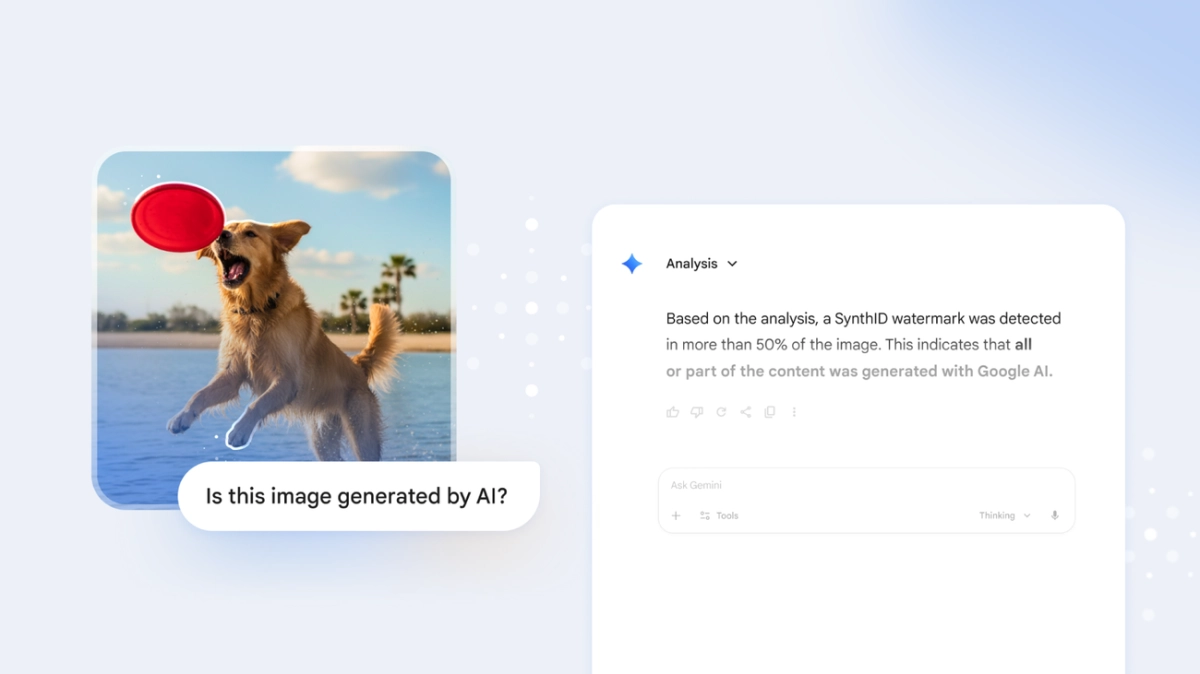
Google is integrating a crucial new feature into its Gemini app: AI image verification. According to the announcement, this capability allows users to determine if an image was generated or edited by Google AI, directly addressing the growing challenge of synthetic media. It represents a significant step towards increasing transparency in the digital content landscape.
The system leverages SynthID, Google's proprietary digital watermarking technology. SynthID embeds imperceptible signals into AI-generated content, a method refined since its 2023 introduction and applied to over 20 billion pieces of content. Users simply upload an image to Gemini and ask if it was AI-generated, receiving context-rich responses.
Broader Industry Implications
While initially focused on Google's own AI, the initiative extends beyond its ecosystem. Google is a key player in the Coalition for Content Provenance and Authenticity (C2PA), actively working to establish industry-wide standards. Images from Google's Nano Banana Pro model, used in Gemini, Vertex AI, and Google Ads, will now embed C2PA metadata, providing verifiable creation details.
This collaboration is vital. Expanding SynthID verification to video and audio, and integrating C2PA content credentials for non-Google content, will be transformative. It moves beyond a single company's solution to foster a more transparent internet, empowering users to trace content origins regardless of its creator.
Gemini AI image verification marks a pivotal moment in the fight against AI-driven misinformation. It sets a precedent for accountability among AI developers and offers users a much-needed tool to navigate an increasingly complex digital world. This commitment to content provenance is essential for maintaining trust in generative AI.