

Ayo Adedeji, Google's Developer Relations Engineer, boldly declared, "Or, you could just not do any of that. Let me show you how that entire pipeline is now just a single API call to Gemini 2.5 Pro." This statement, delivered during a recent Google Cloud Tech "Serverless Expeditions" video, encapsulates a profound shift in how developers approach multimedia processing with artificial intelligence. It highlights a future where complex AI applications are built not through intricate, multi-stage pipelines, but by intelligently prompting a single, versatile multimodal model.
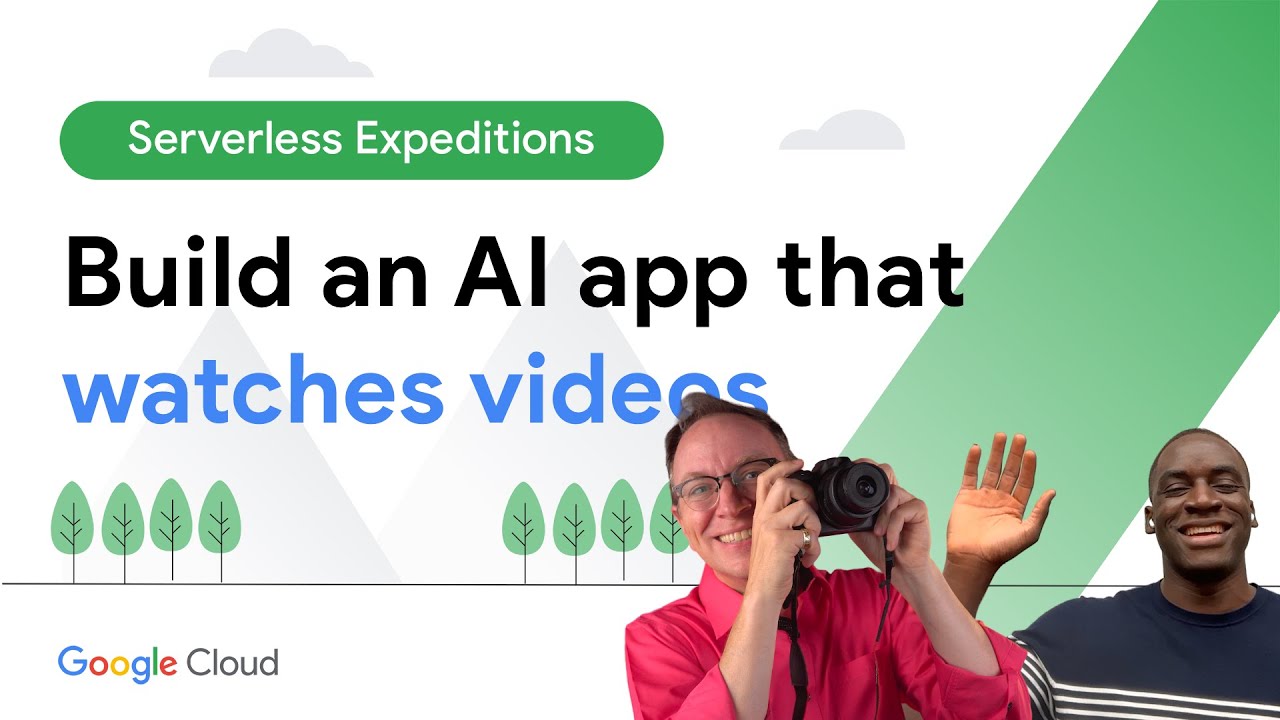
Martin Omander, a Cloud Developer Advocate, hosted Adedeji in a segment focused on building AI apps that understand and generate content from video using Gemini 2.5 Pro. Their discussion centered on showcasing Google's latest multimodal AI capabilities and the practical implications for developers and businesses. The core message resonated with the startup ecosystem and tech insiders: the era of brittle, multi-component AI pipelines for video is rapidly giving way to a more integrated, prompt-driven paradigm.
Traditionally, creating an AI application capable of "watching" a video and extracting meaning involved a cumbersome multi-step pipeline. Omander outlined this conventional approach: separating audio, transcribing speech to text, applying Optical Character Recognition (OCR) for any on-screen text or slides, and then using a separate summarizer model to distill the information. "That's a serious pipeline," he noted, underscoring the inherent complexity, the numerous points of failure, and the significant development overhead associated with such a system. Gemini 2.5 Pro, a multimodal AI model, fundamentally alters this paradigm, offering a unified interface for processing diverse data types.
Adedeji demonstrated this simplification with a practical application: a "YouTube to Blog Post Generator." Users simply input a YouTube link, and the application, powered by Gemini, produces a comprehensive blog post complete with a generated header image. The entire process, from video ingestion to content and image generation, relies on just two distinct API calls: one for the textual blog post and another for the accompanying visual.
The Python application's `generate_blog_post_text` function is central to this process. It accepts the YouTube link and a specified model name (e.g., Gemini 2.5 Flash Lite). Crucially, the function does not require any pre-generated transcript, separate audio files, or isolated visual frames. Instead, it constructs a request that includes the YouTube URL and a meticulously crafted text prompt, sending this directly to Google's Generative AI. Adedeji confirmed, "That one call tells Gemini to watch the video, listen to the audio, and write the whole article based on the prompt." This illustrates the model's inherent multimodal understanding, processing both visual and auditory information within a single, cohesive request, bypassing the need for a fragmented, sequential pipeline.
The header image, a visually relevant accompaniment to the generated blog post, originates from a second, equally streamlined API call. The `generate_image` function within the app takes the blog post title as input. This title is then used to craft a specific prompt for Imagen 4.0, Google's advanced image generation model. The model receives this textual prompt along with configuration settings, returning a single PNG image. The image data is subsequently Base64 encoded for seamless web page display, completing the multimodal output.
The effectiveness of this streamlined approach hinges significantly on prompt engineering, a skill increasingly paramount in the AI development landscape. Adedeji revealed the detailed instructions provided to Gemini, effectively establishing a "persona" for the AI: "You are an expert technical writer specializing in developer advocacy content." Further directives covered desired structure, flow, writing style (e.g., "Write in clear, engaging prose without excessive bullet points"), and specific formatting requirements. This granular control over the output, without needing to manage complex model architectures or data preprocessing steps, underscores the evolving role of the developer. It is less about building intricate pipelines and more about crafting precise, intelligent prompts that guide the AI's creative and analytical capabilities.
For founders and venture capitalists evaluating AI solutions, cost is a critical factor. Adedeji addressed this directly, detailing Google's tokenization method for video input. Each second of video is tokenized at approximately 300 tokens for default media resolution, or a more economical 100 tokens at low resolution. A one-minute video, therefore, translates to roughly 18,000 tokens. Utilizing Gemini 2.5 Flash, which is priced at $0.30 per million tokens, processing a one-minute video would cost a mere half-cent (after exhausting any daily free quota). This aggressive pricing strategy makes multimodal AI accessible for a vast array of applications, from content creation to internal knowledge management, lowering the barrier to entry for innovative solutions.
The inherent flexibility of this pattern is a key insight. The API is not limited to YouTube URLs; users can upload MP4 files directly or point to videos in cloud storage. The core principle remains: "Just change the prompt. That's the beauty of Gemini." This decouples application logic from specific output formats. A developer could easily modify the prompt to generate bullet-point summaries, quizzes, or even audio scripts from the same video input, without altering the underlying code. Furthermore, prompts can be externalized—stored in a text file, a database, or managed via an admin UI—allowing dynamic adjustments to the AI's behavior without requiring a full redeployment of the application.
Adedeji concluded by stressing that "this isn't just a demo, it's a pattern." Gemini 2.5, particularly when combined with Veo for advanced video capabilities, accepts multimodal inputs (text, image, audio, video) and can produce multimodal outputs. This opens up new horizons for AI-driven applications, such as converting blog posts into audio scripts for podcasts, automatically generating video highlight reels from extensive meeting recordings, or creating comprehensive educational materials from lectures. The developer's focus shifts from managing a labyrinth of specialized models and brittle integrations to intelligently prompting a single, versatile multimodal AI, unlocking unprecedented potential for innovation across industries.

