

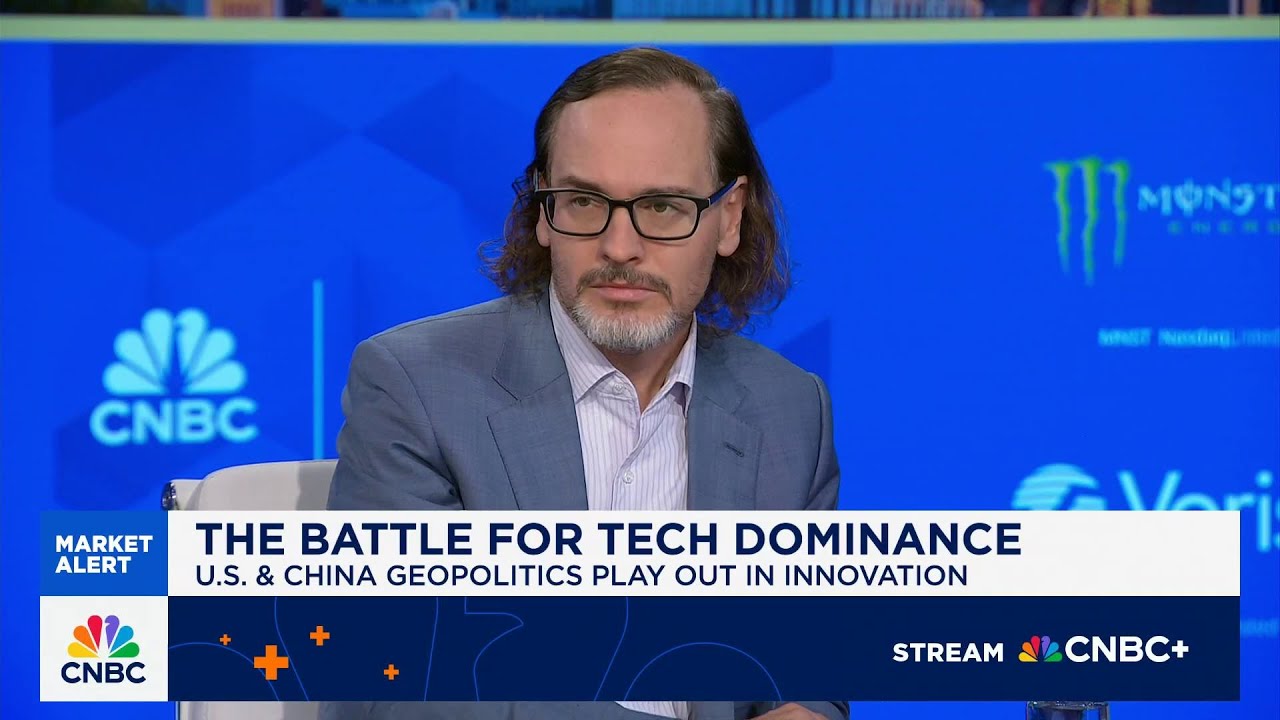
For retail investors looking to capitalize on the artificial intelligence boom, the most prudent strategy is not to chase the hot new model-makers but to invest in the established giants. That was the core thesis from Mitchell Green, founding partner of Lead Edge Capital, who argued that the real winners will be the companies with the deepest pockets.
Speaking with the hosts of CNBC’s 'Squawk Box', Green discussed the ongoing battle for AI dominance and offered a clear, if contrarian, investment framework. He contended that while companies like OpenAI and Anthropic capture headlines, their path to long-term dominance is fraught with immense financial hurdles that only a select few can overcome. The sheer scale of capital required to compete at the foundational level creates an almost insurmountable barrier to entry.
Green’s argument centers on the astronomical capital expenditures of the tech titans. He pointed out that companies like Meta, Amazon, and Google are dedicating "massive amounts of capital to this space," with spending plans reaching tens of billions of dollars per quarter. This financial firepower creates a profound competitive moat. Green questioned the long-term viability of challengers, asking, "We really don't know how you compete against those giant hyperscalers." The cost to run inference and train next-generation models is a war of attrition that heavily favors the incumbents who have spent decades optimizing their infrastructure.
Investing directly in the buzzy AI startups presents a different kind of risk: dilution. These companies are in a state of near-constant fundraising to fuel their capital-intensive operations. Green warned that for early investors, "the dilution at some of these private AI companies is absolutely insane."
This dynamic is not without historical precedent. Green drew a compelling parallel to the early days of the internet, questioning if today’s AI darlings are the modern equivalent of now-defunct search pioneers. "How do we know these aren't Excite, Lycos, and AltaVista?" he asked, referencing early search engines that ultimately lost to Google. The lesson is that initial consumer traction does not guarantee victory when a better-capitalized competitor can build a more efficient and scalable solution. For Green, the most logical investment is not in the startups themselves, but in the hyperscalers that will either acquire them, out-compete them, or become their largest customers.