

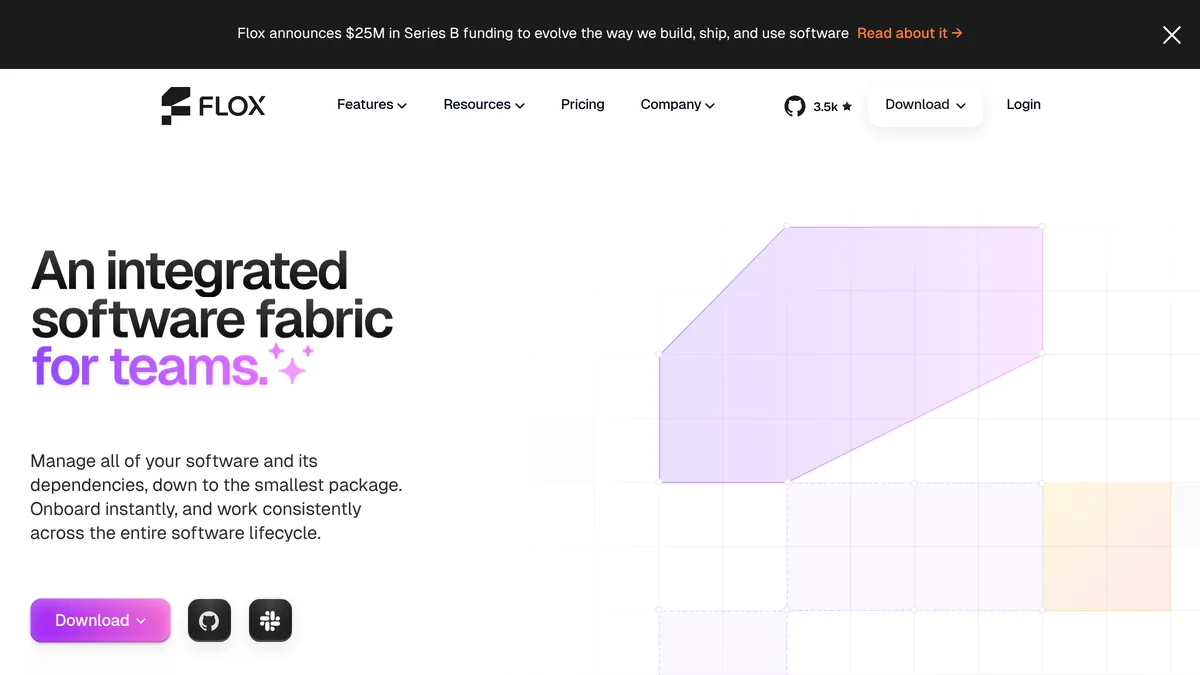
Flox has secured a $25 million Series B funding round led by Addition to tackle the growing infrastructure crisis plaguing software development. As generative AI floods engineering teams with new code, the underlying tools for managing it are buckling, leading to what the company calls a “brittle ecosystem” of broken dependencies and out-of-sync environments.
The problem is a familiar one for developers: the dreaded “works on my machine” scenario, where subtle differences between setups introduce bugs that only surface in production. According to Flox, AI has supercharged this issue, making consistency nearly impossible to enforce manually.
Taming the AI-Fueled Chaos
Flox’s solution is to harness the power of Nix, a tool known for creating reproducible, deterministic environments, but without its notoriously steep learning curve. The platform abstracts away the complexity, allowing teams to spin up and sync environments with a single command. This ensures that a developer’s local machine, the CI/CD pipeline, and production systems are all running the exact same setup.
This investment, with participation from NEA and the D. E. Shaw Group, will fund Flox’s push to build a universal infrastructure that works across operating systems and architectures. The goal isn't just convenience; it's about embedding security and governance directly into the development lifecycle. By providing a full software bill of materials (SBOM), Flox aims to give enterprises control over their sprawling, AI-influenced software supply chains, moving teams from firefighting to innovation.