


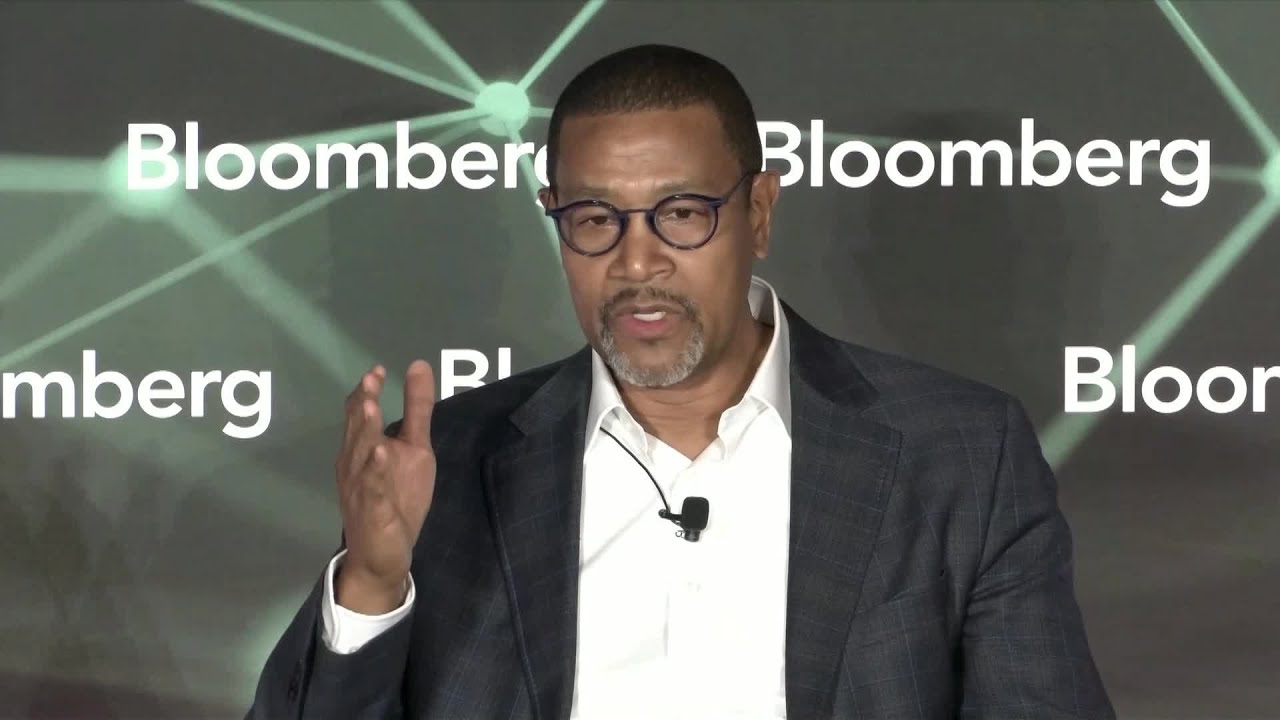
The financial services industry, traditionally characterized by its cautious approach to technological innovation, is now undergoing a dramatic acceleration in AI adoption. This swift transformation, driven by a new wave of agentic and generative AI, promises to fundamentally reshape banking, capital markets, and insurance. As Bill Borden, Corporate Vice President for Worldwide Financial Services at Microsoft, articulated, "It is fascinating that an industry like financial services, based on risk management and being regulated, is actually moving in pace around AI and the implementation of it." This sentiment, shared during his insightful discussion with Bloomberg Intelligence Senior Analyst Diksha Gera at the Building a Future-Ready Business event in New York, underscores a pivotal shift in how financial institutions perceive and integrate advanced technology.
Borden highlighted recent findings from a Microsoft and IDC study, revealing that a significant 68% of executives across various industries are actively pursuing AI initiatives. Within this broad adoption, a "frontier group" of financial services firms stands out, demonstrating a remarkable three-fold return on investment compared to their slower-moving counterparts. This leading segment, representing 31% of financial services companies surveyed, is not merely experimenting but is rapidly deploying specific AI applications and capabilities, with 70% planning rollouts within the next six to seven months. This aggressive timeline signals a profound strategic pivot.
The catalyst for this accelerated adoption can be traced back to the COVID-19 pandemic, which forced a rapid embrace of cloud technologies and remote work solutions across the sector. This unexpected push into digital infrastructure inadvertently laid the groundwork for the current AI boom, proving that even highly regulated industries could adapt quickly when faced with imperative change. The current narrative, however, extends far beyond basic large language models (LLMs) to the realm of agentic AI.
The conversation has evolved rapidly. "In '23, we just learned about the idea of having access to large language models... We just started talking about agents in January of this year. January, that's ten months," Borden remarked, emphasizing the blistering pace of development and discussion. This shift to agents, AI systems capable of autonomous decision-making and task execution, is poised to revolutionize operational workflows.
These agents are moving beyond mere "copilots" that assist human workers, towards autonomous entities that can manage complex tasks under human oversight. This evolution necessitates a re-imagination of organizational structures, moving away from traditional, hierarchical models. Financial institutions are now actively exploring how to "rewire" their day-to-day operations, from customer onboarding to product development, to leverage these intelligent agents.
