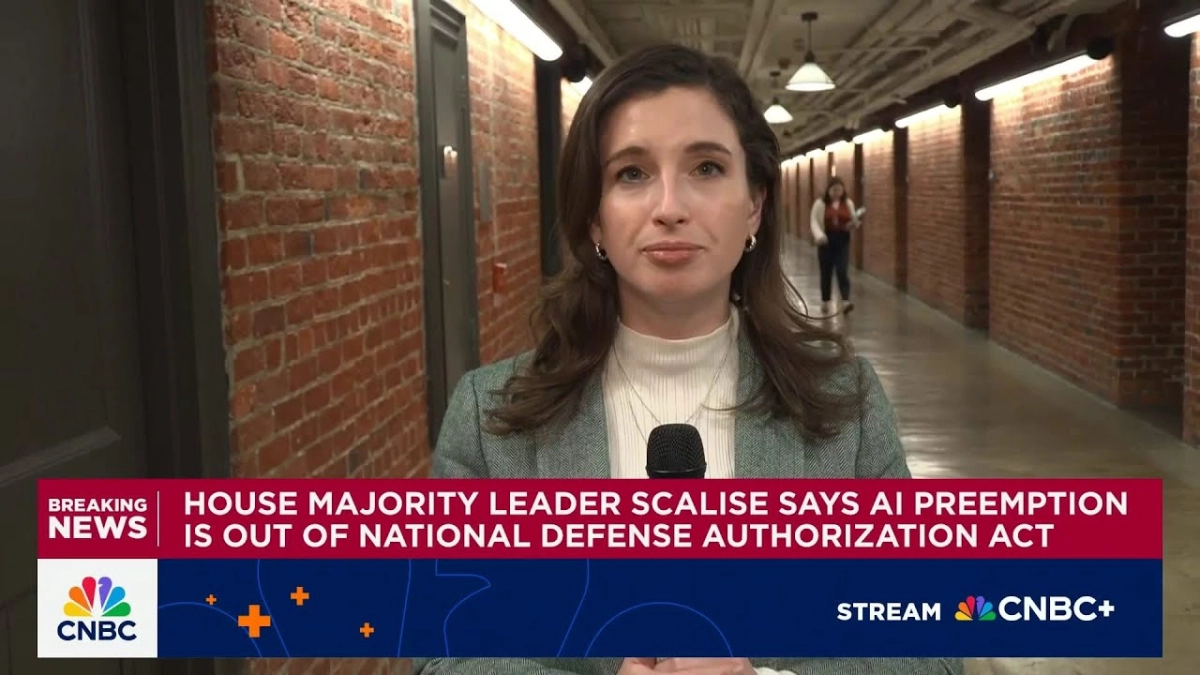
The highly anticipated federal preemption of state-level artificial intelligence laws, a provision championed by both the White House and leading AI companies, has been effectively shelved for the current legislative cycle. This significant development, reported by CNBC's Emily Wilkins from Capitol Hill, signals a fragmented future for AI regulation across the United States, presenting immediate challenges for founders, venture capitalists, and the broader tech ecosystem. Wilkins conveyed that House Majority Leader Steve Scalise confirmed the AI preemption measure would not be included in the National Defense Authorization Act (NDAA) this year, citing a lack of consensus.
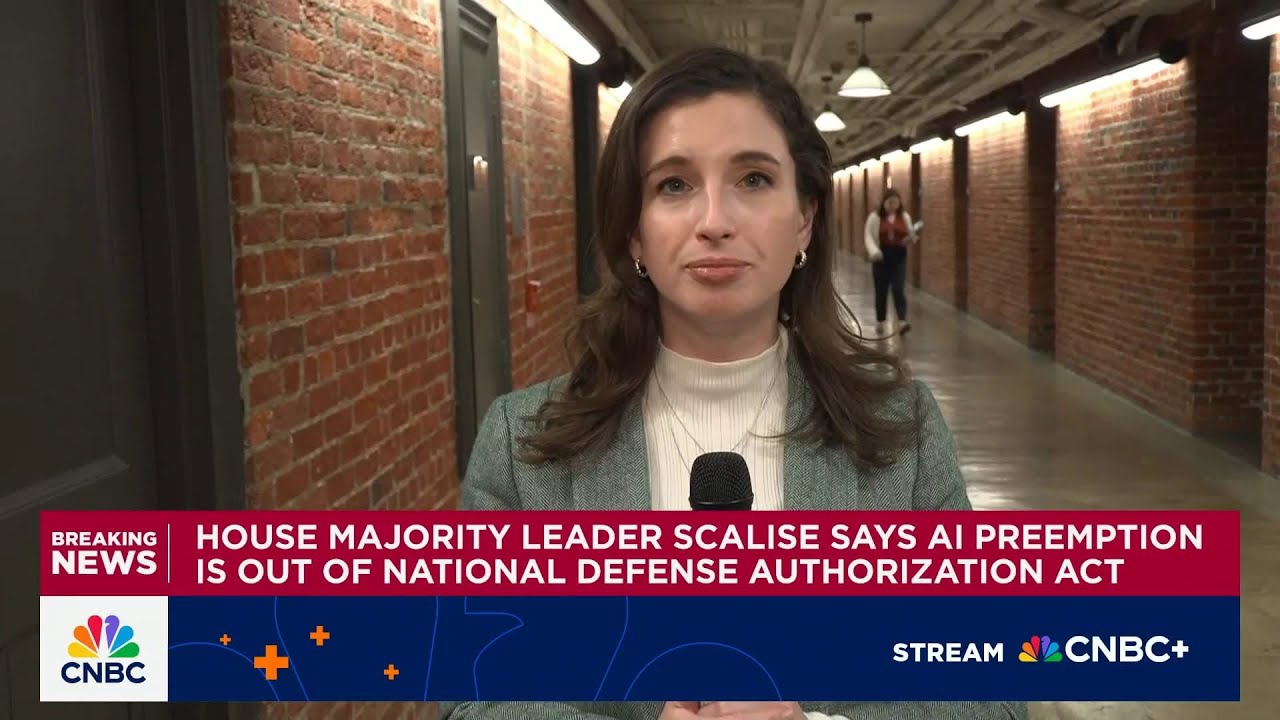
Emily Wilkins reported on House Majority Leader Steve Scalise's remarks regarding the proposed AI preemption provision, detailing its exclusion from the upcoming National Defense Authorization Act. This particular provision aimed to supplant disparate state AI laws with a single federal standard, a move fervently advocated by major AI firms and the executive branch seeking regulatory clarity and consistency. The intent was to prevent a patchwork of regulations that could stifle innovation and complicate compliance for companies operating across state lines.
The immediate consequence of this legislative impasse is the solidification of a fragmented regulatory landscape. Without a unifying federal framework, states like Texas, California, Utah, and Colorado will continue to advance their own distinct AI policies and statutes. This divergence creates an intricate web of compliance requirements, forcing AI startups and established enterprises to navigate varied legal frameworks, which can significantly increase operational costs and complexity. For venture capitalists, the absence of a clear national standard introduces a layer of regulatory uncertainty that could impact investment decisions, particularly for companies with ambitions for broad market penetration.
This setback underscores a critical political reality: legislating rapidly evolving technologies like AI faces substantial hurdles in a divided Congress. Scalise himself indicated that for such a bill, "you need a particular coalition and there just wasn't enough support." The skepticism extended across the aisle, with "a number of Democrats and even some Republicans" expressing reservations about the preemption. This political gridlock highlights the difficulty of achieving bipartisan consensus on complex technological governance, especially when various stakeholders, from civil liberties advocates to industry giants, hold differing views on the appropriate balance between innovation and oversight.
The exclusion of the AI preemption from the NDAA also carries strategic implications, particularly for the defense sector and national security. The National Defense Authorization Act is a critical annual bill that outlines the budget and expenditures for the U.S. military. Its potential inclusion of an AI preemption clause indicated a federal recognition of AI's burgeoning role in defense and the necessity for a standardized approach to its development and deployment within military contexts. The failure to pass this provision suggests a missed opportunity for the federal government to establish a cohesive national strategy that could both foster cutting-edge AI innovation for defense applications and ensure responsible, ethical deployment.