


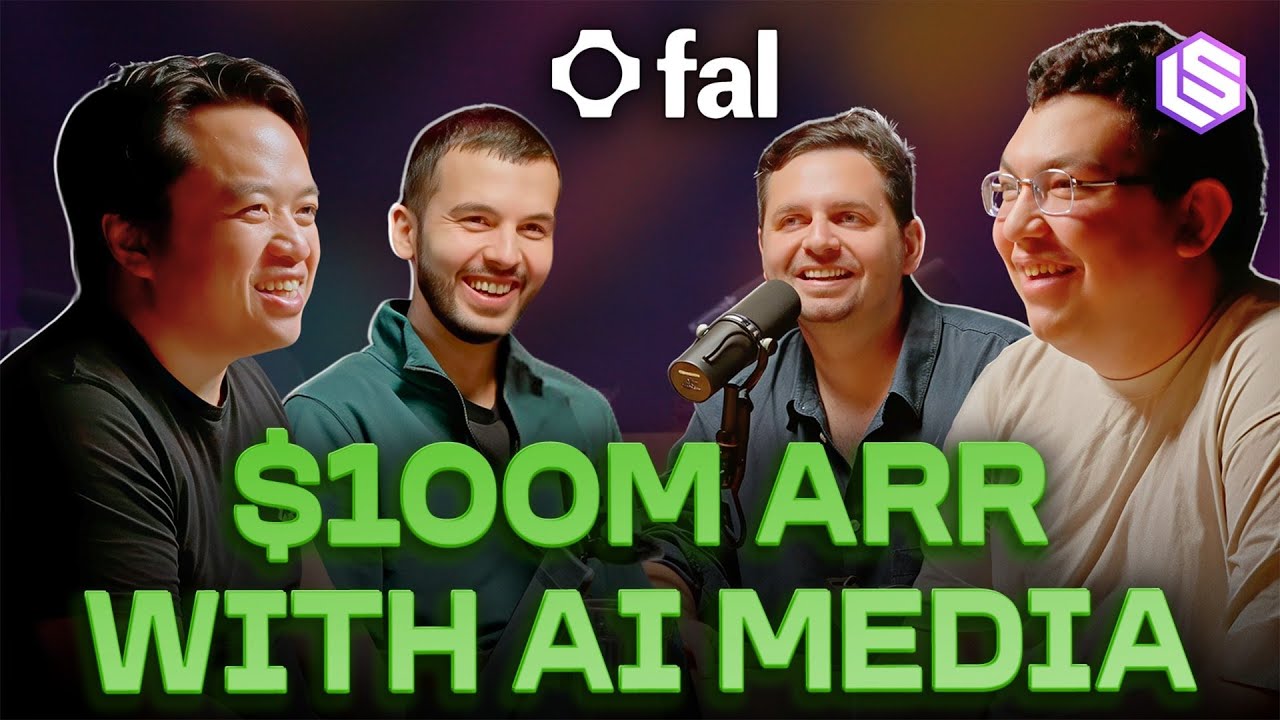
The generative AI landscape is a battlefield, but Fal.ai found its strategic high ground not by confronting giants, but by cultivating an underserved niche. In a recent Latent Space podcast, co-host Swyx, founder of Smol AI, spoke with Fal.ai's CTO Gorkem Yurtseven and Head of Engineering Batuhan as they recounted their remarkable journey from optimizing Dbt pipelines to becoming a leading generative media inference provider. Their story is a masterclass in agile adaptation and deep technical specialization within a rapidly evolving market.
Fal.ai’s genesis was rooted in a broader ambition to optimize Python runtimes in the cloud, a venture that initially saw them building a feature store. However, a critical inflection point arrived with the advent of diffusion models. As Gorkem explained, "It was first like we were building a feature store, and then we took a step back, and then we decided to build a Python runtime in the cloud, and that evolved into an inference system that evolved into what Fal.ai is today, which is a generative media platform." This strategic pivot allowed them to focus on the nascent, yet explosive, potential of image and video generation.
Their success wasn't merely about identifying a trend; it was about executing with unparalleled technical depth. Batuhan highlighted the critical role of low-level optimization, noting, "We noticed like we had a serverless runtime and everyone was running the Stable Diffusion 1.5 by themselves, and we noticed it's terrible for utilization and they are not optimizing it." This insight led Fal.ai to custom CUDA kernels and specialized inference engines, drastically reducing latency and improving GPU utilization. This technical edge translated directly into superior user experience, a factor proven vital by extensive A/B testing with customers, akin to the page load time metrics Amazon famously prioritizes.
The decision to double down on generative media, rather than chasing the more crowded large language model (LLM) space, was a defining moment. Gorkem articulated this strategic choice clearly: "A lot of the inference providers at the time...they all went all in on language models, and we decided...hosting language models is not a good business." He elaborated that competing against behemoths like Google and OpenAI in search-driven LLMs would be a battle for existing market share, whereas generative media presented a "net new market" where Fal.ai could be a leader. This bold move has paid dividends, with the company recently announcing a $125 million Series C round, exceeding $100 million in ARR, and serving approximately 2 million developers with over 350 models across image, video, and audio.
The rapid evolution of video models, particularly the rise of open-source offerings from China and innovations like Google DeepMind's VEO3, continues to fuel Fal.ai's growth. They are not just hosting these models; they are actively working with both open and closed-source model developers, often collaborating behind the scenes to optimize inference. This includes building custom kernels for cutting-edge architectures like Diffusion Transformers and even Blackwel chips, ensuring they stay ahead of the curve in performance and cost-efficiency. Fal.ai's journey underscores that in the dynamic AI landscape, deep technical expertise combined with strategic market positioning creates an enduring advantage.

