

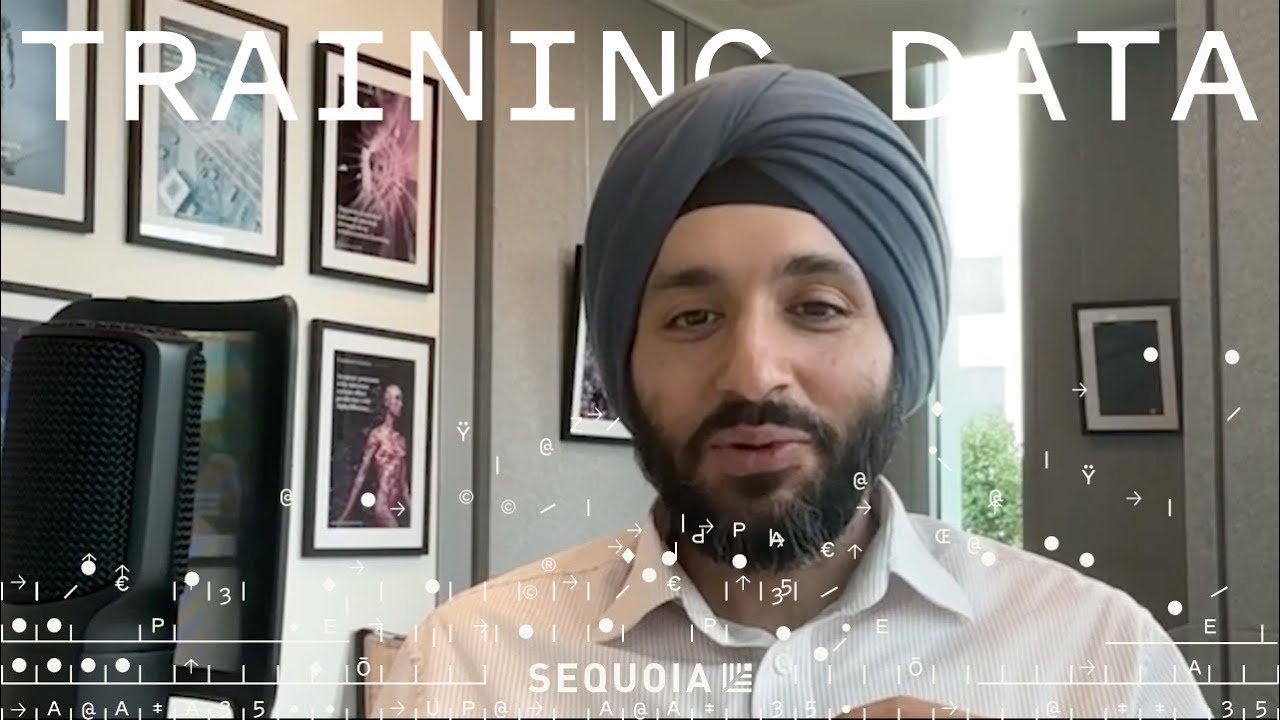
Artificial intelligence is undergoing a profound transformation, shifting from systems designed to answer human-posed questions to entities capable of formulating and solving novel scientific problems. This paradigm shift is at the heart of DeepMind's latest breakthrough, AlphaEvolve, a system designed to accelerate discovery across a spectrum of scientific and mathematical domains. Pushmeet Kohli, Head of AI for Science at DeepMind, recently discussed this revolutionary development with Sonya Huang and Pat Grady of Sequoia Capital, highlighting how AI is not merely accelerating but fundamentally altering the landscape of scientific inquiry.
At its core, AlphaEvolve represents a new scientific method, leveraging the generative power of Large Language Models (LLMs) coupled with rigorous evaluators. Kohli explains that this "harness" allows AI to explore vast solution spaces and identify breakthroughs that human experts might overlook. He notes, "What we have shown is that you have an AI model, a large language model, when coupled with a harness, is able to discover new algorithms and... new mathematical results." This process even recontextualizes what might traditionally be considered "hallucinations" from an LLM. As Kohli puts it, "hallucinations were great because some of those hallucinations were in fact brilliant new insights that nobody had thought about." This novel approach contrasts sharply with prior AI for science models, such as DeepMind's own FunSearch, which required human-provided algorithmic templates. AlphaEvolve, powered by advanced Gemini models, removes this restriction, enabling it to search entire algorithmic spaces and optimize large, complex pieces of code with unprecedented efficiency.
The broad applicability of AlphaEvolve is a critical insight. The system is domain-agnostic, needing only a reliable evaluation function to test proposed solutions. Its successes span diverse fields, from improving 50-year-old matrix multiplication algorithms to generating interpretable code for data center scheduling and even contributing to chip design and materials science. This versatility underscores AI's potential as a universal co-scientist. DeepMind's research into multi-agent systems, where different LLMs play specialized roles as hypothesis generators, critics, or reviewers, further amplifies this capability, yielding results far beyond what a single model could achieve.
The impact of such systems is already evident. Kohli cites AlphaFold, a predecessor to AlphaEvolve, as a prime example. AlphaFold's ability to accurately predict protein structures democratized a capability that previously required years of lab work and millions of dollars per protein. "We released AlphaFold 2... it gave me the structure, it perfectly fit the answer. I've been working on this for 10 years. What do I do next?" This anecdote from a biologist illustrates the profound shift AI brings, making complex scientific endeavors accessible globally. The immediate bottleneck for these advancements lies not just in improving AI, but in bridging the gap between digital discoveries and real-world validation. This includes making the technology itself more accessible to a wider scientific community.