

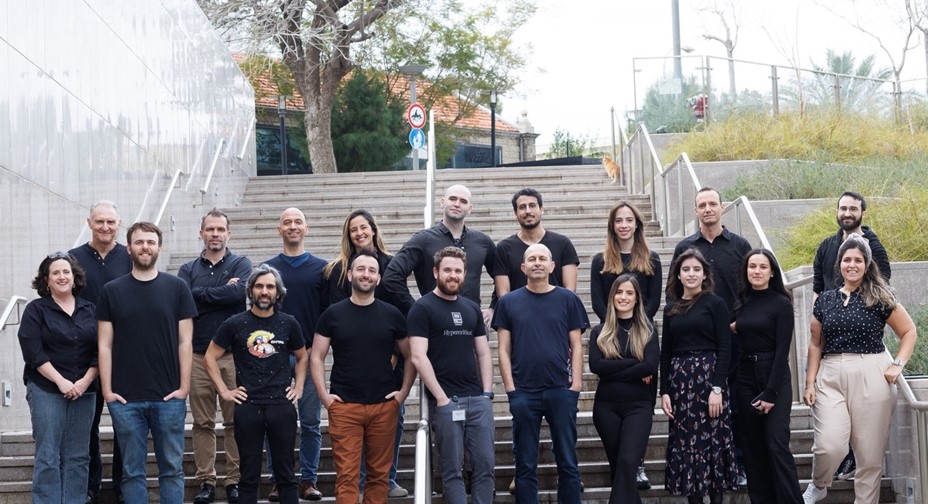
DeepKeep, the leading provider of AI-Native Trust, Risk, and Security Management (TRiSM), today revealed its platform, which enables large corporations that rely on AI, GenAI, and LLM to manage risk and protect growth. DeepKeep raised $10 million in seed funding in a round led by Canadian-Israeli VC Awz Ventures.
Established in 2021 by seasoned AI innovator Rony Ohayon, DeepKeep employs GenAI to secure LLM, GenAI and AI to safeguard the entire AI lifecycle, enabling organizations to create bold AI models - providing them with a significant competitive advantage.
As defense needs and budgets grow worldwide and AI security evolves into a regulatory requirement, DeepKeep’s solution is rising to the challenge. The platform enables data scientists and CISO teams to gain valuable understanding and insights into AI systems' risks and challenges, alongside comprehensive protection and alerts. DeepKeep is already deployed by leading global enterprises in the finance, security, and AI computing sectors.
DeepKeep is a model-agnostic, multi-layer platform that safeguards AI with AI-native security and trustworthiness from the R&D phase of machine learning models through to deployment, covering risk assessment, prevention, detection, and mitigation. DeepKeep’s platform recently prevented data leakage and stopped an LLM from toxic responses at a large financial institution. It also executed fast object detection on an edge device with GenAI. These successful trials have paved the way to DeepKeep applying GenAI on a wide range of additional use cases.
AI is becoming an essential part of businesses and everyday lives. In 2023, 35% of businesses adopted AI, while 90% of leading businesses supported AI and invested in it to achieve competitive advantages. As the adoption of LLMs and generative AI surges in a wide range of diverse applications and industries, so will organizations’ attack surfaces, posing several types of threats and weaknesses. New risks associated with LLMs are unique beyond traditional, familiar issues, such as cyber-attacks, and include prompt injection, jailbreak, and PII leakage, as well as a lack of trustworthiness due to limited biases, fairness and weak spots.