

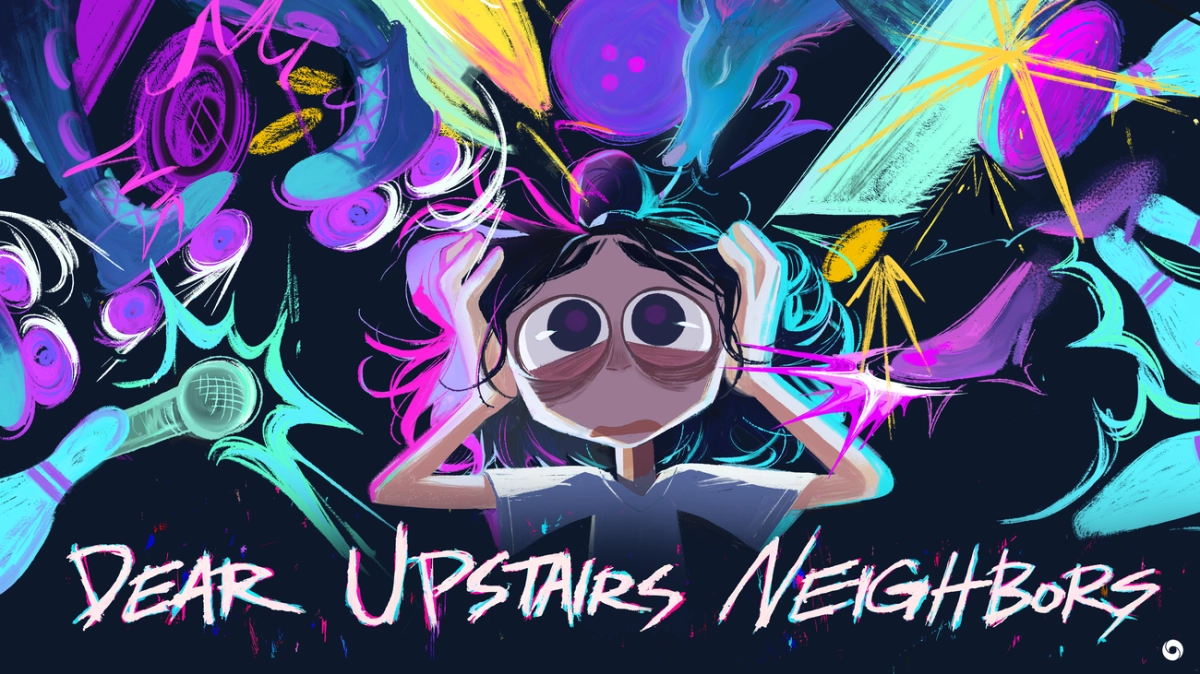
The debut of the animated short film 'Dear Upstairs Neighbors' at the Sundance Film Festival is more than a creative milestone; it is a critical demonstration of generative AI's evolution within professional pipelines. This collaboration between veteran animators and Google DeepMind researchers successfully navigated the tension between AI scalability and granular artistic control. The resulting film showcases advanced video-to-video techniques and localized refinement tools that redefine how artists teach and guide large models.
The film’s abstract expressionist style and unique character designs were far too specific for general-purpose generative models to handle consistently. For instance, the main character Ada’s design followed strict two-dimensional rules, demanding that her hair silhouette never obscure her face, a concept that violates standard 3D geometry. According to the announcement, the team had to fine-tune custom Veo and Imagen models using just a few examples of the artists' original artwork. This process is crucial because it moves AI from a generalist tool to a specialist collaborator, proving that production-ready generative tools must inherit deep artistic concepts, not just superficial textures, ensuring visual consistency across hundreds of shots.
Text prompting alone is fundamentally insufficient for narrative animation, failing to capture the nuance required for comedic timing, rhythm, or specific camera framing. The core technical breakthrough here is the robust video-to-video workflow, where animators provided rough 2D or 3D input using their preferred tools like Maya or TV Paint. The AI then transformed this motion into the final stylized look. This workflow is the definitive answer to the control problem, allowing artists to use their existing expertise to dictate motion while leveraging AI for complex, frame-by-frame stylistic rendering.
The Production Pipeline of Iterative Refinement
The narrative that generative AI is a "one-click" solution is definitively debunked by this production. Just like traditional filmmaking, the team relied on dailies and multiple rounds of feedback to achieve the director's specific vision. To facilitate this necessary iteration, researchers developed localized refinement tools, enabling artists to edit specific regions of a video without regenerating the entire shot from scratch. This capability is vital for professional adoption, transforming AI from a blunt instrument into a precise editing tool capable of fixing a silhouette or adjusting a single element's texture mid-shot, iterating toward perfection.
The final stage addressed the practical demands of cinema: resolution and detail. Veo's upscaling capability was used to bring the final shots to 4K, a necessary step for big-screen presentation. Crucially, the upscaling was guided by artistic critique, ensuring that the added detail preserved the unique painterly style and nuance, rather than introducing generic photorealism. This demonstrates that generative models are now being engineered to handle the entire pipeline, from initial concept style transfer to high-resolution final delivery, meeting the real-world needs of professional filmmakers.