


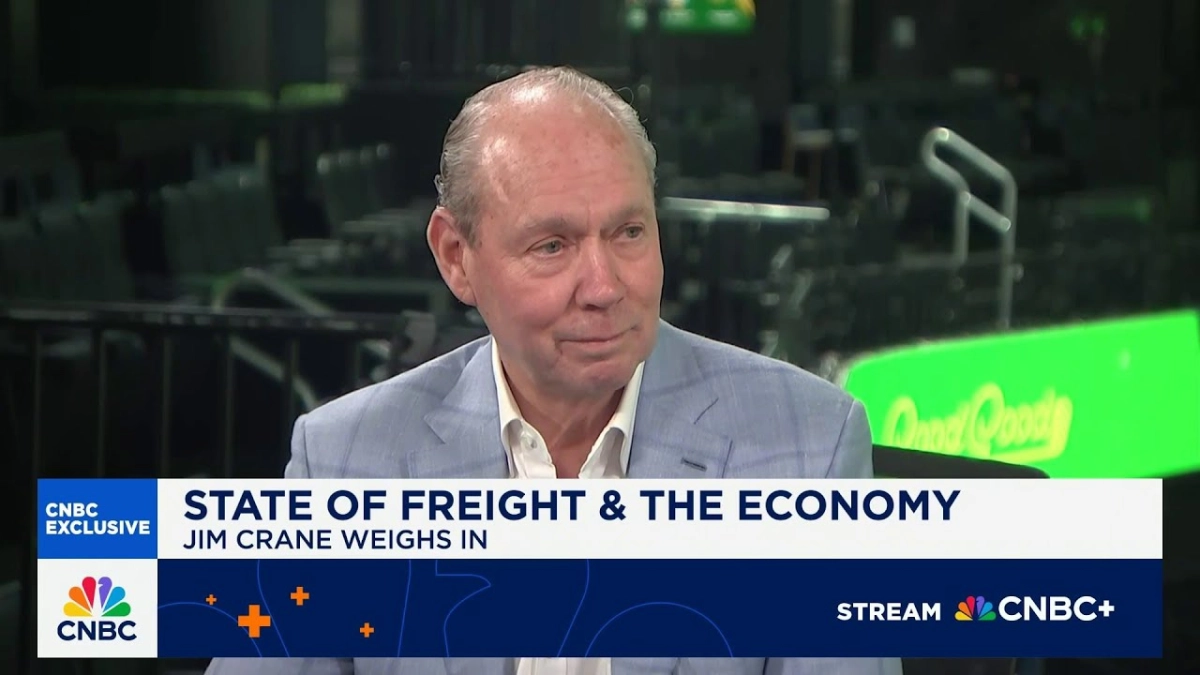
The relentless buildout of data centers, propelled by the burgeoning artificial intelligence sector, is currently the primary engine driving a robust freight business, according to Jim Crane, Founder and Chairman of Crane Worldwide Logistics and owner of the Houston Astros. This high-tech demand stands out as a significant bright spot in a global economy otherwise marked by considerable uncertainty and adaptation.
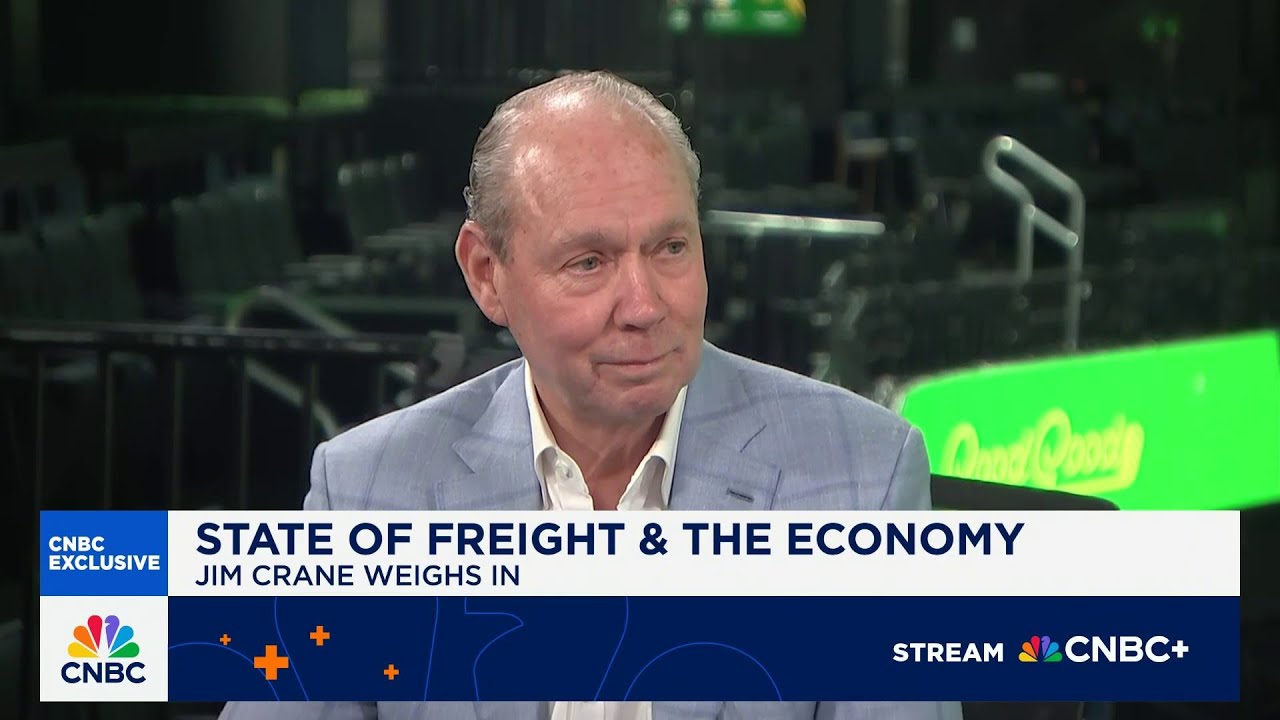
Jim Crane, a seasoned entrepreneur with a diverse portfolio spanning global logistics and professional sports, recently shared his insights with Morgan Brennan at the CNBC CEO Council event in Palm Beach Gardens, Florida. Their discussion navigated the intricate landscape of the freight industry, the broader U.S. economy, and even the evolving business dynamics of Major League Baseball, offering a comprehensive view from the front lines of both tangible goods movement and the experiential economy.
The freight sector, often considered a bellwether for economic health, is experiencing a bifurcated reality. While many traditional industries maintain a steady, if not spectacular, pace, it is the technology boom that provides the current impetus. Crane emphasized that the "freight business has been pretty good this year. It's driven a lot by high-tech, a lot of the high-tech folks building data centers, the servers, racks, all the equipment associated with that is flying around all over the world." This surge underscores how deeply the physical infrastructure demands of AI and cloud computing are embedding themselves into global supply chains, creating an undeniable tailwind for logistics providers specializing in high-value, time-sensitive cargo.
Other sectors, including oil and gas, pharmaceuticals, and retail, are holding their own. "Nobody's blowing the doors off right now," Crane observed, indicating a general stability rather than explosive growth.
The impact of trade tariffs, a significant concern in recent years, appears to have largely been absorbed. Businesses, according to Crane, have "adapted to the tariffs and all the things they needed to do to adjust to that," leading to a smoothing out of initial disruptions. However, the ultimate cost invariably trickles down to the consumer, affecting purchasing power. Geographically, Asia remains a dominant force in the tech supply chain, reflecting established manufacturing hubs.
Looking ahead to 2026, Crane acknowledges a "question mark" over the market's trajectory, describing it as "a little rocky." Yet, his overall outlook remains positive, largely due to the sustained momentum in technology. The data center expansion and the vast capital being raised to support this infrastructure are "just getting started," he noted, predicting "a few bright years with that big push behind us." This long-term tech investment provides a crucial buffer against potential broader economic slowdowns, though the timeline for its eventual plateau remains unknown.
Beyond the tangible world of cargo, Crane offered a parallel perspective from his role as owner of the Houston Astros. The business of sports, like logistics, is intricately linked to economic conditions, albeit with a different set of drivers. Success on the field is paramount to fan engagement and revenue, a principle that holds true across any enterprise relying on consumer enthusiasm.
Related Reading
- AI's Unquenchable Thirst: The Looming Energy Crisis and Global Power Shift
- Nvidia's Masterpiece Quarter and the Enduring AI Revolution
- Bitcoin's Infrastructure Fuels the AI Gold Rush
Baseball, as a sport, is in "good shape," Crane believes, citing a "great World Series" and growing fan base. The industry is actively working on plans to enhance content and smooth out existing issues. He candidly pointed out the difference between perceived value and liquidity, stating, "Valuations are great, but it really's not money in the bank. So you really can't spend a valuation unless you sell the team, and so we're not interested in doing that." This highlights a critical distinction for founders and investors: growth in valuation does not always equate to immediate operational capital.
Ultimately, the health of the economy forms the bedrock for both freight and sports. Crane succinctly connected these disparate worlds: "If people have jobs and the economy's good, they'd go to more sporting events, spend more money at the ballpark, buy an extra jersey." This consumer confidence, fueled by stable employment and a robust economy, directly translates into demand for goods (moving through Crane Worldwide's network) and leisure activities (filling Astros stadiums). Inflation, a persistent concern, continues to drive up costs across the board, from building materials to cargo movement, necessitating careful management to maintain economic equilibrium.

