

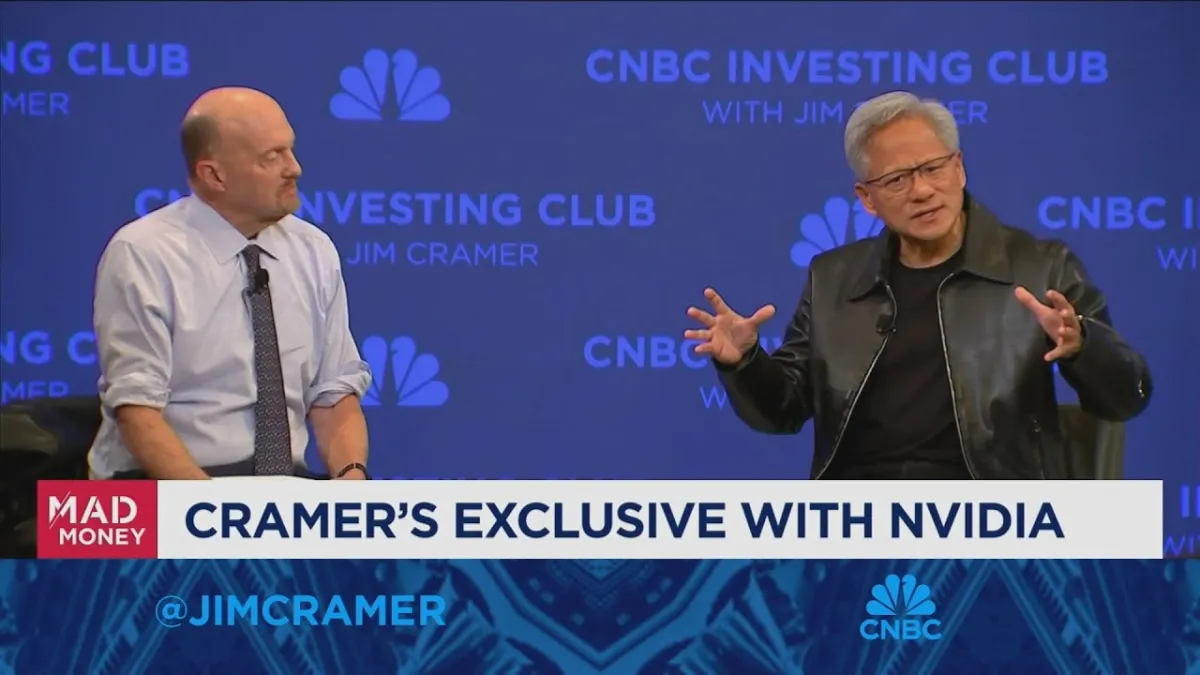
The advent of artificial intelligence has fundamentally reshaped the computational landscape, demanding infrastructure on an unprecedented scale. This seismic shift was a central theme when Jensen Huang, CEO of Nvidia, spoke with 'Mad Money' host Jim Cramer, delving into the state of the AI and semiconductor industry, competitive dynamics, and Nvidia's strategic positioning within this burgeoning technological epoch.
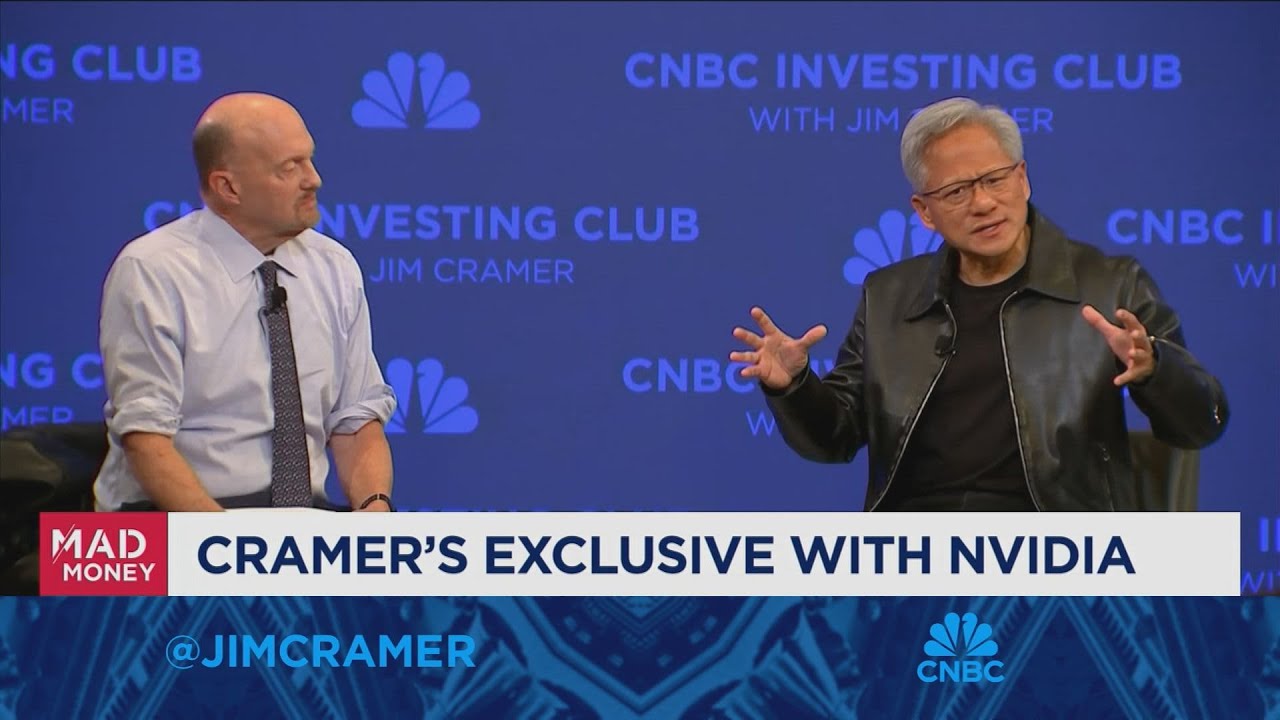
Jim Cramer initiated the discussion by framing AI as the "fourth industrial revolution," suggesting a broad canvas with ample room for various players. He probed Huang on the competitive landscape, specifically referencing AMD's collaboration with OpenAI and questioning if Nvidia, despite its dominance, could possibly cater to the entire industry's chip demands. Huang, with a confident smile, quipped, "We could try," a playful retort that underscored Nvidia's ambition while subtly acknowledging the scale of the opportunity.
Cramer pressed further, drawing a distinction between Nvidia and its hardware-focused competitors. He highlighted that while other companies might produce powerful chips, Nvidia’s strength lies in its comprehensive ecosystem. He articulated this by stating, "That's a chip. You're not a, you're a platform and your software, you're loaded with software." This observation hits at a crucial differentiation point: Nvidia’s long-standing investment in CUDA and its developer ecosystem has created a formidable moat, transforming it from a mere hardware vendor into a full-stack computing platform provider. This platform approach ensures that the total cost of ownership for AI workloads extends far beyond the raw chip performance, encompassing the entire software stack and developer tools.
Huang elaborated on this evolution, explaining that "Nvidia started out as a graphics chip company and over time we became a computing platform company. And a computing platform company is largely software, and you have, uh, you have a lot of developers, an ecosystem that, that create other software that sits on top of your computer, we became a computer platform company." This statement is not merely a historical recount but a strategic declaration. It emphasizes that Nvidia’s value proposition in the AI era is intrinsically tied to its software layers and the vast developer community built around its GPUs. This integrated approach allows for optimized performance and a smoother development experience, which are critical for the complex and rapidly evolving world of AI.
The conversation pivoted to the sheer scale of computing required for modern AI. Huang posited a profound shift in how we must conceive of computational infrastructure. "When artificial intelligence came along, uh we realized that artificial intelligence are really large computers and the entire data center is essentially uh one computer," he stated with conviction. This isn't just hyperbole; it’s a conceptual reframing of the data center from a collection of discrete machines into a single, cohesive supercomputer. This perspective necessitates an integrated design philosophy where networking, switching, and software are all meticulously engineered to operate as a unified whole, rather than as disparate components. The implication is clear: building AI requires thinking beyond individual servers to architecting entire digital factories.