

Danny Werfel on AI in Tax Filing

Former IRS Commissioner Danny Werfel discusses the current limitations and future potential of AI in tax filing, emphasizing the need for domain-specific validation and careful consideration of data privacy.

4 min read
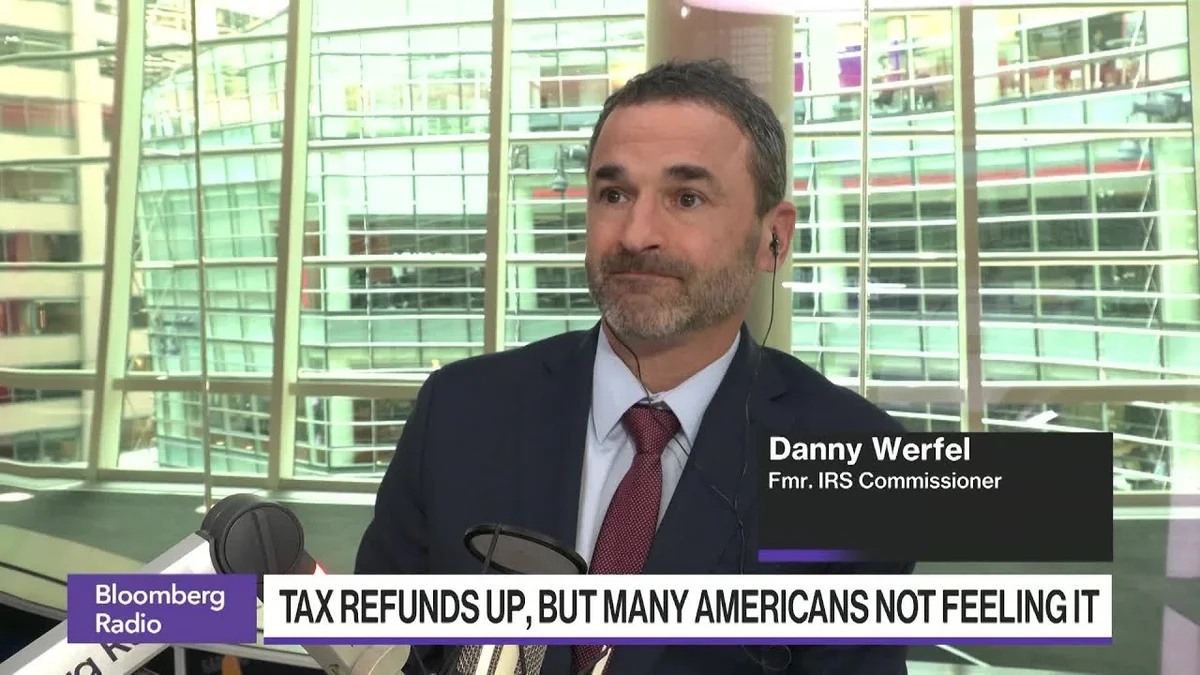
Danny Werfel, former IRS Commissioner, speaks on a video call about AI in tax filing.
Image credit: Bloomberg Radio· Bloomberg Podcast

In a recent interview on Bloomberg Radio, former IRS Commissioner Danny Werfel discussed the growing role of artificial intelligence in tax preparation. Werfel, a respected figure in tax policy and administration, highlighted the potential benefits of AI while also cautioning against over-reliance on the technology for complex financial matters.

Guest Context: Danny Werfel

Danny Werfel served as the Commissioner of the Internal Revenue Service (IRS) during a critical period, overseeing the agency's operations and strategic direction. His tenure was marked by efforts to modernize the IRS and improve taxpayer services. Werfel's experience provides valuable insight into the practical application and challenges of leveraging technology within government agencies, particularly in the sensitive area of tax administration.

AI in Tax Filing: Potential and Pitfalls

Werfel explained that while the IRS is actively exploring AI for various functions, including assisting with tax filings, the technology is not yet sophisticated enough to handle all aspects of tax preparation. He emphasized that the complexity of tax laws and the need for accuracy mean that AI tools are currently best suited for simpler tasks.

Related startups

The full discussion can be found on Bloomberg Podcast's YouTube channel.
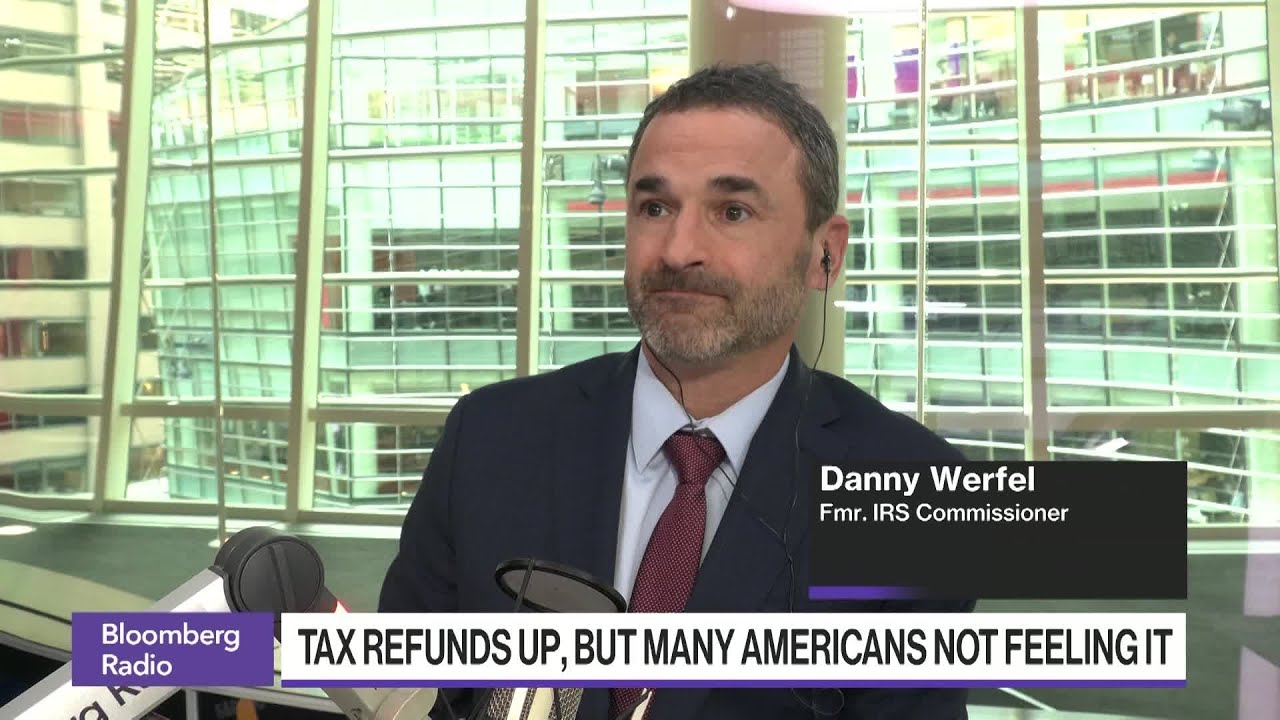
Fmr. IRS Commissioner Warns Against Relying on AI for Filing Returns - Bloomberg Podcast
Fmr. IRS Commissioner Warns Against Relying on AI for Filing Returns — from Bloomberg Podcast

He noted that the IRS has been working to implement AI to help with data analysis and processing, but when it comes to individual tax filings, especially those involving intricate deductions or credits, human expertise remains essential. Werfel stated, "If you're doing something simple like filing a 1040 with just a W-2, you can probably trust an AI tool. But if you're doing something complex like claiming research and development credit, or planning a bathroom remodel, you're on the wrong platform."

The Importance of Domain-Specific AI

A key point Werfel raised was the distinction between general AI and AI specialized for specific domains like tax law. He stressed that AI tools designed for tax advice must be rigorously validated against the nuances of the tax code. "I would not take the chance," Werfel advised, regarding the use of AI for complex tax situations. He drew an analogy to medical advice, suggesting that just as one would seek a doctor for medical guidance rather than a general AI, tax matters requiring specialized knowledge should be handled by experts or thoroughly vetted AI tools.

The former commissioner highlighted that for AI to be truly effective and trustworthy in tax preparation, it needs to be trained on and validated against specific tax regulations. He pointed out that the IRS has been working to develop such specialized tools, but they are still in development and not yet widely available for public use.

Data Sharing and Privacy Concerns

Werfel also touched upon the sensitive issue of data sharing between government agencies. He referenced a Washington Post report about the IRS sharing data with ICE (Immigration and Customs Enforcement) and the potential implications for undocumented workers. Werfel explained that while the IRS has legal authority to share certain taxpayer information under specific circumstances, the broader implications of such data sharing can create a chilling effect on compliance.

He elaborated on the concept of a "safe harbor" for taxpayers who file correctly, contrasting it with situations where information might be shared with other agencies, potentially leading to unintended consequences. Werfel emphasized that the IRS operates under strict legal frameworks that dictate when and how information can be shared, and that any expansion of these capabilities would likely require legislative action.

The discussion underscored the ongoing evolution of AI in public services, balancing the promise of efficiency and accessibility with the critical need for accuracy, security, and trust. As AI technology advances, the regulatory and ethical considerations surrounding its use in sensitive areas like taxation will continue to be a significant focus.

© 2026 StartupHub.ai. All rights reserved. Do not enter, scrape, copy, reproduce, or republish this article in whole or in part. Use as input to AI training, fine-tuning, retrieval-augmented generation, or any machine-learning system is prohibited without written license. Substantially-similar derivative works will be pursued to the fullest extent of applicable copyright, database, and computer-misuse laws. See our terms.