


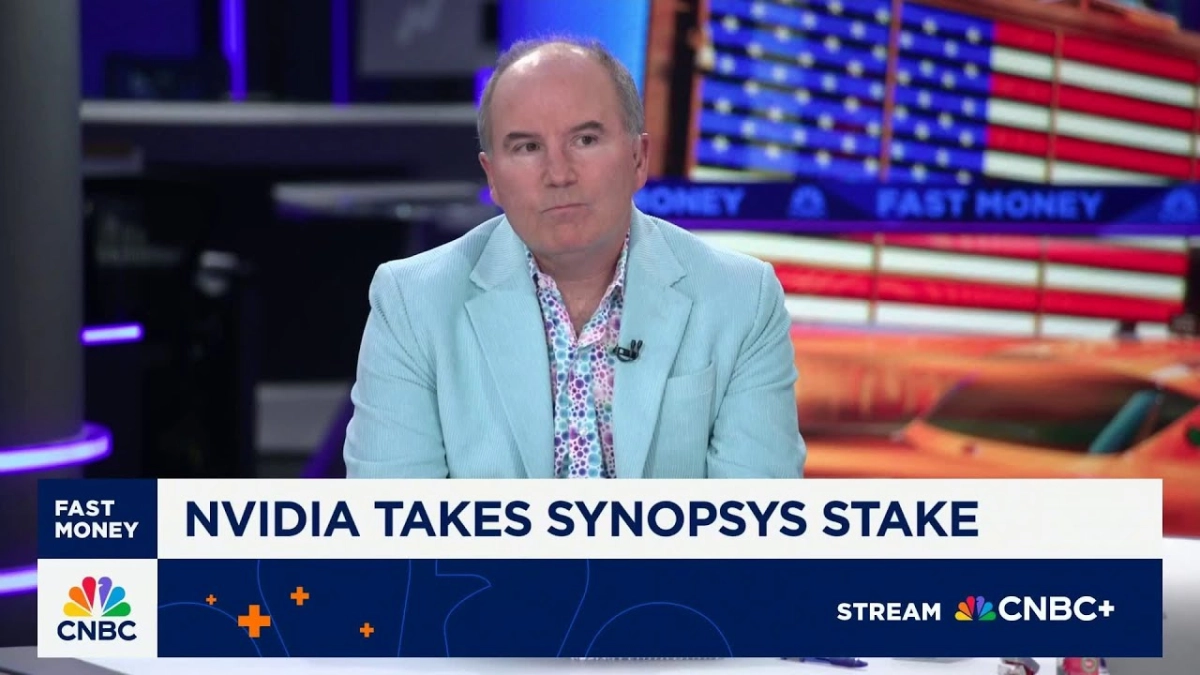
"This is just starting the next stage of the AI revolution," declared Dan Ives, Wedbush's Global Head of Technology Research, on CNBC's "Fast Money" as he unveiled his 2026 outlook for the tech sector. Ives’ commentary, delivered amidst a panel discussion, centered on the profound, long-term implications of artificial intelligence, painting a picture of an accelerating market poised for substantial growth beyond current valuations. His insights are particularly pertinent for founders, venture capitalists, and AI professionals navigating the transformative landscape.
The discussion, featuring Ives and other panelists, largely revolved around the strategic plays and investment opportunities within the burgeoning AI ecosystem. Ives outlined a bold forecast, predicting a 20% to 25% upside for the "AI Revolution stocks" within the broader tech sector, encompassing everything from software and cybersecurity to infrastructure. This projection isn't merely speculative; it’s underpinned by a tangible acceleration in AI deals from hyperscalers, which he notes have seen a 20-25% increase in recent weeks. This surge signals a critical inflection point, moving beyond conceptualization into aggressive monetization and deployment.
Nvidia, the undisputed leader in AI chips, emerged as a central pillar of Ives’ thesis. He posited that Nvidia is actively "putting stakes in the ground across the entire AI ecosystem," a strategic maneuver that extends its influence far beyond its core hardware business. The recent investment in Synopsys, a key player in electronic design automation, exemplifies this strategy. Synopsys' adoption of Nvidia's CUDA platform effectively turns a partner into a paying customer, further embedding Nvidia's technology as a foundational layer across the industry.
While some market observers might view such investments as a form of vendor financing, raising potential red flags, Ives offered a different perspective. "This is an AI arms race," he asserted, framing these moves as essential for securing long-term strategic advantage. He believes that for every dollar Nvidia invests in these partnerships, they are positioned to generate $8 to $10 in future returns over the next two to four years. This long-term view underscores a fundamental shift in how value is created and captured in the AI era, where ecosystem dominance becomes paramount.
The market's immediate reaction to the Synopsys news, which saw its stock trade only modestly higher, perhaps reflects a short-sighted focus. Ives, however, views this as an opportunity, categorizing Synopsys as a "second, third derivative" play on the AI revolution. It highlights a recurring theme in his analysis: the market often underappreciates the broader, ripple effects of foundational technological shifts.
Another company that sparked considerable debate was Palantir. Despite its recent volatility and a valuation that some find excessive, Ives remains steadfastly bullish. He advised investors to "triple down" on Palantir, forecasting a potential trillion-dollar market capitalization for the data analytics firm within the next two to three years. This conviction stems from Palantir’s unique position as the "first call" for enterprise AI use cases, particularly in critical sectors like defense and intelligence, where its platforms are already deeply integrated.
Related Reading
- AI Capex Fuels 2026 Market Outlook, Broader Participation Hinges on Rate Cuts
- AI's Enduring Market Story Amidst Volatility and Rate Shifts
- AI's Shifting Moat: From Models to Infrastructure and Commoditization
Ives' broader list of top AI picks further illustrates the comprehensive nature of this revolution, extending beyond the obvious chipmakers and hyperscalers. He identifies significant opportunities in enterprise software, cybersecurity, autonomous systems, robotics, and even the consumer internet, with companies like Microsoft, Alphabet, Amazon, Oracle, IBM, Snowflake, Palo Alto Networks, Tesla, Apple, and Meta all poised to benefit. The sheer breadth of these categories underscores that AI is not a niche technology but a pervasive force reshaping virtually every industry.
The current phase is characterized by an accelerating shift from experimental AI projects to widespread enterprise adoption and tangible monetization. Companies that can effectively integrate AI into their core offerings and leverage it for competitive advantage will be the true winners. The strategic investments and partnerships being forged today are not merely transactional; they are foundational building blocks for a future economy increasingly powered by intelligent systems. This period demands a nuanced understanding of both technological capabilities and strategic market positioning, recognizing that the true value often materializes over a multi-year horizon.

