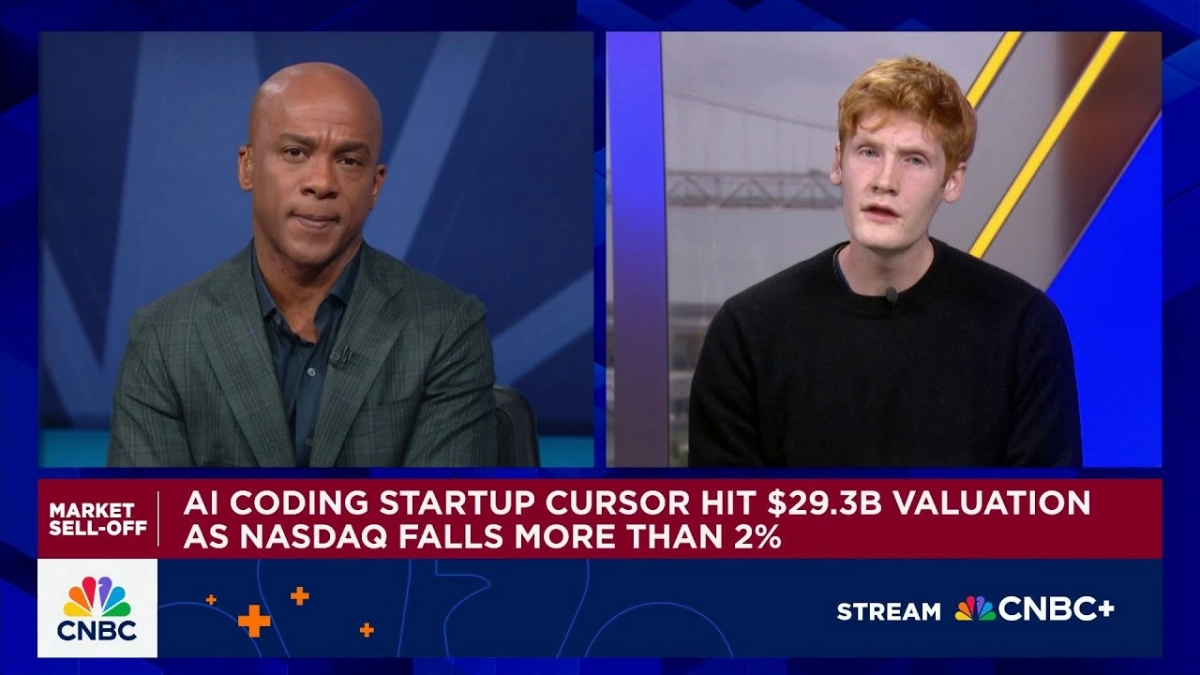
The burgeoning success of AI coding tools is no longer merely a promise but a quantifiable reality, as evidenced by Cursor CEO Michael Truell’s recent discussion on CNBC's 'Closing Bell Overtime'. Truell, speaking with the interviewer, addressed Cursor's latest funding round, its rapidly escalating valuation, the burgeoning demand for its AI-powered coding assistant, and the tangible productivity gains it delivers to a diverse array of enterprises. His insights painted a clear picture of a company capitalizing on a foundational shift in software development, demonstrating that the AI age is delivering not just demand, but verifiable success.
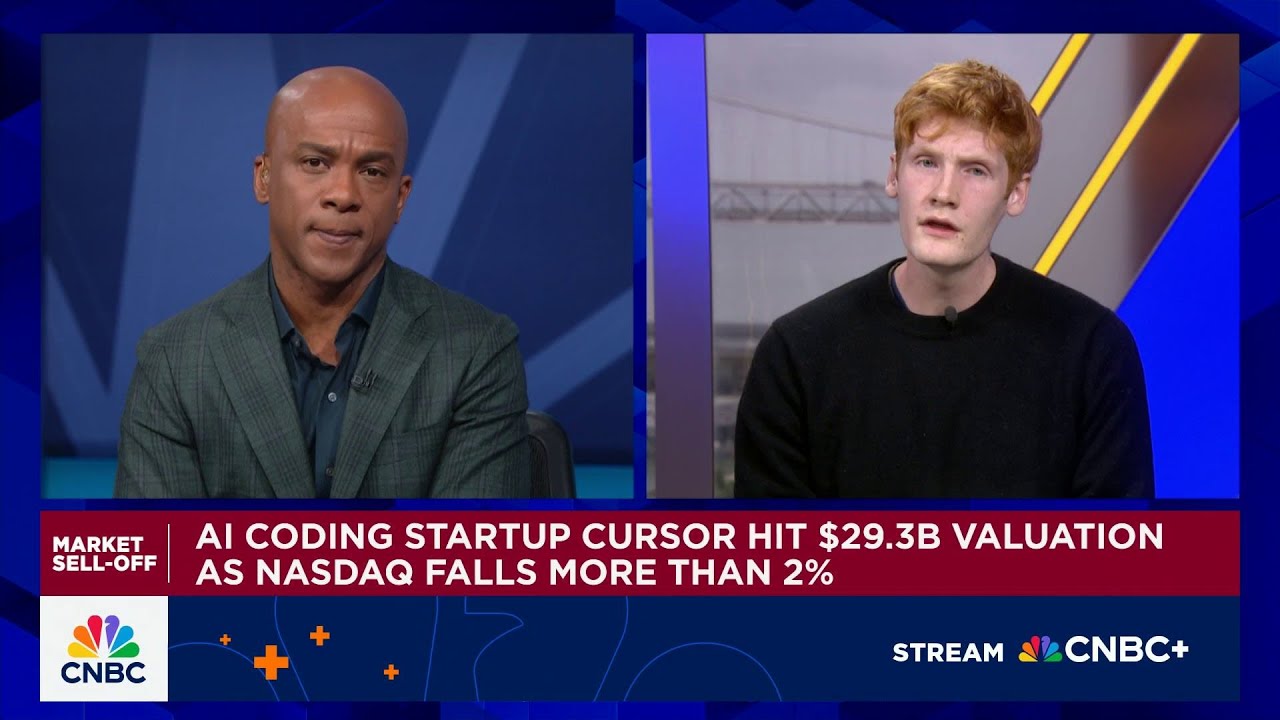
Cursor's financial trajectory alone underscores the profound investor confidence in the AI coding sector. The company recently announced a $2.3 billion fundraising round, catapulting its post-money valuation to an astounding $29.3 billion. This figure represents a nearly threefold increase from its $9.9 billion valuation just five months prior, in June 2025, and a dramatic leap from a $400 million valuation in August 2024. Such rapid appreciation in a challenging market environment for many startups signals a strong belief in Cursor's underlying technology and its market penetration. This meteoric rise indicates that investors are moving beyond speculative bets, instead valuing companies that can demonstrate immediate, impactful utility.
Truell highlighted the breadth of Cursor's enterprise adoption, stating, "We are seeing an acceleration of demand across especially our enterprise base." This demand spans both "digital native companies" like Uber, Adobe, Nvidia, and Shopify, and "real economy companies" such as Starbucks, PWC, and Hilton. The fact that Cursor serves over 60% of the Fortune 500 and that these clients are actively paying for the service dispels any notion of AI coding being a niche or experimental tool. It signifies a widespread integration of AI into critical business functions, moving from departmental pilots to wall-to-wall deployments.
Beyond mere demand, Truell emphasized the demonstrable success of their product. He cited a recent study from the University of Chicago that investigated the productivity impacts of switching to Cursor's AI agent. The findings were compelling: companies adopting Cursor's tools "ship 40% more code and get 40% more of their roadmap done." This statistical validation is crucial for enterprise decision-makers, providing a clear return on investment that justifies the integration of such advanced AI solutions into their development workflows. These gains translate directly into faster innovation cycles and increased competitive advantage.
The market for AI coding agents remains vast and largely untapped, despite Cursor's significant penetration. Truell articulated this expansive opportunity, noting that their market comprises "people who build software for a living." He believes the company could easily serve "over an order of magnitude more people." This speaks to the enormous potential for expansion within the existing developer ecosystem, as well as the potential to democratize software development, enabling more individuals to contribute to code creation with AI assistance.