


CPUs Stage AI Comeback

CPUs like AWS Graviton are becoming critical for agentic AI, which requires continuous processing and real-time decision-making.

3 min read
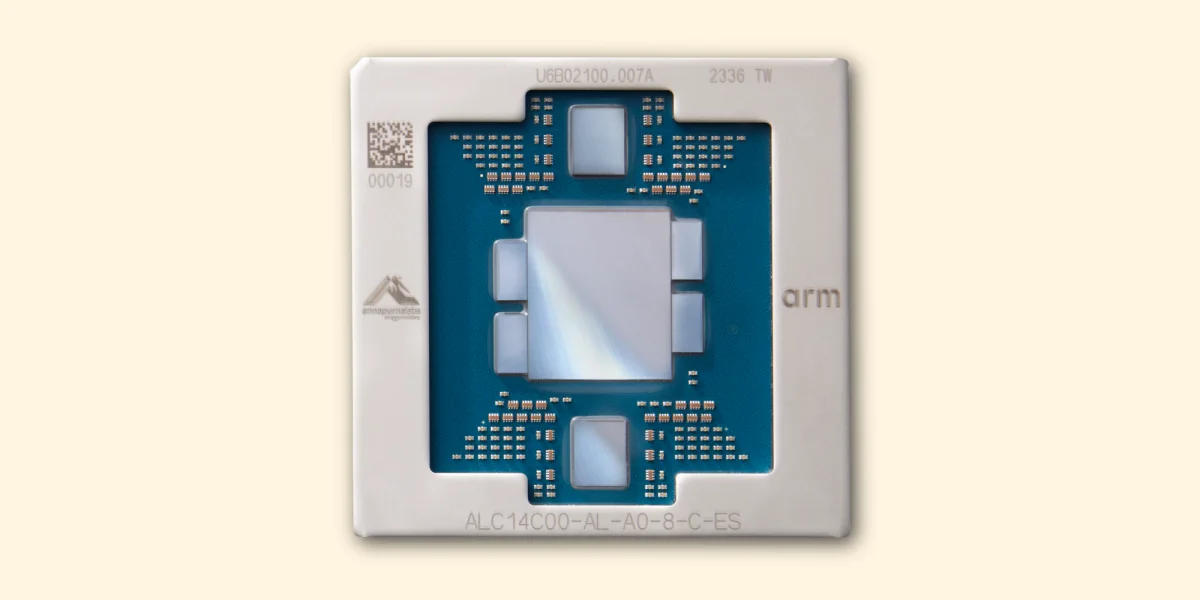
Diagram showing AWS Graviton processor architecture and its benefits for AI workloads.
AWS Graviton processors are designed to meet the demands of continuous AI workloads.· Amazon News

The AI hardware conversation has long been dominated by GPUs and specialized accelerators built for the massive parallel computations of model training. But a fundamental shift is underway with the rise of agentic AI, systems that reason and act continuously, demanding a different kind of infrastructure. This evolving landscape is bringing Central Processing Units (CPUs) back into the spotlight.

Unlike traditional AI models that process data in discrete batches, agentic AI operates like a constantly thinking digital assistant. These systems must break down complex tasks into sequential steps, interact with various tools and data sources, and make real-time decisions. This requires sustained computing power and rapid communication between processing cores, a workload for which purpose-built CPUs are increasingly suited.

Related startups

The Agent vs. The Calculator

Think of a standard language model as a powerful calculator, excelling at performing vast numbers of simultaneous calculations to predict the next token. GPUs, with their thousands of parallel cores, are ideal for this task. An AI agent, however, is more akin to a manager. It doesn't just generate text; it must plan, execute, parse information, and even run code to complete a multistep objective autonomously.

Every step in this process—logic, file management, network calls, code execution—is inherently a CPU-native task. This necessitates processing units designed for constant, low-latency workloads.

Graviton's Role in Continuous Intelligence

AWS is positioning its AWS Graviton processors as a key solution for this new era. These CPUs are engineered for the sustained performance and fast inter-core communication that agentic AI demands. Companies like Meta are already deploying tens of millions of Graviton cores to power their agentic AI systems at a global scale, underscoring the hardware's critical role.

Agentic systems engage in rapid execution cycles, constantly retrieving data, calling tools, and evaluating next steps. The efficiency of data sharing between different parts of the processor is paramount. Graviton's architecture is designed to minimize this communication overhead, making it a critical component for AI systems that require continuous information exchange.

This sustained performance and constant adaptation are fundamentally different from the intense bursts of model training. As AI systems serve millions of users around the clock, performance and energy efficiency become paramount. Graviton processors offer both improved performance and greater energy efficiency, making continuous, large-scale agentic AI deployments economically and environmentally viable.

The rise of agentic AI represents a fundamental shift in how we build and deploy artificial intelligence. As these systems become more autonomous and integrated into our digital lives, the underlying infrastructure must evolve to support their continuous operation. Processors like Graviton are becoming the foundation for this new era of AI that never stops thinking.

© 2026 StartupHub.ai. All rights reserved. Do not enter, scrape, copy, reproduce, or republish this article in whole or in part. Use as input to AI training, fine-tuning, retrieval-augmented generation, or any machine-learning system is prohibited without written license. Substantially-similar derivative works will be pursued to the fullest extent of applicable copyright, database, and computer-misuse laws. See our terms.