

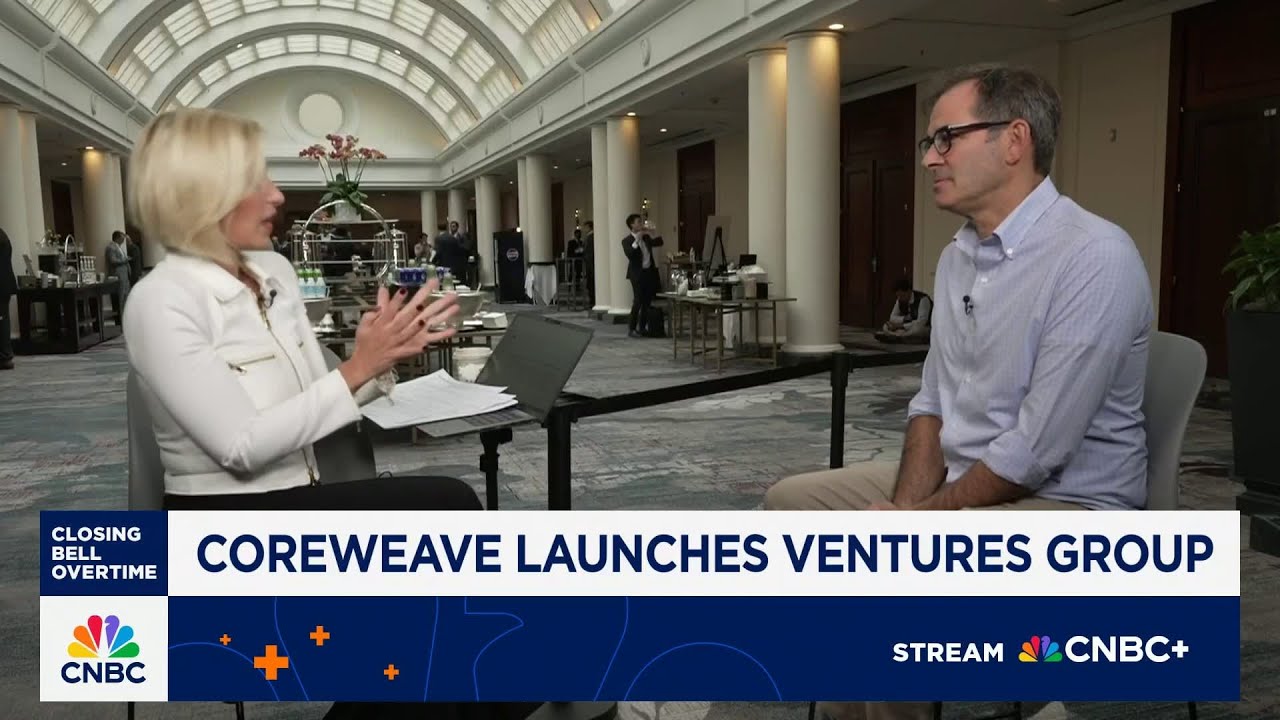
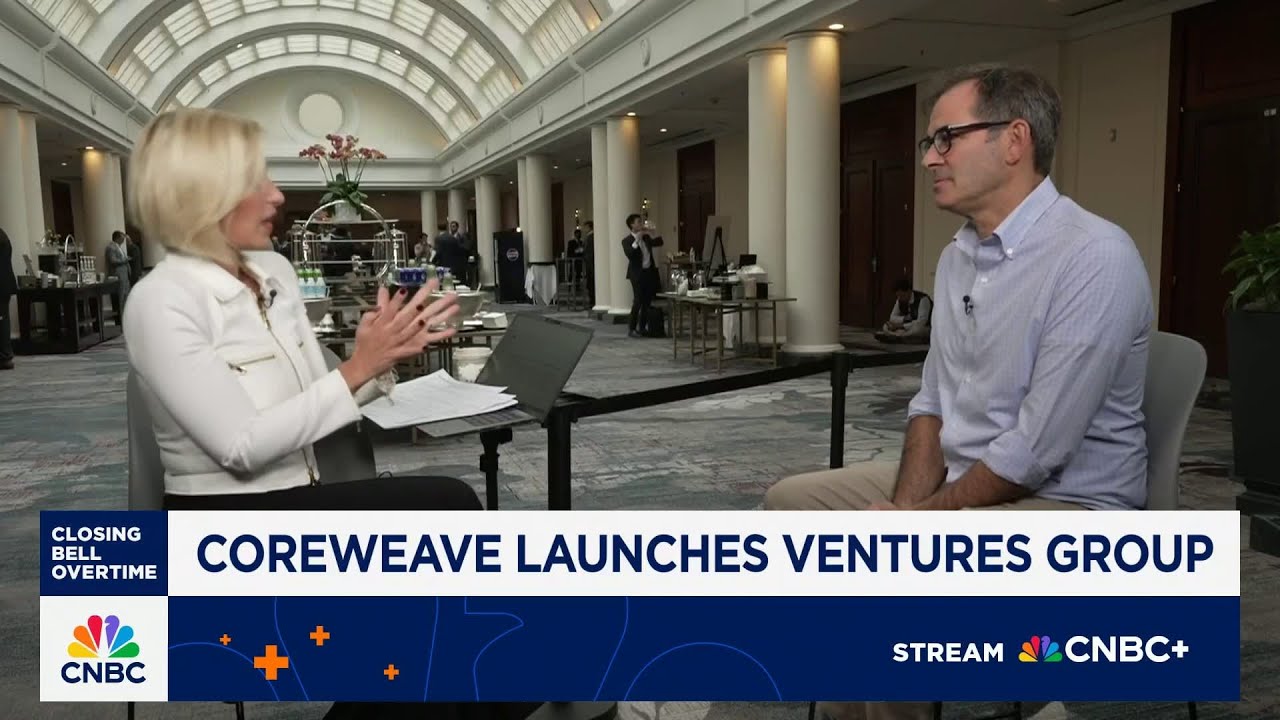
The current macroeconomic environment for artificial intelligence is marked by an "insatiable demand for compute," a powerful tailwind for companies like CoreWeave. This was the central message from Mike Intrator, Co-Founder and CEO of CoreWeave, during his recent interview with Sara Eisen on CNBC's 'Closing Bell Overtime' at the Goldman Sachs Communacopia conference. Intrator delved into the profound implications of this unprecedented demand, CoreWeave's strategic positioning, and the recent launch of its venture group.
Intrator highlighted the broader market sentiment, citing Oracle's recent 20% stock surge driven by its AI-related backlog as a clear indicator of the pervasive capacity crunch. This market movement, along with significant deals like Microsoft's partnership with Nebius, underscores a fundamental truth: the entities building the future of AI, from foundational model developers to enterprise integrators, are desperately seeking the computational infrastructure required to power their innovations. It is a compelling validation of CoreWeave's long-standing strategy.
CoreWeave has positioned itself as a critical provider of this infrastructure, designed specifically to cater to the unique and escalating needs of AI and cloud-native communities. Intrator emphasized that the current surge in demand is not merely a transient trend but a profound, sustained shift. The companies at the forefront of AI development are finding themselves resource-constrained, unable to acquire sufficient compute power to train their models and drive their businesses forward at the desired pace. This bottleneck has transformed the provision of high-performance compute into a strategic imperative for the entire AI ecosystem.
Meeting this colossal demand requires not only technical prowess but also significant financial agility and robust supply chain management. Intrator proudly detailed CoreWeave's success in navigating these complex waters. "We've been incredibly successful... in accessing the capital markets," he stated, revealing that the company has raised in excess of $25 billion over the last 18 months. This capital influx is crucial for scaling operations, acquiring advanced GPUs, and expanding their data center footprint.
The ability to raise such substantial capital, even in a challenging economic climate, speaks volumes about investor confidence in CoreWeave’s model and the perceived longevity of the AI boom. This financial strength allows CoreWeave to not only keep pace with demand but also to proactively build out the necessary infrastructure. The company's impressive expansion plans, including 33 data centers with approximately 470MW of active power and 2.2GW of contracted power by Q2 2025, illustrate a clear commitment to scaling ahead of the curve.