


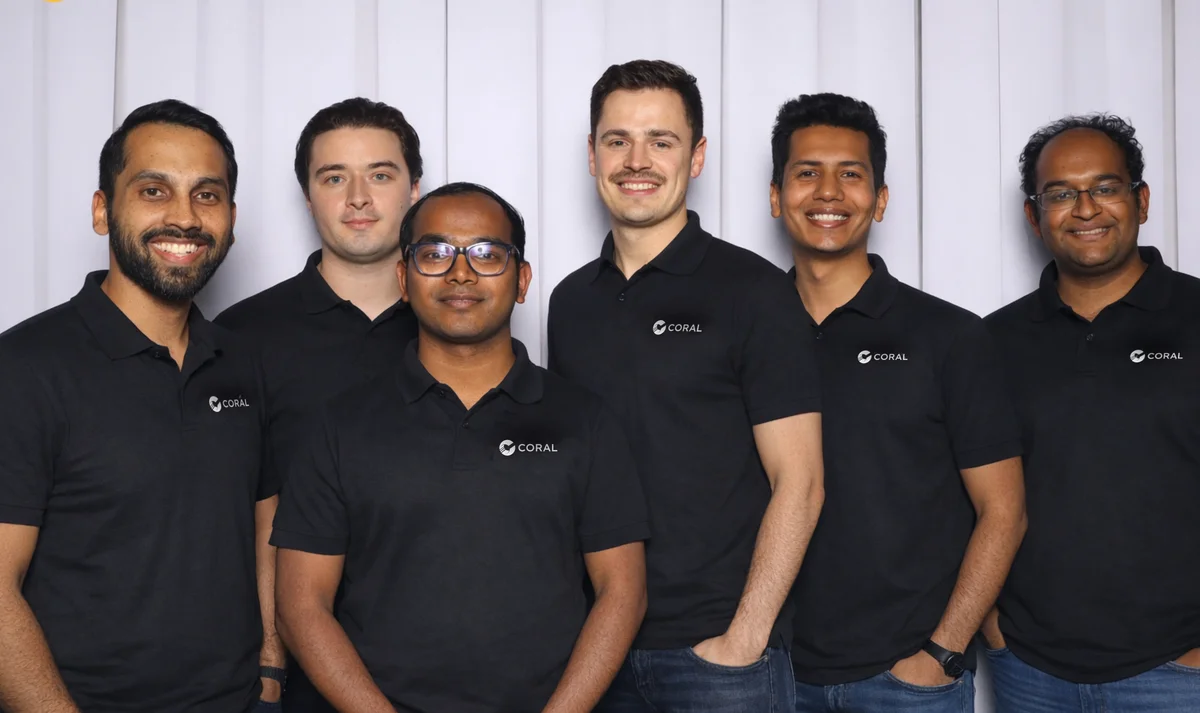
Coral raises $12.5M for healthcare automation

Coral raises $12.5M to automate healthcare's administrative back office, using AI to streamline workflows around legacy systems like fax machines.

Coral healthcare automation platform processing patient intake forms
Coral secures $12.5M to revolutionize healthcare back-office automation.

Coral, a startup aiming to untangle healthcare's administrative knots, has raised $12.5 million in a round led by Lightspeed and Z47. The company focuses on automating the often-clunky processes that bog down providers, from prior authorizations to patient intake.

The administrative burden in American healthcare is immense, causing significant delays for patients. Referrals get lost in fax queues, prior authorizations languish, and discharges are postponed due to unprocessed paperwork. Coral's mission is to tackle this bottleneck, which stems not from a lack of clinicians but from a shortage of administrative support.

Founded by Ajay Shrihari and Aniket Mohanty, Coral emerged from Shrihari's personal experience navigating the healthcare system post-accident, highlighting the inefficiencies surrounding clinical care.

Coral's core innovation lies in its pragmatic approach: automating healthcare administrative workflow automation by working with, not against, legacy systems. Instead of forcing providers to overhaul their IT infrastructure, Coral integrates with existing EHRs, fax lines, and payer portals. It then handles end-to-end administrative tasks, including intake, prior authorization, and patient communications, without demanding workflow changes from providers.

Related startups

Fax Machine Automation Healthcare

The company's AI models demonstrate remarkable accuracy, achieving 99.7% on crucial documents like handwritten faxes and insurance cards. This allows for complete patient intakes in under five minutes, even for complex cases. When information is missing, Coral actively works to retrieve it from relevant parties.

"Every person in the healthcare system is being slowed down by the same thing: administrative work that was never built to scale," said Ajay Shrihari, Founder and CEO of Coral. "When you automate the right things, all of them win at once."

Coral initially targeted durable medical equipment (DME) providers, a sector heavily reliant on faxes. The model's success quickly showed the problem was systemic across specialties.

For patients in infusion centers, delays mean missed doses. Coral's platform streamlines authorization and intake, freeing up clinical staff to focus on patient care.

Customer confidence is evident in the growing adoption of multiple modules and, notably, upfront contract payments—a rare sign of trust in enterprise software, especially within healthcare's lengthy evaluation cycles.

The company has already achieved multi-million dollar revenues and is targeting fourfold growth this year, expanding into radiology and other specialty areas.

Rohil Bagga, Investor at Lightspeed, noted, "Healthcare is one of the hardest environments to automate, given legacy systems and fragmented workflows, yet Coral is delivering real outcomes at scale."

Ashwin KP, Investor at Z47, added, "US healthcare admin carries over a trillion dollars in overhead each year, yet the back-office teams doing this work have been chronically underserved by technology."

The new funding will accelerate team expansion, bringing in engineering talent and seasoned healthcare operations professionals. Product development will focus on an AI workflow builder for providers and a co-pilot layer to surface actionable intelligence from processed data, identifying bottlenecks and suggesting next steps.

Coral's approach reframes administration as a workflow problem, not a staffing issue, proving effective across DME, infusion, and specialty pharmacy by shortening fax queues and allowing staff more patient-facing time.

© 2026 StartupHub.ai. All rights reserved. Do not enter, scrape, copy, reproduce, or republish this article in whole or in part. Use as input to AI training, fine-tuning, retrieval-augmented generation, or any machine-learning system is prohibited without written license. Substantially-similar derivative works will be pursued to the fullest extent of applicable copyright, database, and computer-misuse laws. See our terms.