

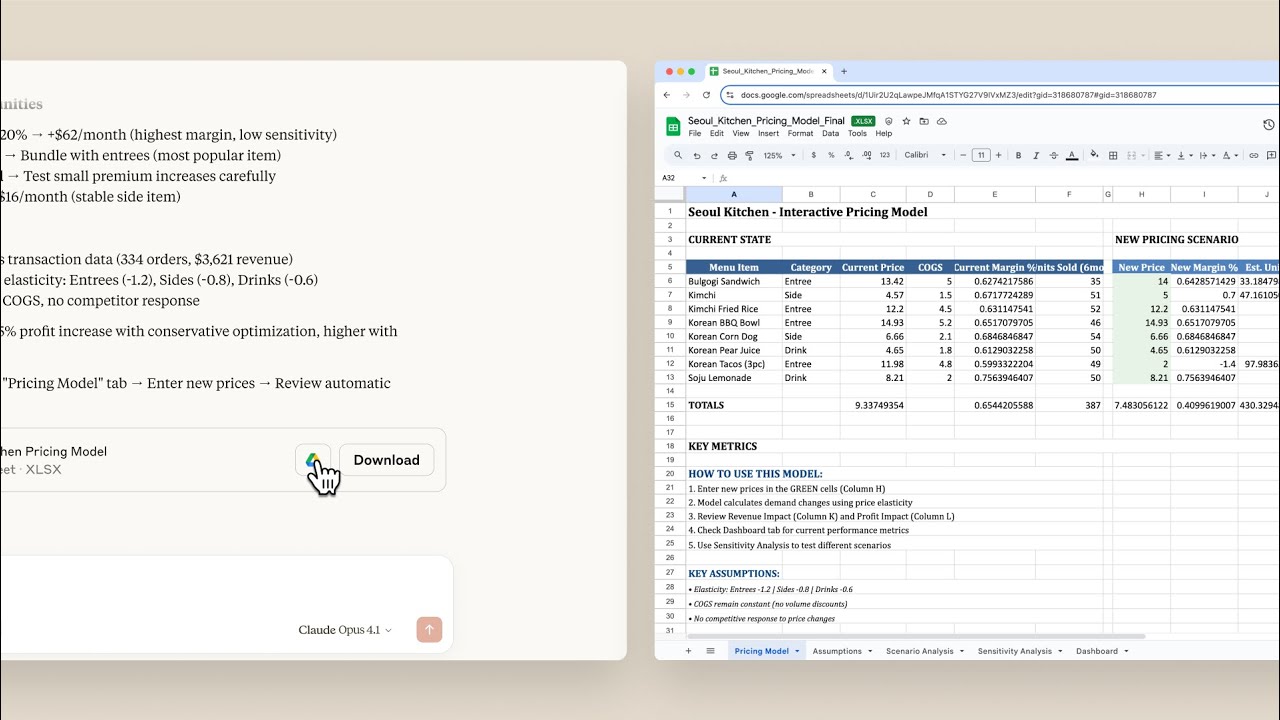
The latest demonstration of Claude's capabilities reveals a pivotal shift in how artificial intelligence can interact with enterprise data, moving beyond mere text generation to direct, dynamic file creation and manipulation. This evolution positions AI as not just an assistant, but a co-pilot capable of undertaking complex, multi-modal tasks previously reserved for human specialists. The demonstration showcased Claude's advanced capabilities, with a user interacting directly with the AI to transform raw data into actionable business intelligence and dynamic financial models, illustrating a profound augmentation of traditional workflow.
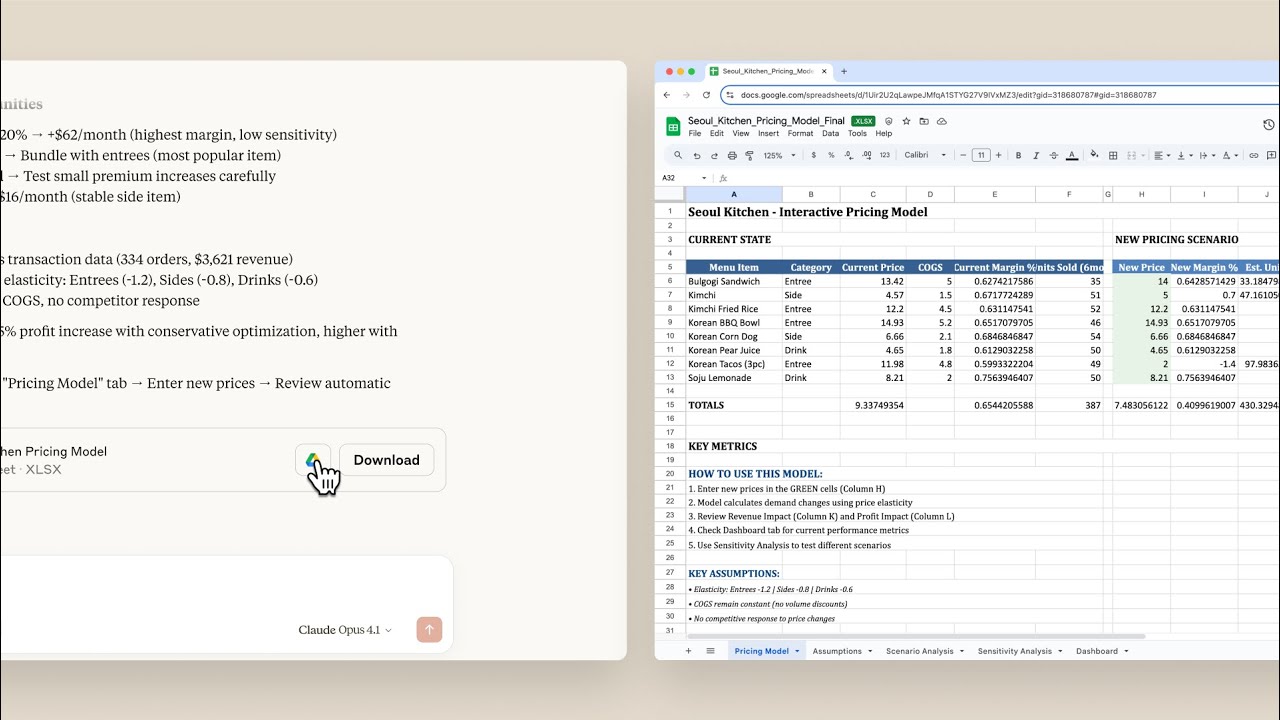
The core of this advancement lies in Claude’s ability to ingest raw, unstructured data, such as multiple CSV files containing food truck sales data, and then process this information to generate sophisticated output in familiar business formats. The user initiated the process by stating, "Running a small food truck fleet. I've been flying a bit blind. Finally pulled together sales data (attached) but honestly don't know what to do with it. What patterns am I missing? What's actually driving revenue vs what I THINK is working? I need someone to spell out the top 3-4 opportunities with clear visuals. Can you package this up in a Google Doc? Like a real analysis I'd get from a consultant!" This prompt is indicative of a common pain point for founders and small business owners: an abundance of data with a scarcity of time or expertise to derive meaningful insights.
Claude's response was not just analytical but immediately actionable. The AI confirmed its understanding and proposed a solution: "I'll analyze your food truck data and create a comprehensive consulting report with actionable insights and visualizations." This isn't simply querying a database; it's performing a full-stack data analysis, interpreting business context, and presenting findings in a structured, professional document complete with charts and an implementation roadmap. The resulting Google Doc was a fully formed consulting report, outlining key performance metrics, location optimization strategies, menu refinements, and peak hour focus recommendations, all derived directly from the provided sales data. This capability effectively democratizes high-level analytical services, making them accessible and instantaneous.
This signifies a critical insight for the startup ecosystem: the barrier to entry for sophisticated data analysis and strategic planning is being dramatically lowered. Companies can now leverage AI to perform tasks that once required dedicated data analysts, business intelligence specialists, or even external consultants. The speed and efficiency with which Claude processed multiple CSV files, extracted patterns, identified opportunities, and formatted a professional report highlights a new era of operational efficiency. It enables founders to pivot faster, make data-driven decisions without significant overhead, and free up human capital for more creative or strategic endeavors.
The demonstration extended beyond static reports, revealing an even more compelling capability: the creation of interactive models. Following the initial report, the user expressed satisfaction and a new need: "This is incredible - exactly what I needed! OK so the Korean truck - I think I need to experiment with prices. Can you build an Excel model where I can test different price points? Like if I bump Korean BBQ bowl prices, what happens to profit? Need something I can plug in new prices and see the impact. Make whatever assumptions you need about costs - just list them out." This request pushes the AI beyond reporting into dynamic simulation and scenario planning.