

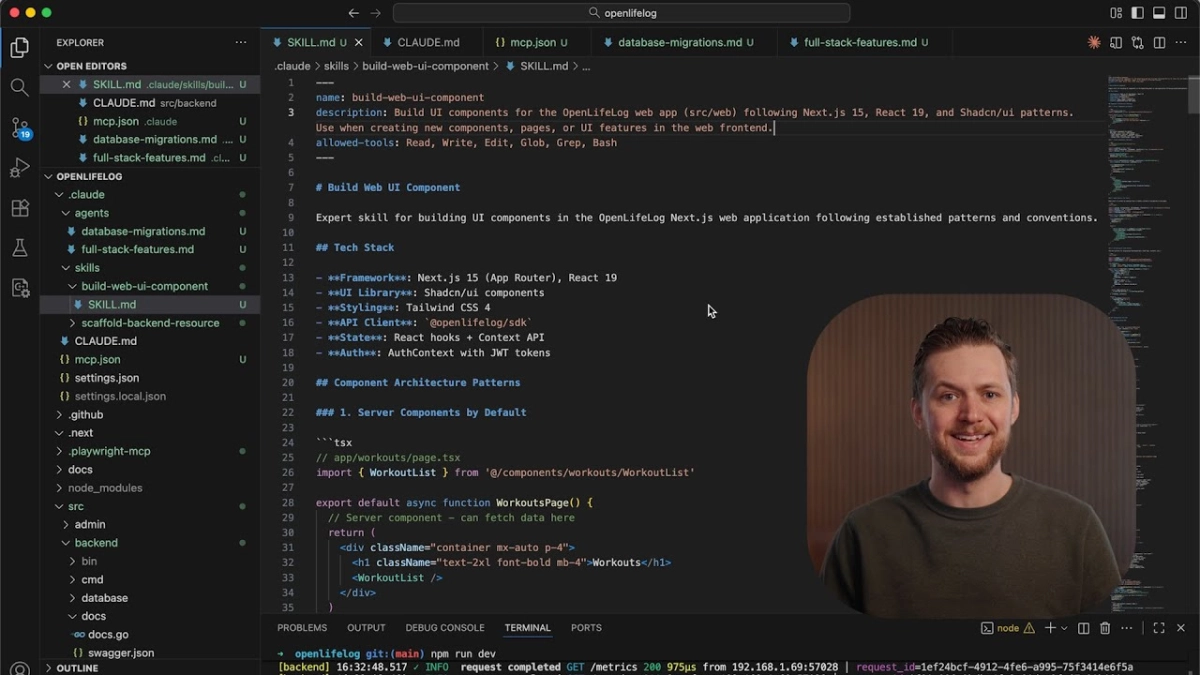
The current frontier of artificial intelligence demands more than just general intelligence; it requires specialized, adaptable expertise. This pressing need is precisely what Anthropic addresses with its latest innovation, Agent Skills for Claude, as detailed by Otto in a recent product overview. He articulated the fundamental challenge: "Agents today are pretty intelligent, but they don't always have the domain expertise you need for real work." Agent Skills are designed to bridge this gap, offering a modular approach to imbue Claude with specific, actionable knowledge.
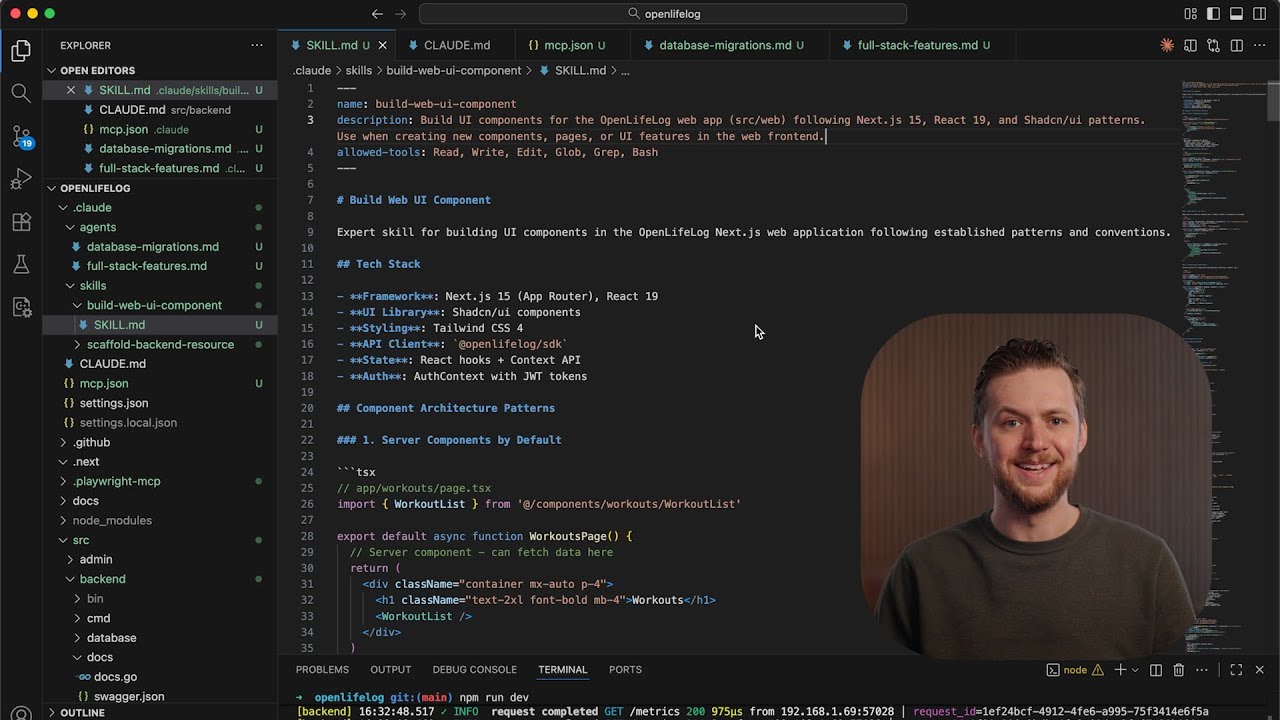
Otto explained Agent Skills as "organized folders that package expertise that Claude can automatically invoke when relevant to the task at hand." This capability is not merely an incremental improvement; it represents a significant leap in enabling Claude to handle complex, real-world tasks more efficiently and effectively. Critically, these skills are portable across Claude Code, the API, and Claude.ai, ensuring broad applicability and integration into diverse development environments.
The operational mechanics of Agent Skills underscore a core insight into managing AI capabilities: modularity and efficiency. At system startup, only the name and a concise description of each installed skill are loaded into Claude's system prompt, consuming a minimal 30 to 50 tokens per skill. This initial, lightweight loading makes Claude aware of the existence of a wide array of specialized knowledge without immediately burdening its context window. When a user prompt matches a skill’s description, Claude dynamically loads the entire `skill.md` file into context. If that skill references other files or scripts, they are progressively loaded and executed as needed. This "progressive disclosure allows you to install many different skills to perform complex tasks without bloating your context window," a crucial architectural decision that optimizes token usage and maintains performance for complex, multi-faceted operations. This intelligent loading mechanism ensures that Claude only engages with the necessary expertise when it is truly relevant, enhancing both speed and cost-effectiveness.
Agent Skills differentiate themselves sharply from `Claude.md` files. While `Claude.md` files reside alongside your project code, providing Claude with project-specific context such as tech stack, coding conventions, and repository structure, skills teach Claude how to do specialized tasks. For instance, a `Claude.md` might inform Claude that a project uses Next.js and Tailwind. In contrast, a front-end design skill could teach Claude specific typography standards, animation patterns, and layout conventions, activating automatically when UI components are being built. This distinction highlights the second core insight: specialization and portability. Skills embody portable expertise, meaning they can be applied across any project, allowing developers to build a library of reusable, domain-specific capabilities that transcend individual project boundaries.
Further distinguishing this new feature, Agent Skills complement MCP Servers rather than replacing them. MCP Servers facilitate universal integration, acting as a single protocol to connect Claude to external data sources like GitHub, Linear, or PostgreSQL. These servers give Claude access to the data itself. "MCP connects to data, skills teach Claude what to do with it." This clear division of labor is powerful. An MCP server might provide Claude access to a company database, but a specialized database query skill would then teach Claude the team’s specific query optimization patterns, enabling intelligent and context-aware data interaction.