

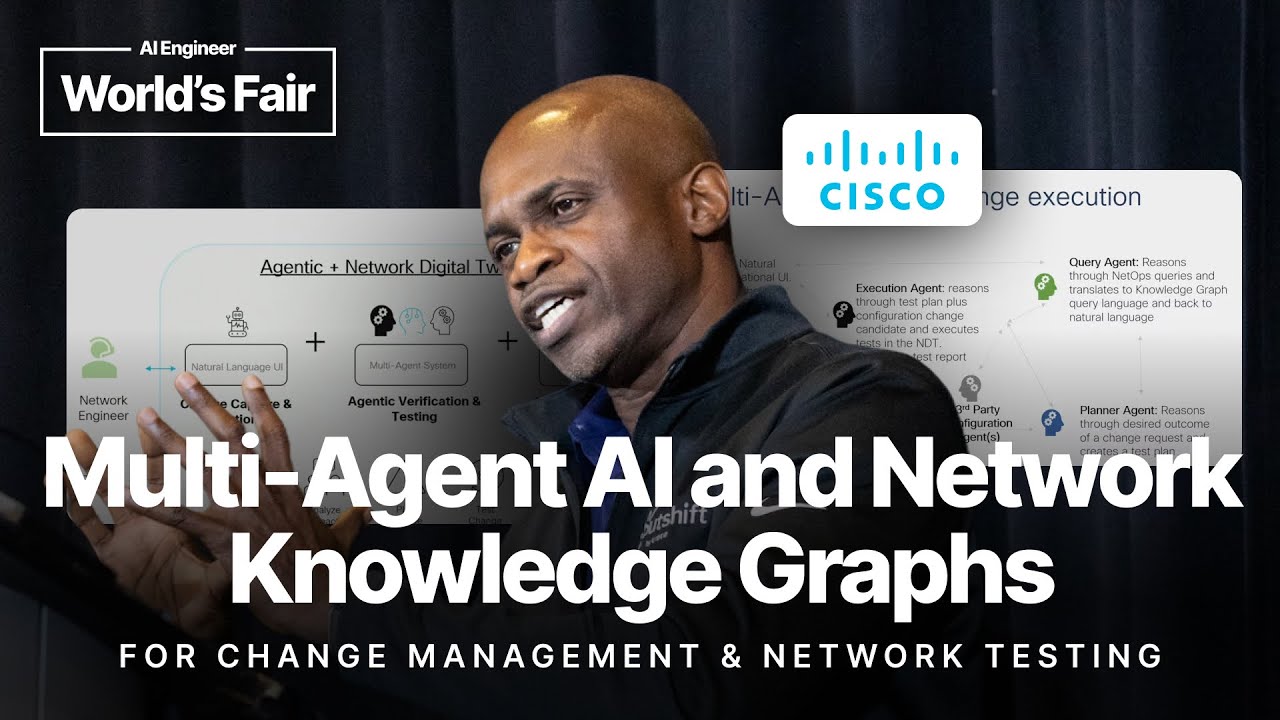
"What I need is a comprehensive tool that I can pull out, build a model of my network, and model the changes and get some expectations of what’s going to happen. Having some sort of AI tool to model that or to flag something that’s important would be really useful." This compelling statement from a Senior Manager of Network Operations at a financial services company encapsulates the critical pain point addressed by Cisco's latest innovation.
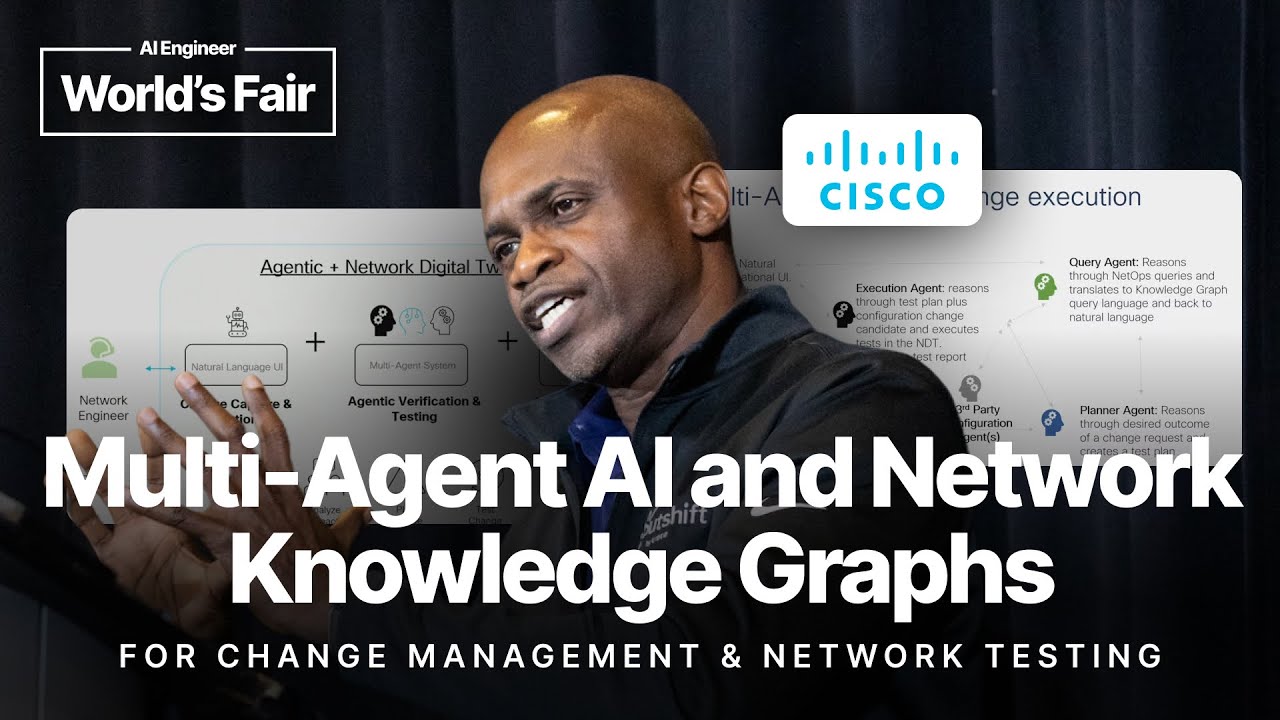
Ola Mabadeje, Product Manager for Cisco's Outshift Incubator Group, recently presented at the AI Engineer World's Fair, detailing how multi-agent AI and network knowledge graphs are transforming complex network change validation and testing. His presentation highlighted Cisco's commitment to leveraging emerging technologies to accelerate traditional business roadmaps, tackling an industry-wide problem estimated to cost the Global 2000 $400 billion annually in unplanned downtime due.
The core issue stems from manual, non-representative, lengthy, and error-prone testing workflows in network operations. These fragmented processes lead to delayed resolutions, repeated incidents, and dissatisfied stakeholders. Cisco's solution introduces an "Agentic + Network Digital Twin" paradigm, aiming to reduce outages, accelerate rollouts, and decrease operational costs.
This innovative architecture comprises three primary components: a natural language user interface, a multi-agent system, and a network digital twin. The natural language UI allows network engineers and integrated IT Service Management (ITSM) systems, such as ServiceNow, to seamlessly communicate change intents. This direct interaction streamlines the initial stages of change capture and iteration.
The multi-agent system is the intelligent core, featuring specialized AI agents for tasks like impact assessment, test planning, and execution. These agents operate on a ReAct reasoning loop, leveraging open-source large language models (LLMs) finetuned with network knowledge graph schemas and example queries. This fine-tuning proved crucial. "After fine-tuning we saw a drastic reduction in the number of tokens consumed as well as the amount of time it took to actually come back with the results," Mabadeje noted, emphasizing the efficiency gains.