When a Chinese AI startup, previously “largely unknown” to Western audiences, suddenly has to cap access to its core product because demand from US developers has overloaded its compute resources, the narrative shifts from "catching up" to "competitive parity." This is precisely the situation surrounding Zhipu AI and its GLM Coding Agent, a development that should serve as a stark warning to Silicon Valley’s proprietary model builders and national security analysts alike. The breakout of Zhipu, following earlier signals from DeepSeek, confirms that China is rapidly establishing global influence in foundational AI, particularly by mastering the strategic landscape of open-source distribution.
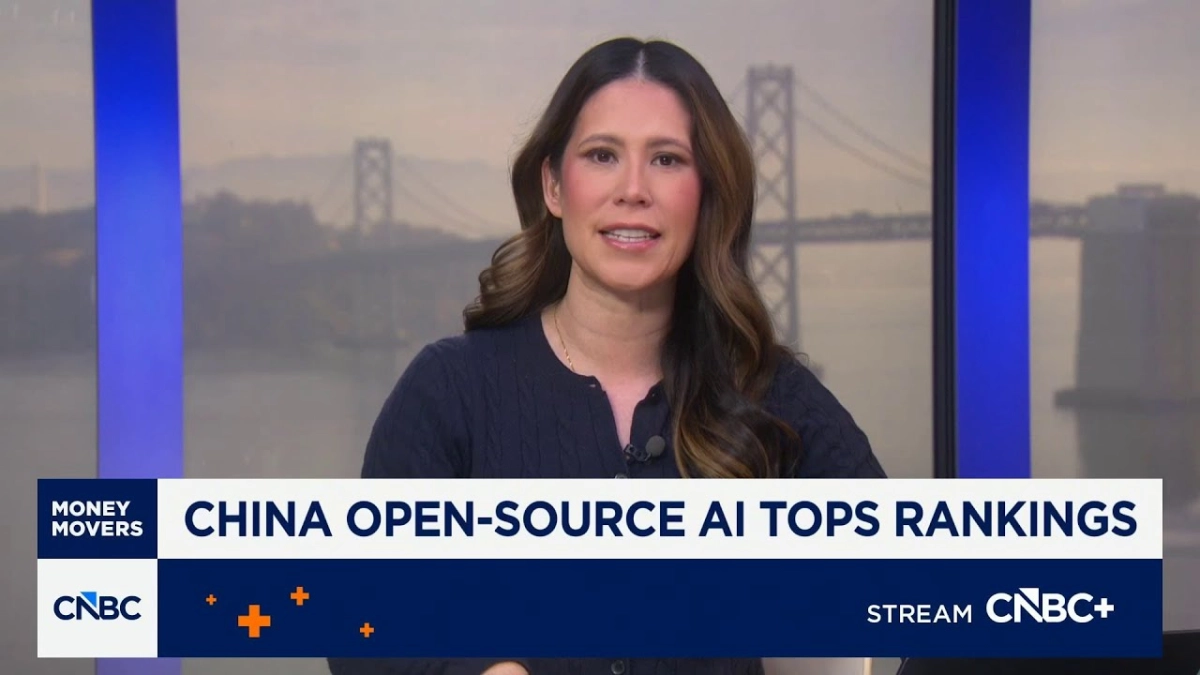
CNBC’s Deirdre Bosa reported on the phenomenal surge in interest surrounding Zhipu’s model during a segment on Tech Check. The immediate trigger for the analysis was Zhipu’s necessity to implement a subscription limit due to overwhelming traffic. This isn't just about a good product; it is a measurable, quantitative signal that Chinese innovation is resonating directly with the developers who drive the global application layer—including those based in the United States.
Zhipu AI confirmed the magnitude of this sudden international traction, citing a dramatic spike in usage that forced them to take protective measures. The company stated in an email, “Our online traffic has increased fivefold... This current subscription limit is a protective measure we have implemented to ensure a stable and high-quality experience for our existing users.” This level of demand is not simply organic growth; it implies that Zhipu’s model offers a quality or functionality proposition compelling enough to overcome the considerable political and technological friction involved in adopting a Chinese-developed tool.
Crucially, the demand is geographically concentrated in the two most powerful technology markets globally. Zhipu’s user base for the GLM Coding Plan is “primarily concentrated in the United States and China, followed by countries such as India, Japan, Brazil, and the United Kingdom.” The fact that the US comprises one half of the primary concentration underscores the depth of the competitive breach. US developers, often early adopters focused purely on performance and cost efficiency, are actively choosing a Chinese model over established, well-funded domestic alternatives like OpenAI’s agents or offerings from Google and Anthropic. This is a direct validation of technical competence in a high-value domain like coding assistance.
This phenomenon highlights China's strategic mastery of the open-source distribution model, which is quickly becoming China's primary competitive edge in AI. While US companies often favor closed, proprietary models to protect their intellectual property and maintain market control, Chinese firms are flooding the ecosystem with high-quality, open-source alternatives. This strategy minimizes the cost barrier for adoption and maximizes global distribution, turning developers into evangelists.
The open model approach offers distinct advantages in the highly sensitive geopolitical climate. As Bosa noted, these open-source models are "cheaper to run, they’re easier to customize, and they’re harder to be cut off from." For developers and enterprises operating globally, or those cautious about future geopolitical sanctions, utilizing a model that is not subject to the whims of US export control policies provides operational resilience. This strategic use of open source is visibly paying off on global benchmarks, with Chinese models dominating the leaderboards for open-source AI performance. Seven of the top ten open models by provider are now Chinese, demonstrating a systemic advantage in accessible, high-performing foundational technology.
Beyond the software layer, Zhipu’s trajectory reveals critical progress in hardware independence. Zhipu announced that its latest model was trained entirely on Huawei chips. This detail is perhaps the most significant indicator of China’s long-term resilience. The US has leveraged export controls on advanced Nvidia GPUs to slow China’s progress in training cutting-edge models. By successfully training a top-tier model on domestically produced hardware, Zhipu—and by extension, the broader Chinese AI ecosystem—is demonstrating a path toward decoupling from the US chip supply chain. This vertical integration, from domestic chip design (Huawei) to foundational model training (Zhipu), creates a self-sustaining AI infrastructure that is highly insulated from external pressure.
The collective response from US market observers and incumbents seems, at times, overly muted—a mild reaction, as one CNBC anchor noted, compared to the initial surprise of DeepSeek’s emergence a year prior. However, the evidence is mounting: Zhipu’s breakout is not a fluke but the second clear signal in a pattern of rapid, high-quality development originating from Chinese labs. For VCs and founders in the West, this demands a serious reassessment of competitive timelines and investment strategies, as the foundational model landscape is rapidly becoming a true duopoly defined by competing strategic approaches to distribution and hardware sovereignty.