

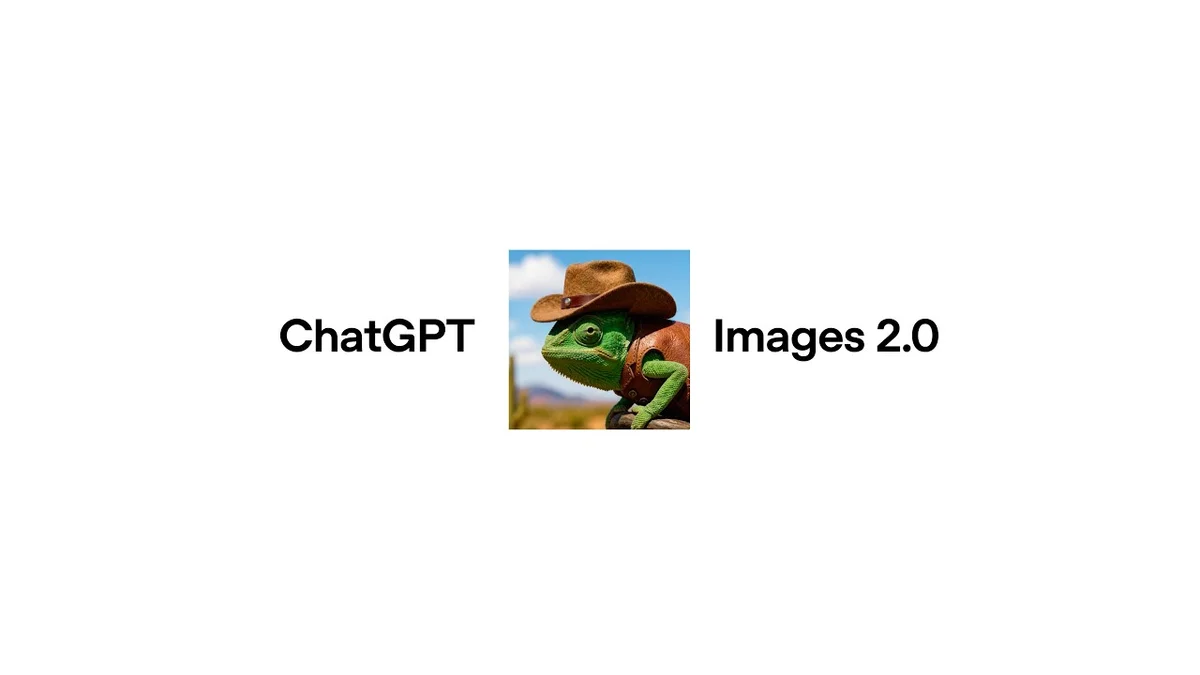
ChatGPT Images 2.0: AI's Chameleon Act

A 'ChatGPT Images 2.0' showcase reveals AI's advanced visual generation capabilities, using the chameleon metaphor for adaptability.

5 min read
Collage of images depicting chameleons in various scenarios, showcasing AI's creative versatility.
Image credit: AI Demonstration· OpenAI Youtube

The advent of sophisticated AI image generation has ushered in an era where digital creativity knows few bounds. A recent showcase, implicitly linked to OpenAI's advancements and branded as 'ChatGPT Images 2.0', dramatically illustrates this point. The video, a rapid-fire montage of diverse scenarios, effectively uses the chameleon as a visual metaphor for AI's burgeoning capacity to adapt, transform, and integrate into virtually any context. It’s a vivid demonstration of how artificial intelligence is rapidly moving beyond its text-based origins to become a powerful tool for visual creation and communication.

While the video does not feature specific speakers or interviews, it functions as a potent visual narrative. The core thesis is clear: AI, particularly in its generative image capabilities, is becoming remarkably versatile and context-aware. The rapid succession of images—a chameleon as topiary, on a magazine cover, in a bowl of jelly, on a surfboard, in a disco, as a wrestler, a cowboy, and even a DJ—all driven by the underlying theme of 'ChatGPT Images 2.0', underscores the AI's ability to produce imagery fitting a vast spectrum of themes and styles. This isn't just about generating a single image; it's about demonstrating an intelligence that can understand and manifest concepts across a wide array of visual requirements.

The full discussion can be found on OpenAI Youtube's YouTube channel.
Related startups

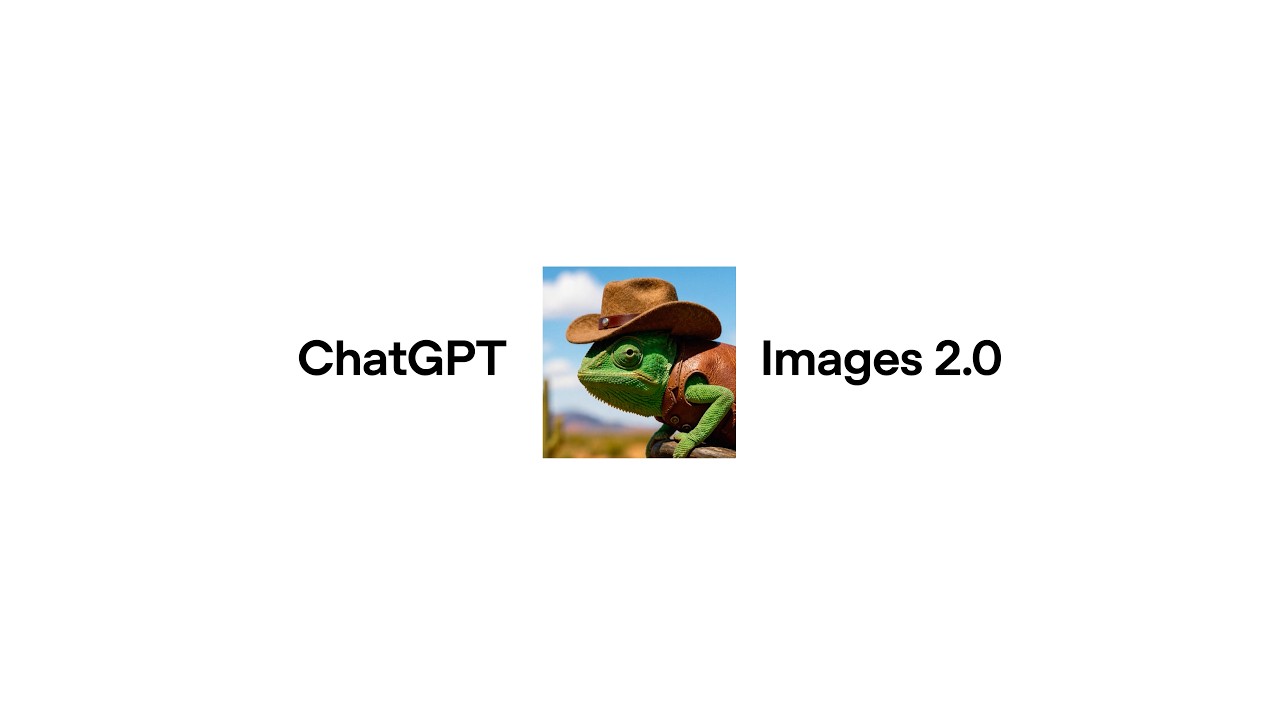
ChatGPT Images — Chameleon - OpenAI Youtube
ChatGPT Images — Chameleon — from OpenAI Youtube

The Chameleon Metaphor: AI's Adaptability

The recurring motif of the chameleon is central to the video's message. Chameleons are renowned for their ability to change color and pattern, allowing them to blend into their surroundings, communicate, and regulate their temperature. This biological marvel serves as a powerful analogy for the capabilities being showcased. Just as a chameleon adapts to its environment, the AI behind 'ChatGPT Images 2.0' is presented as being able to adapt its output to match the specific needs of a prompt or a given context. The seamless transitions between vastly different scenes—from a domestic setting to a wild safari, from a wrestling ring to a music studio—highlight this adaptive quality.

The video suggests that AI is no longer a static tool but a dynamic one. It can be a playful companion, a serious professional, a historical figure, or a futuristic entity, all based on the instructions it receives. This adaptability is crucial for the widespread adoption of AI in creative industries, where flexibility and the ability to pivot are paramount. The imagery implies that users can prompt the AI to generate visuals for anything from marketing campaigns and educational materials to artistic endeavors and personal projects, with the AI chameleonically fitting each need.

Beyond Text: The Visual Frontier of AI

For years, AI's most prominent public-facing achievements were in natural language processing, exemplified by models like ChatGPT itself. However, the visual realm is rapidly becoming a new frontier. The 'ChatGPT Images 2.0' demonstration is a clear signal that generative AI is making significant strides in creating compelling and contextually relevant images. The sophisticated rendering, the attention to detail in each scene, and the sheer diversity of the generated visuals point to a considerable leap in capability.

The video showcases the AI's ability to not only create realistic imagery but also to imbue it with narrative and thematic elements. A chameleon depicted as a wrestler, complete with a mask and dramatic lighting, or as a cowboy under a vast desert sky, suggests that the AI can grasp and visually represent complex ideas and even abstract concepts. This moves beyond simple object generation to a more nuanced form of visual storytelling.

Implications for Content Creation and Startups

The implications of such advanced AI image generation for the startup and creative sectors are profound. For content creators, the ability to generate custom visuals on demand can dramatically reduce production times and costs. This could democratize high-quality visual content, making it accessible to smaller businesses, individual creators, and non-profits. Imagine a startup needing a unique illustration for its app, a blog post requiring a striking header image, or a social media campaign demanding a series of themed visuals—all achievable with advanced generative AI.

For AI startups, this demonstration sets a new benchmark. The ability to deliver on such a wide range of visual styles and thematic requirements indicates a sophisticated underlying model. Companies specializing in AI-driven design tools, visual content platforms, and personalized marketing solutions could find immense value in these capabilities. The 'chameleon act' of AI suggests a future where visual creation is more fluid, more accessible, and more integrated into the daily workflows of many industries.

The Future of AI and Visuals

The video concludes by reinforcing the idea that AI's capabilities are continually expanding. The final scenes, showing the AI generating images for a map, a wrestling event poster, and even educational diagrams, suggest a future where AI is not just a tool for novelty but for practical application across various domains. The progression from simple image generation to more complex, contextual, and even narrative-driven visuals points towards AI becoming an indispensable partner in creative and professional endeavors. The 'ChatGPT Images 2.0' concept, as visually articulated, is a compelling glimpse into that future, where AI's adaptability mirrors the natural world's most remarkable transformations.

© 2026 StartupHub.ai. All rights reserved. Do not enter, scrape, copy, reproduce, or republish this article in whole or in part. Use as input to AI training, fine-tuning, retrieval-augmented generation, or any machine-learning system is prohibited without written license. Substantially-similar derivative works will be pursued to the fullest extent of applicable copyright, database, and computer-misuse laws. See our terms.