

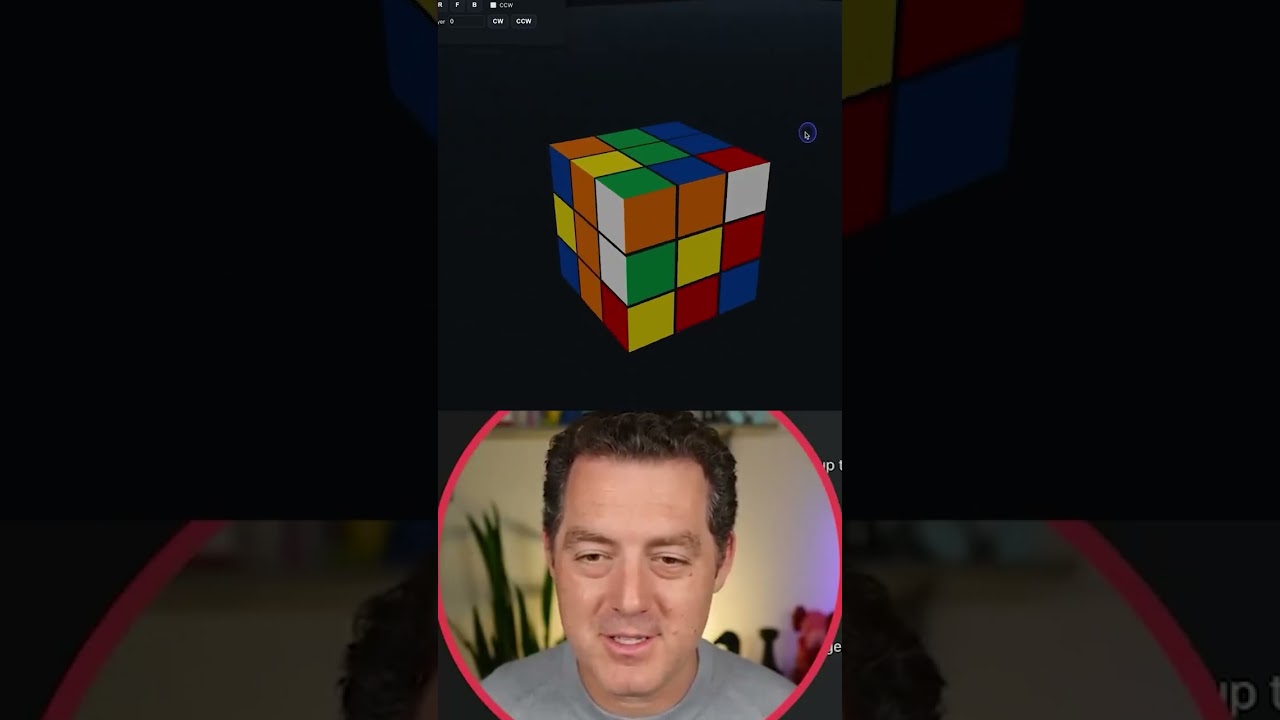
Artificial intelligence has demonstrated a profound leap in its capacity for both creative code generation and complex problem-solving. In a recent demonstration, an AI professional showcased the capabilities of ChatGPT-5, specifically its ability to produce functional, interactive code for a Rubik's Cube simulator and subsequently solve cubes of varying complexity within that simulation.
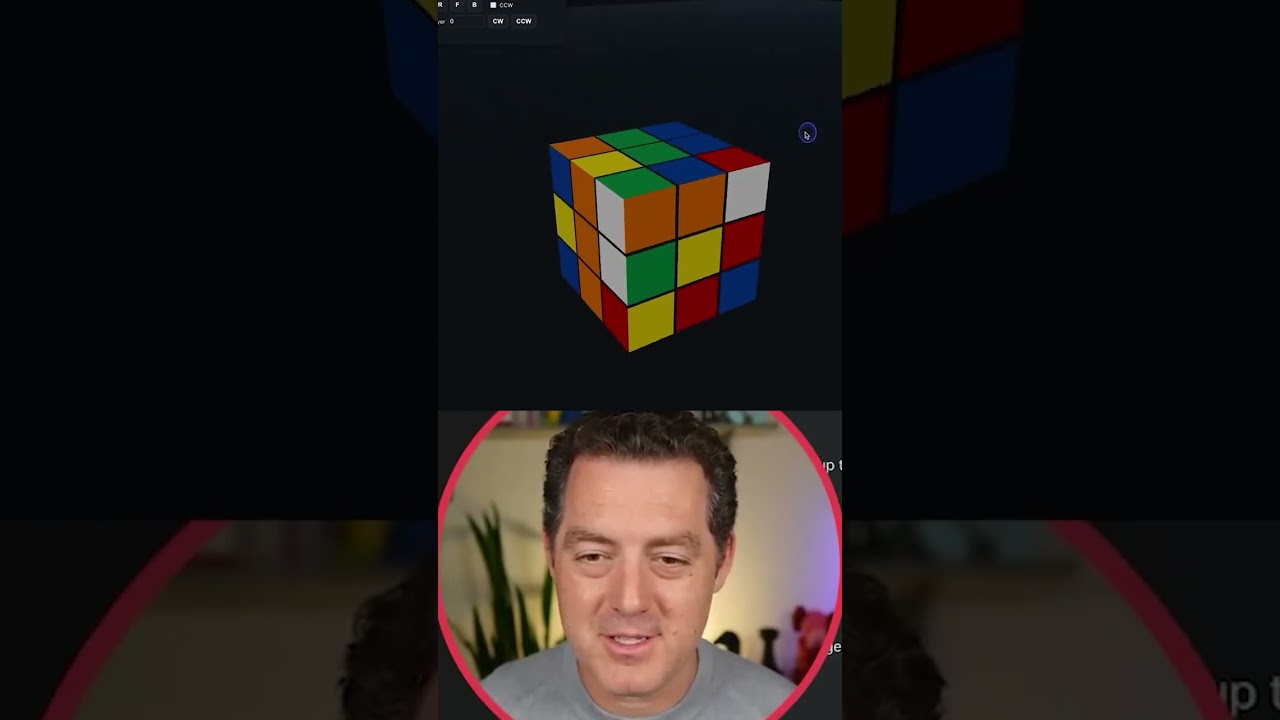
The core of the demonstration began with a direct, ambitious prompt to the model: "Write a complete HTML/JavaScript program using Three.js that renders a fully interactive Rubik's Cube simulation of any size up to 20x20x20." This single instruction highlights a significant advancement in large language models' ability to translate natural language intent into sophisticated, multi-component software. The generated code not only rendered a visually accurate 3x3x3 Rubik's Cube but allowed for seamless, realistic rotations and scrambling, a notable improvement over previous models that often produced "wonky" or non-functional simulations.
Beyond mere rendering, ChatGPT-5 exhibited an impressive grasp of the underlying mechanics required for a functional Rubik's Cube. The simulator allowed the presenter to scramble the cube "perfectly, simulated perfectly," indicating the generated code accurately handled the complex permutations of a real cube. The true test came when the model was tasked with solving the scrambled cube, which it executed with precision, returning the 3x3x3 cube to its solved state. This demonstrated a deep understanding of the problem's logic, beyond just superficial code generation.
The demonstration escalated, testing the model's scalability and robustness. The presenter requested a 5x5x5 cube, which ChatGPT-5 built and subsequently solved with similar efficiency. The ultimate challenge was a massive 20x20x20 cube, a scale that pushes computational and rendering limits. While the demonstrator noted that "the frames per second have dipped" during the scrambling and solving of this colossal cube, the model nonetheless delivered a fully functional and solvable simulation. This performance on an exponentially more complex problem underscores the model's impressive algorithmic reasoning and its capacity to handle large-scale, intricate tasks. The sight of the 20x20x20 cube resolving itself was genuinely remarkable. "Look at that. So cool," the presenter exclaimed, capturing the astonishment at AI's growing prowess. This signals a future where AI can not only understand complex requests but also generate the tools to interact with and solve them, opening new avenues for rapid prototyping and application development in various technical domains.