

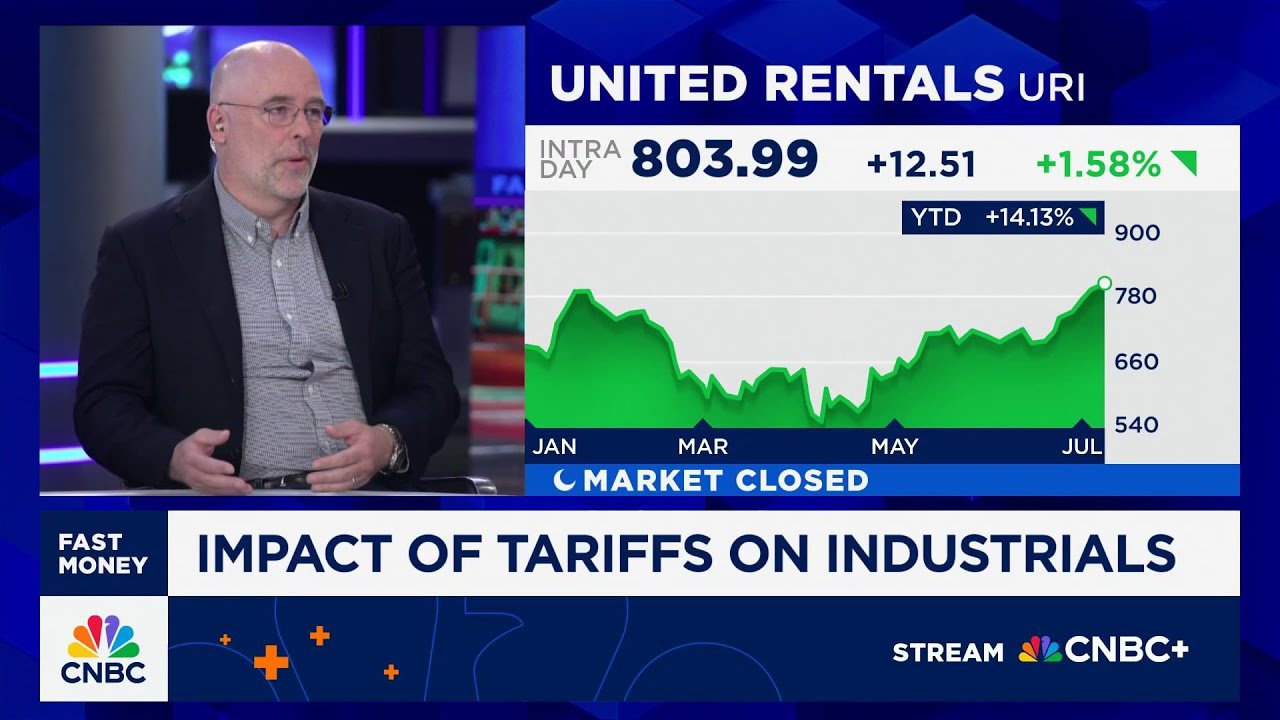
The burgeoning artificial intelligence revolution, often associated with advanced silicon and intricate algorithms, paradoxically hinges on a far more foundational element: brute power. This crucial, often overlooked, aspect of the AI boom positions an unlikely industrial titan, Caterpillar, as a sleeper beneficiary, according to Rob Wertheimer, Founding Partner and Machinery Analyst at Melius Research. Wertheimer, speaking on CNBC's Fast Money, articulated a compelling bull case for Caterpillar, highlighting its evolving role beyond traditional heavy machinery to become a critical infrastructure provider for the AI era.
Wertheimer’s core argument centers on the unprecedented power demands of AI data centers. While many perceive Caterpillar primarily through the lens of excavators and bulldozers, the company possesses a substantial engine business capable of powering these energy-intensive facilities. "The AI wave is just hard to grasp," Wertheimer stated, emphasizing that "the demand just being pushed through in power and grid is stunning and it's creating new opportunities." As existing grid infrastructure struggles to keep pace, data centers are increasingly turning to self-contained power solutions, a niche perfectly suited for Caterpillar’s large-scale generators and power systems.
This strategic pivot towards energy solutions for data centers represents a significant departure from Caterpillar's historically cyclical business model. The company has consciously worked to "steady out some of that cyclicity" by enhancing its aftermarket services and adopting more robust management practices. This ongoing transformation, coupled with the burgeoning AI-driven power demand, offers a more stable and predictable revenue stream, arguably warranting a re-evaluation of its traditional cyclical multiple.
Furthermore, Wertheimer points to a long-overdue mining upcycle as another tailwind for Caterpillar. "You also just haven't seen a mining upcycle in 15 years," he observed, noting that disciplined capital expenditure by mining companies, despite soaring commodity prices like copper, suggests pent-up demand for new equipment. The push for reshoring and strengthening domestic supply chains, influenced by recent political administrations, further amplifies the need for increased mining activity within the United States. While developing new mines is a protracted process, typically spanning 10 to 20 years, the long-term outlook for increased domestic resource extraction is favorable for heavy equipment manufacturers.
This confluence of factors, the explosive, immediate demand for power in the AI sector and the anticipated long-term resurgence in mining and domestic industrial investment, presents a unique opportunity for Caterpillar. It is no longer merely an industrial play but an essential enabler of the digital future, driving a significant re-rating potential for its valuation.