

Castelion develops hypersonic missile systems and raised a $350 million Series B funding round. The round was led by Lightspeed Venture Partners and Altimeter Capital. This new funding follows a $100 million Series A round that closed in January, which Lightspeed also led.
Breaking into the government defense market presents challenges for non-traditional entities. Castelion, founded by former SpaceX executives, aims to transform the production of hypersonic missile systems, a critical national security technology. The company employs an approach similar to SpaceX, focusing on rapid building, frequent testing, and vertical integration to reduce costs. This strategy is intended to accelerate the development and deployment of advanced defense capabilities.
The U.S. Department of Defense has a substantial budget, yet military leaders have expressed concerns regarding China's rapid development and deployment of hypersonic capabilities. These weapons travel above Mach 5, and China's advancements in this area are noted as outpacing the United States. Castelion's proposed solution directly addresses this national security imperative by offering a path to more rapidly field advanced hypersonic weapons.
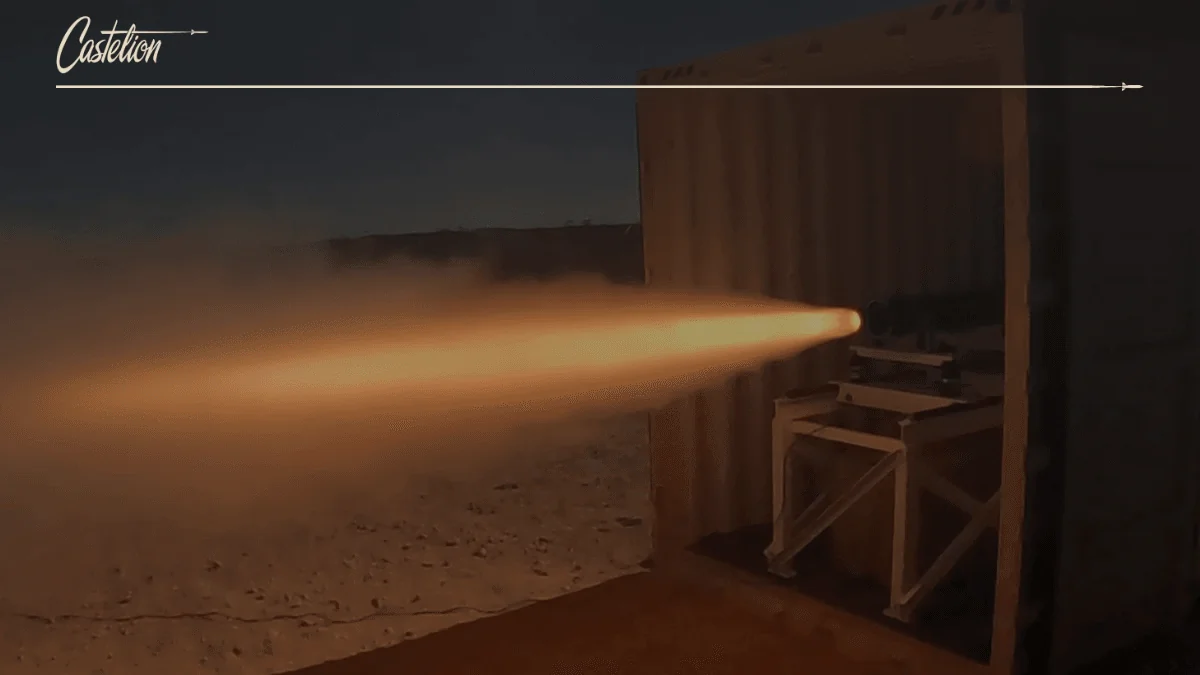
Castelion has secured grants and awards from various DoD offices, including the Air Force Research Laboratory and the Naval Air Systems Command. The company conducted its initial test of a hypersonic vehicle in the Mojave Desert in March. This test aimed to demonstrate the company's ability to field low-cost hypersonic missiles at scale for the government, proving its technical and production capabilities.
The U.S. Army's fiscal year 2026 budget request, published in June, included $25 million under an initiative named Project HX3. This funding supports the development and testing of an "affordable, mass-produced hypersonic weapon" called Blackbeard Ground Launch (GL). The Blackbeard GL is designed to offer approximately 80% of the capability of current long-range hypersonic weapon variants developed by established aerospace primes. Through this contract, the Army indicates a willingness to trade some speed and range for a lower-cost, more rapidly deployable product.