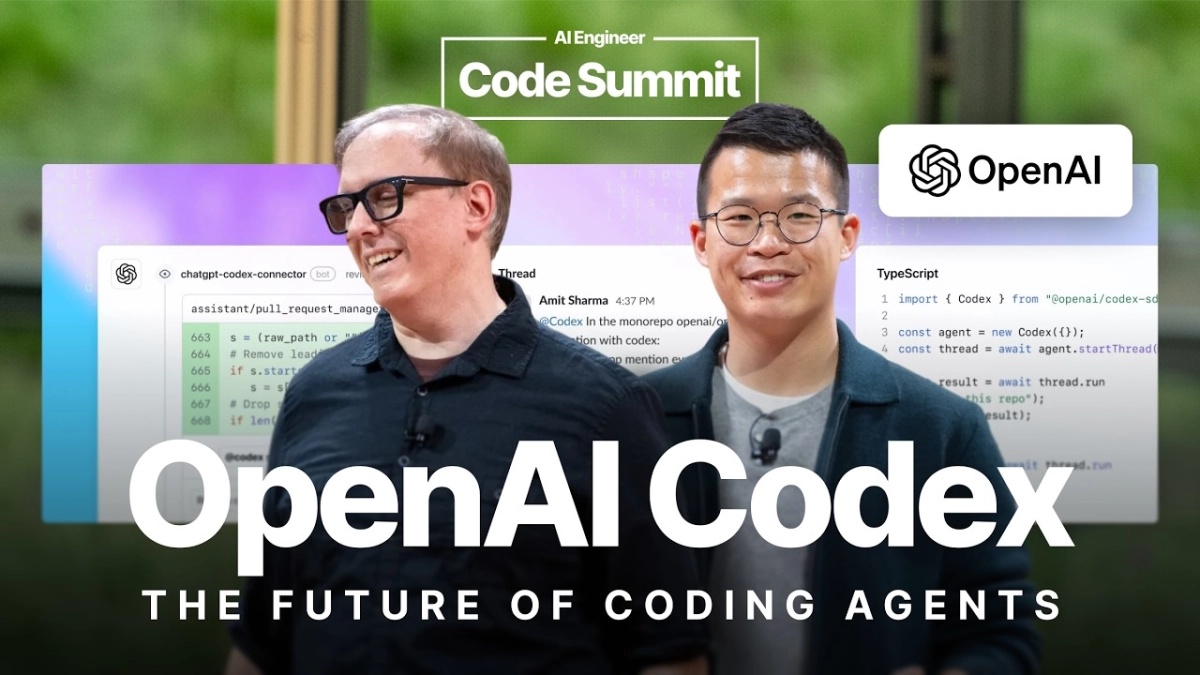
The fundamental challenge in developing sophisticated AI coding agents today is not merely achieving impressive benchmarks, but constructing infrastructure robust enough to withstand the relentless pace of model evolution. This critical insight formed the bedrock of the discussion between Bill Chen and Brian Fioca of OpenAI at a recent AI.Engineer event, where they presented a compelling argument for future-proofing AI development through strategic abstraction. Their framework suggests a departure from the fragile, model-specific architectures prevalent in the industry, advocating instead for a stable, modular approach that maximizes developer velocity and long-term resilience.
Chen and Fioca illuminated a common pitfall: the cyclical rebuilding of infrastructure every time a new model emerges or an existing one is updated. This constant refactoring drains resources and stifles innovation. Brian Fioca articulated this succinctly, stating, "The problem is that every time you have a new model, you have to rewrite your harness." This continuous cycle of adaptation creates significant overhead, preventing teams from focusing on the unique value propositions of their applications. It’s a tactical trap that diverts engineering talent from product differentiation to mere maintenance.
Their proposed solution centers on establishing a stable abstraction layer, exemplified by systems like Codex, which acts as a durable interface between the application logic and the underlying AI models. This layer insulates developers from the granular changes within specific models or providers. Bill Chen emphasized this architectural philosophy, noting, "We're not building a bespoke system for every single model; we're building a system that can consume a wide variety of models." This perspective shifts the paradigm from tightly coupled components to a more loosely coupled, adaptable ecosystem. For founders and VCs, this translates directly into reduced technical debt and a more predictable development roadmap, mitigating the significant risks associated with an unpredictable AI landscape.

A core tenet of their approach is viewing large language models not as monolithic solutions, but as "interchangeable sub-agents." This modularity allows developers to plug different models into the same abstraction layer, leveraging the strengths of various AI providers without re-engineering their entire application stack. This strategic flexibility is paramount in a market where model performance, cost, and availability can fluctuate rapidly. Imagine swapping out a code generation model for a new, more efficient one, or integrating a specialized debugging agent, all without disrupting the core application logic.
This modularity is not just about convenience; it is a strategic imperative for staying competitive. It enables organizations to adopt cutting-edge AI capabilities as they become available, rather than being locked into a particular vendor or model. This agility ensures that products can continuously integrate the best-in-class AI components, maintaining a performance edge and responsiveness to market demands. The ability to seamlessly integrate upstream improvements without breaking existing products is a powerful differentiator.
The ultimate goal of this architectural philosophy is to redirect developer energy towards creating lasting value. By anchoring on shared primitives and stable abstractions, teams can "stop worrying about harness rewrites and focus on the parts of the stack that create lasting value." This means more resources dedicated to domain-specific workflows, enhancing user experience, and developing proprietary features that truly differentiate a product in the market. Instead of chasing the tail of model updates, engineering teams can invest in deeper problem-solving and innovation.
Related Reading
- OpenAI Declares "Code Red" Amid Google's AI Ascent
- Building Cursor Composer – Lee Robinson, Cursor
- Google Antigravity Redefines AI Development with Agent-First IDE
For AI professionals, this framework offers a clear pathway to building more robust and scalable systems. It encourages a disciplined approach to system design, prioritizing resilience and adaptability over short-term hacks. The implications for enterprise adoption are profound, as it provides a blueprint for integrating AI into mission-critical applications with greater confidence and reduced operational risk. This is not just about coding efficiency; it is about building a sustainable foundation for AI-powered businesses.
The insights from Chen and Fioca underscore that the future of AI development belongs to those who master abstraction. By treating models as interchangeable components and building stable interfaces, companies can future-proof their investments, accelerate their development cycles, and maintain a competitive edge in a rapidly evolving technological frontier. This strategic foresight is crucial for any organization aiming to build enduring value in the age of intelligent agents.