


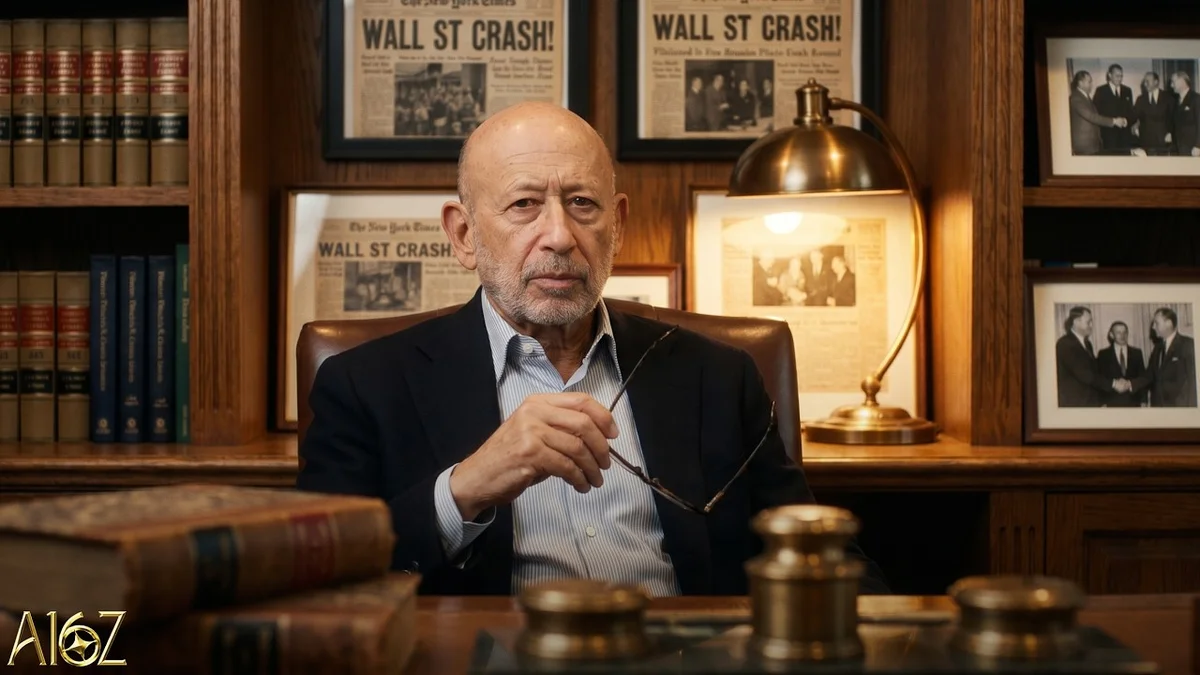
Lloyd Blankfein, the former CEO and current Chairman of Goldman Sachs, joined David Haber, General Partner at Andreessen Horowitz (a16z), on 'The a16z Show' to discuss the profound impact of artificial intelligence on the future of finance. Blankfein, a titan of Wall Street with decades of experience navigating complex financial markets, offered his perspective on how AI is poised to reshape not only the financial industry but also the very nature of risk management and strategic decision-making.
The Dual Role of Finance Professionals
Blankfein opened by framing the core function of anyone in finance: to make money, both for themselves and for their clients. This fundamental goal, he explained, requires a delicate balance between taking calculated risks and rigorously managing potential downsides. He elaborated on this by stating, "You're doing two things. You're trying to make money for yourself and your clients, and you're trying to be a risk manager." This dual mandate, he suggested, is amplified by the advent of advanced technologies like AI, which can process information and execute trades at an unprecedented speed and scale.
Navigating Uncertainty with AI
The conversation then shifted to how AI might alter the landscape of risk management. Blankfein drew a parallel between the current technological shift and historical periods of significant change, noting that while the underlying principles of finance remain, the tools and their implications are evolving rapidly. He emphasized that the challenge isn't just about predicting the future but about building robust systems and contingency plans to navigate inevitable uncertainties. "Most of what we do with respect to risk is not so much predicting, it's planning," Blankfein remarked, underscoring the importance of foresight and adaptability in a rapidly changing world.
The Power and Peril of AI in Finance
Blankfein touched upon the immense potential of AI to streamline processes and unlock new opportunities within finance. However, he also cautioned against a purely optimistic outlook, highlighting the need to understand and mitigate the risks associated with these powerful tools. He mused on the idea that AI might not necessarily make us smarter, but rather, it could turn us into pets if we are not careful about its deployment and our reliance on it. He suggested that the true value of AI lies in its ability to augment human capabilities, not replace them entirely, especially in areas requiring nuanced judgment and ethical consideration.
Personal Reflections on Risk and Resilience
Later in the discussion, Blankfein shared personal anecdotes that provided insight into his own approach to risk and resilience. He recounted experiences from his career, including navigating financial crises and leading a global institution through periods of intense market volatility. He also touched on his own upbringing, noting a modest background that instilled in him a sense of pragmatism and a deep understanding of the value of opportunity. These reflections offered a glimpse into the personal philosophy that has guided his long and distinguished career.