

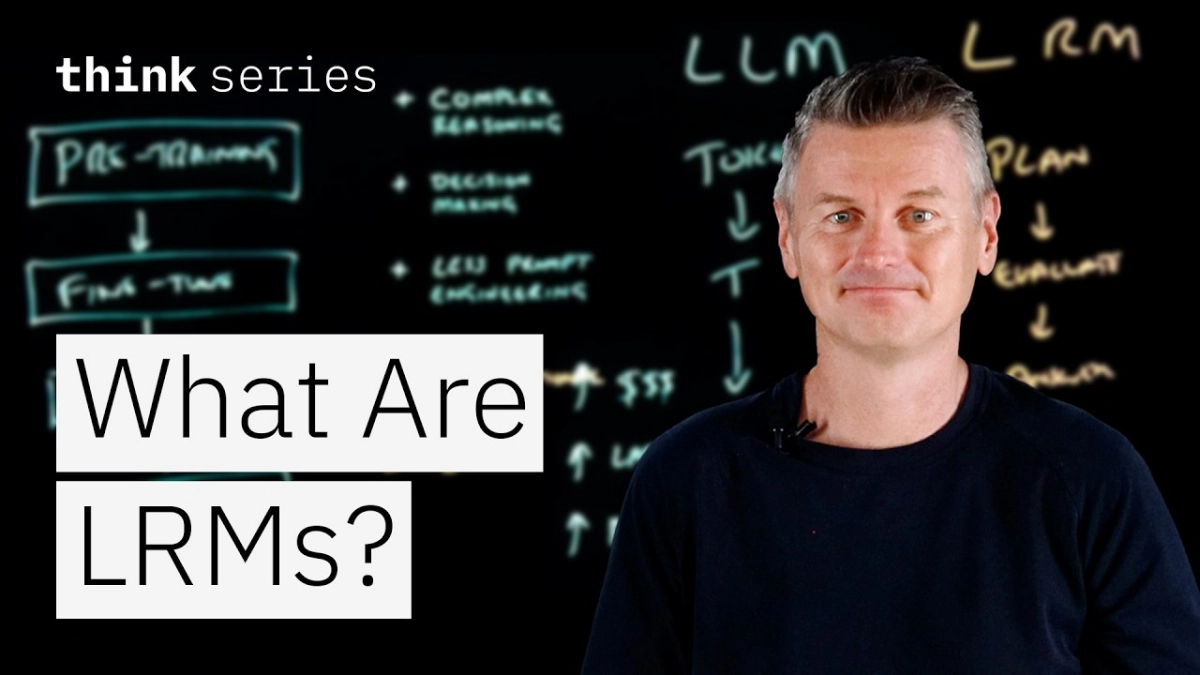
“AI models are no longer just spewing language out at you as fast as they can predict the next word in a sentence, they are taking time to think through responses,” explained Martin Keen, a Master Inventor at IBM, in a recent presentation. This compelling insight underscored a pivotal shift in the artificial intelligence landscape, moving beyond the statistical pattern-matching of Large Language Models (LLMs) towards the more deliberative capabilities of Large Reasoning Models (LRMs). Keen’s articulate explanation, delivered in a visually engaging style, provided a crucial distinction for founders, venture capitalists, and AI professionals seeking to understand the next frontier of AI development.
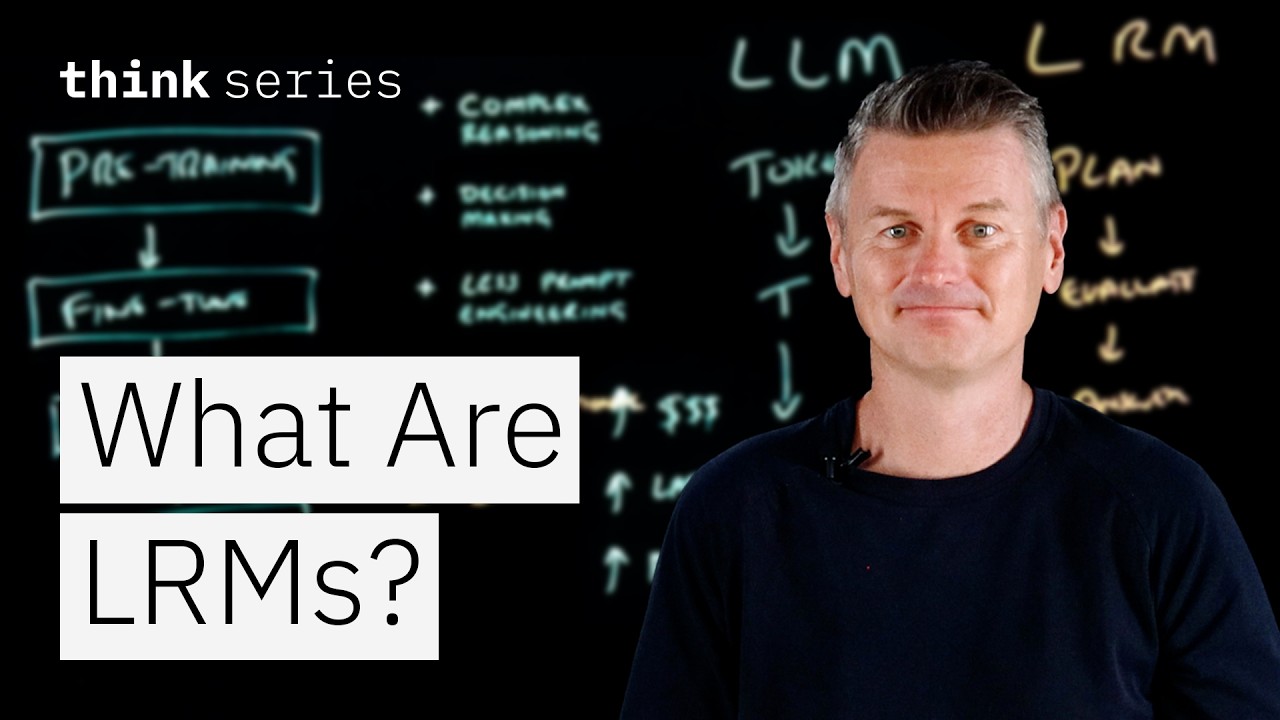
Keen precisely articulated the fundamental difference between these two paradigms. While LLMs generate human-like text by predicting the most statistically probable next token in a sequence, LRMs introduce an internal deliberative process. They "think before they talk," engaging in a multi-step cognitive journey that involves planning, evaluating options, and double-checking calculations within a "sandbox" before producing an answer. This reflective approach stands in stark contrast to the reflexive nature of traditional LLMs, which operate primarily on associative patterns learned from vast datasets.
For routine tasks, such as drafting a social media post, an LLM’s immediate, statistically-driven response is often perfectly adequate. However, for problems demanding genuine analytical depth—like debugging a complex stack trace or meticulously tracing cash flow through intricate corporate structures—the limitations of mere prediction become apparent. In these scenarios, LRMs truly shine.
The LRM’s internal "chain of thought," as Keen described it, enables the model to "test hypotheses and discard dead ends and land on a reasoned answer rather than just following a statistically likely pattern." This systematic exploration of potential solutions, weighing different paths and validating intermediate steps, allows LRMs to deliver more reliable and robust outcomes in critical applications where accuracy and logical consistency are paramount.
The development of these sophisticated reasoning capabilities hinges on a refined training methodology. An LRM typically begins its journey as an existing LLM, having undergone extensive "pre-training." This foundational phase involves exposure to billions of web pages, books, code repositories, and other data, equipping the model with broad language skills and a comprehensive knowledge base. Following this initial immersion, the model enters a crucial stage of "reasoning-focused tuning."
During this fine-tuning, LRMs are fed meticulously curated datasets containing complex logic puzzles, multi-step mathematical problems, and intricate coding challenges. Crucially, each example is accompanied by a full "chain of thought" answer key, teaching the model not just the solution, but the entire logical progression required to arrive at it. This process essentially teaches the model "to show its work," fostering a structured approach to problem-solving.
Further refinement often involves reinforcement learning (RL), where the model is tasked with solving novel problems. This learning can be guided by "Reinforcement Learning from Human Feedback" (RLHF), with human evaluators providing "thumbs up or thumbs down" for each step in the model’s reasoning process. Alternatively, specialized "Process Reward Models" (PRMs) can automatically judge the quality of individual reasoning steps. This iterative feedback loop, whether human or AI-driven, guides the LRM to generate thought sequences that maximize positive reinforcement, continuously improving its logical coherence. Another technique, "distillation," allows a larger, more advanced "teacher model" to generate optimal reasoning traces, which are then used to efficiently train smaller or newer LRM models, transferring complex reasoning abilities while enhancing computational efficiency.
Related Reading
- Orchestrator Agents and Model Context Protocol: The Future of AI Automation
- OpenAI's Multi-Cloud Gambit and Nvidia's Unwavering AI Supremacy
- Amazon's $38 Billion OpenAI Deal Reshapes AI Cloud Dominance
However, the enhanced reasoning capabilities of LRMs come with inherent trade-offs, primarily in terms of computational cost and latency. Each additional internal "pass through the network," self-check, or exploratory search branch during an LRM's deliberation consumes more inference time and GPU resources. Keen explicitly stated, "LRMs, they buy you deeper reasoning at the cost of a longer, pricier think." This translates directly to increased demands on VRAM, higher energy consumption, and consequently, a larger bill from cloud providers, alongside an inevitable increase in response latency. Therefore, the strategic deployment of an LRM necessitates a careful cost-benefit analysis, weighing the value of superior accuracy and complex reasoning against higher operational expenses and potentially slower interaction speeds.
Despite these considerations, the strategic implications of LRMs are profound. They excel in domains requiring multi-step logic, intricate planning, and abstract reasoning, making them indispensable for high-stakes decision-making where precision and reliability are non-negotiable. Furthermore, LRMs generally require "less in the way of prompt engineering." Unlike traditional LLMs, where crafting the perfect prompt can be an arcane art, LRMs inherently grasp the need for a structured, step-by-step thought process. This intrinsic capability reduces the burden on engineers to "sprinkle in magic words" to elicit a reasoned response, streamlining development and accelerating deployment for complex problem domains. The most intelligent AI models today, those consistently achieving the highest scores on advanced benchmarks, are increasingly these reasoning models.

