

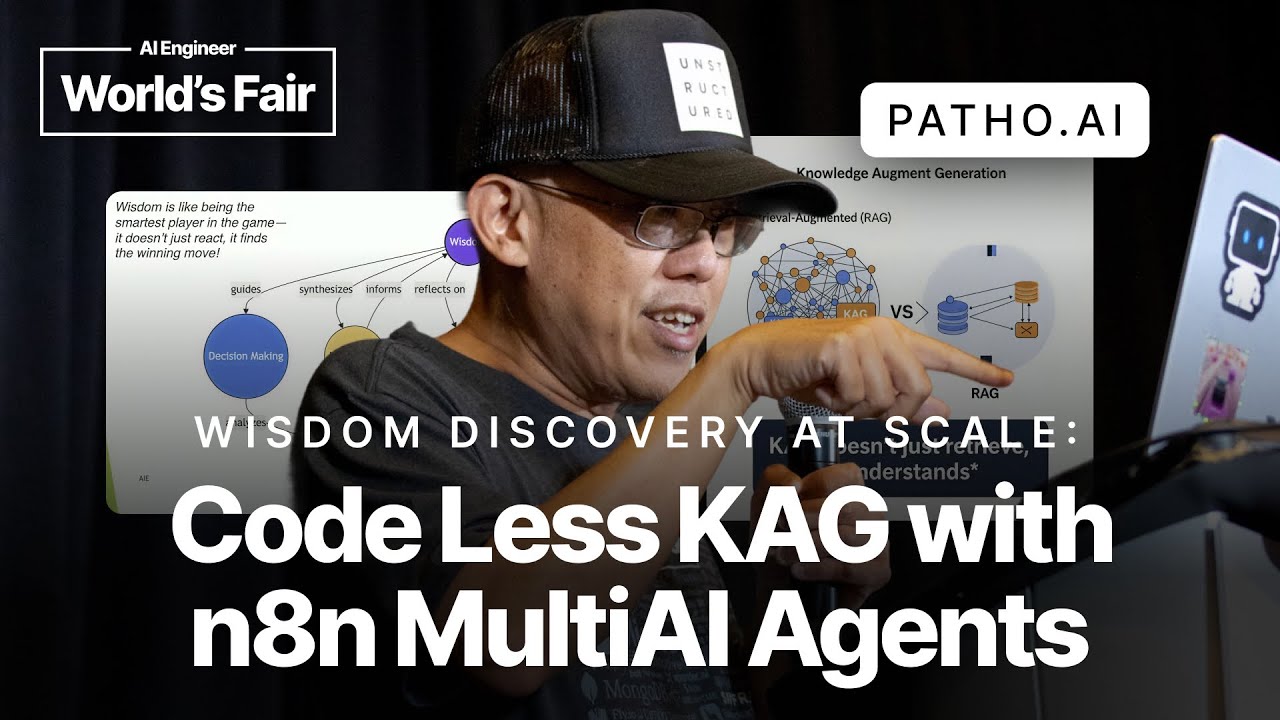
Chin Keong Lam, founder and CEO of Patho AI, presented a compelling vision at the AI Engineer World's Fair in San Francisco, arguing that the future of intelligent systems lies not just in retrieving information, but in understanding it. His firm's work on Knowledge-Augmented Generation (KAG) systems, particularly those powered by a "Wisdom-Driven Knowledge Graph," aims to move AI beyond simple Retrieval-Augmented Generation (RAG) to provide expert-level advice and nuanced insights. This shift is critical for enterprises seeking AI that can genuinely reason and contribute strategically.
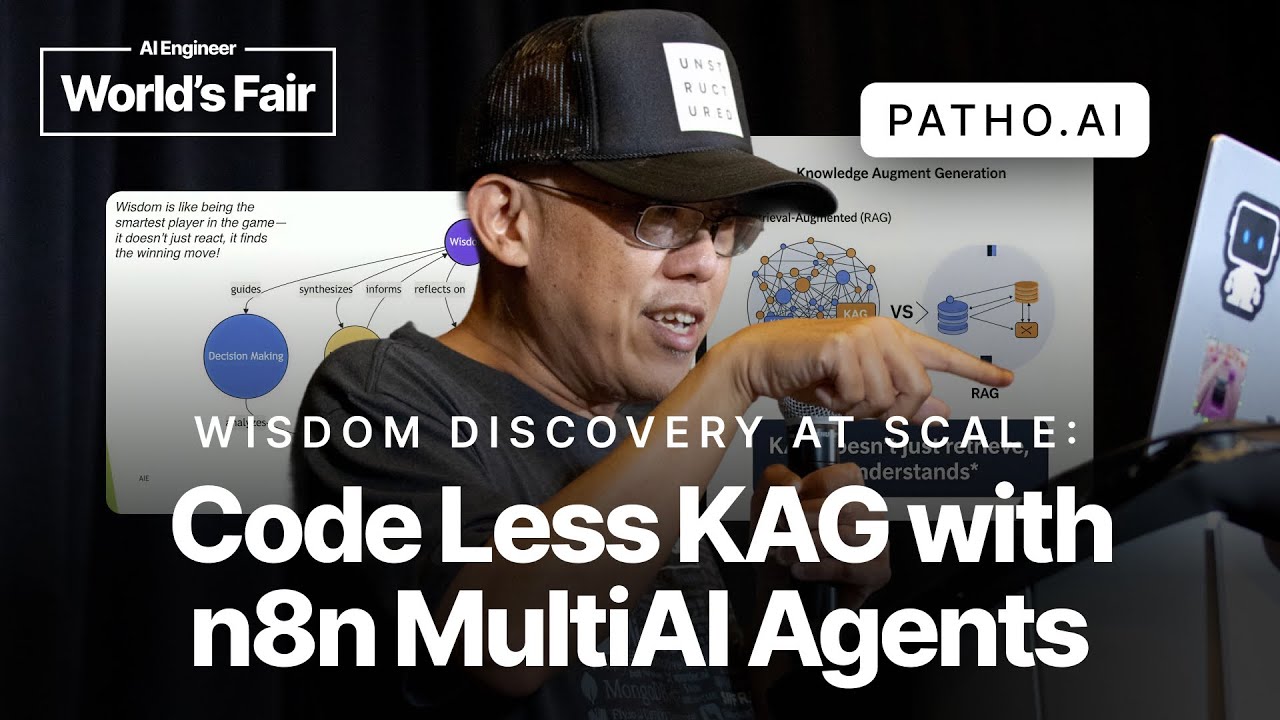
The fundamental distinction Lam highlighted is profound: "KAG doesn't just retrieve, it understands." While traditional RAG systems excel at semantic similarity searches within unstructured data, they often falter with complex numerical calculations or logical reasoning. KAG, by contrast, integrates structured knowledge graphs, allowing for more accurate and insightful responses. This structured approach is essential for deriving meaningful conclusions from interconnected data.
Patho AI’s "Wisdom-Driven" approach conceptualizes wisdom not as static data, but as an active force guiding decision-making. Lam illustrated this with a compelling diagram, showing how "Wisdom isn’t passive. It guides decisions, helping us choose wisely." This wisdom node synthesizes knowledge, experience, and insight, reflecting on situations and deriving informed actions. Crucially, it incorporates a feedback loop, allowing the system to continuously learn and deepen its understanding, much like a growing tree strengthens its roots.
This sophisticated framework finds practical application in areas like competitive analysis. Instead of a chatbot merely fetching competitor data, Patho AI builds an "advisory" system designed to turn raw data into strategic dominance. This Wisdom-Driven AI can answer complex questions such as "How can I beat my competitor based on my current market share?" by analyzing market data, past campaigns, and industry insights, then synthesizing these elements to suggest actionable strategies. It's about empowering leadership with proactive, informed decisions rather than just raw facts.
The superiority of Knowledge Graphs over vector-store RAG becomes particularly evident in quantitative analysis. Knowledge Graphs offer enhanced contextual understanding by capturing complex relationships, improved accuracy through structured data and semantic relationships, and inherent scalability. They also boast rich query capabilities, supporting multi-faceted queries that uncover hidden patterns, and enable seamless integration of diverse data sources, structured, semi-structured, and unstructured. For example, when asked for Apple's revenue percentage change between 2021 and 2022, a traditional RAG might return a list of passages. A Knowledge Graph, however, can precisely calculate and provide the exact numerical answer, in this case, "15.22%," directly from its structured financial data. This precision is paramount in business applications where accuracy dictates success.