

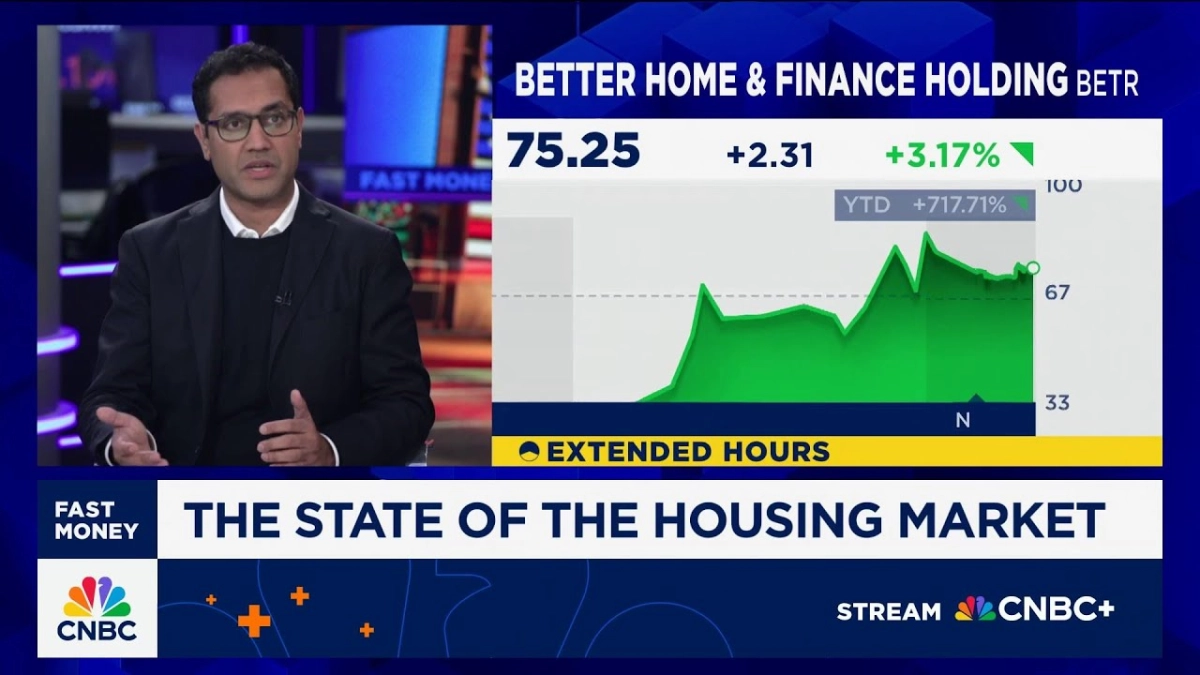
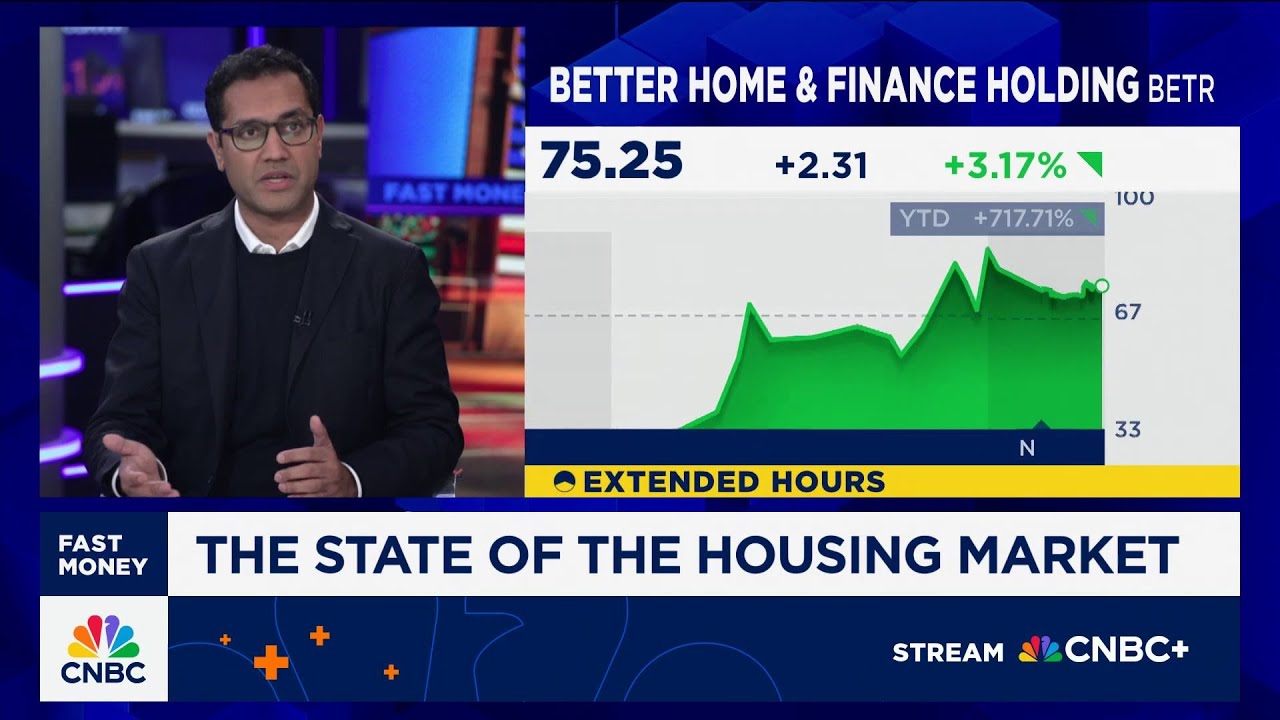
“Real AI is when you can take massive amounts of cost out of the system and deliver that back in savings to the consumer.” This assertion by Vishal Garg, Founder and CEO of Better.com, cuts through the current hype surrounding artificial intelligence, laying bare the true promise of the technology for established, often inefficient, industries. His recent appearance on CNBC’s Fast Money, alongside panelists Melissa Lee, Karen Finerman, Guy Adami, Dan Nathan, and Tim Seymour, offered a candid look into how Better.com is leveraging AI to disrupt the housing market and mortgage lending, particularly in the realm of refinancing and home equity.
The core of Better.com’s strategy, as articulated by Garg, is a profound commitment to cost reduction through technological innovation. He highlighted a significant market opportunity: an estimated 20 million Americans hold mortgages with rates exceeding 7%, acquired over the past three years. With Better.com offering rates around 6.2%, the potential for refinancing savings is substantial. For a $400,000 loan, this translates to roughly $3,200 in interest savings annually, a compelling proposition in an inflationary environment. This efficiency is not merely incremental; it's foundational to Better.com’s operational model.
The stark difference in operational efficiency forms the bedrock of Better.com’s competitive edge. Garg revealed a staggering disparity in loan origination costs: "The average mortgage company, it costs them about $12,000 to make a mortgage. It costs Better.com $3,000 to make a mortgage." This 75% reduction in cost per loan is a direct result of their deep integration of AI, allowing them to pass on these savings to consumers through more competitive rates. This isn’t about superficial AI enhancements; it’s about a complete re-engineering of the underlying processes.
At the heart of Better.com’s AI infrastructure is Betsy, their voice-based AI loan assistant. Trained on 12 million phone calls and equipped with comprehensive underwriting criteria across all investors, Betsy can calculate savings and present optimal options to borrowers. She operates 24/7, serving as a tireless and highly informed resource.
Garg further elaborated on the untapped potential in the home equity market, noting that American families possess "$32 trillion of tappable home equity" and carry "$18 trillion of debts," with half of that debt accumulated post-pandemic. Better.com’s home equity product, launched in 2023, is already two-thirds the size of industry leader Figure, which began in 2018, demonstrating an accelerated growth trajectory. The average family refinancing through home equity with Better.com is reportedly saving $1,100 per month, showcasing the tangible financial benefits derived from their AI-driven efficiencies.