7 Best Neobanks and Digital Banks: Chime, Monzo, Revolut and More

Most neobank comparisons skip the question that matters: is it actually a bank? Chime and Revolut US both say they are not. We compare seven digital banks on our 0-100 StartupHub Scores, funding and headcount, with homepage screenshots captured today. Chime leads at 77.

Chime homepage advertising fee-free banking, cash back and savings
The Chime homepage, captured 5 August 2026.

The best neobank for you depends on a question most comparisons skip entirely: is it actually a bank? Some of the biggest names in digital banking are not, and say so in the small print on their own homepage. That single distinction changes what happens to your money if the company fails.

StartupHub.ai tracks all of these as companies, so this comparison runs on data most review sites do not publish: capital raised, headcount, and the 0-100 StartupHub Score we assign across the directory. Chime leads this group at 77. Every screenshot below was captured on 5 August 2026.

Read the Bottom of the Homepage First

Two of the largest names here carry an explicit disclaimer. Chime's homepage states, in its own footnote, "Chime is a fintech, not a bank." Revolut's US pages state that Revolut is not a bank, and that US savings services are provided through Cross River Bank, a Member FDIC institution.

That does not make either one unsafe. It means your protection comes from a partner bank's insurance rather than from the app itself, and it is worth understanding which entity actually holds your deposit. By contrast, Monzo, Starling, N26 and bunq operate as licensed banks in their home markets, and Varo markets a "Varo Bank Account" in the US.

Whatever you pick, check which institution holds the money and what deposit insurance applies where you live. That is the single most useful five minutes of research in this category.
1. Chime: Best for Fee-Free US Banking

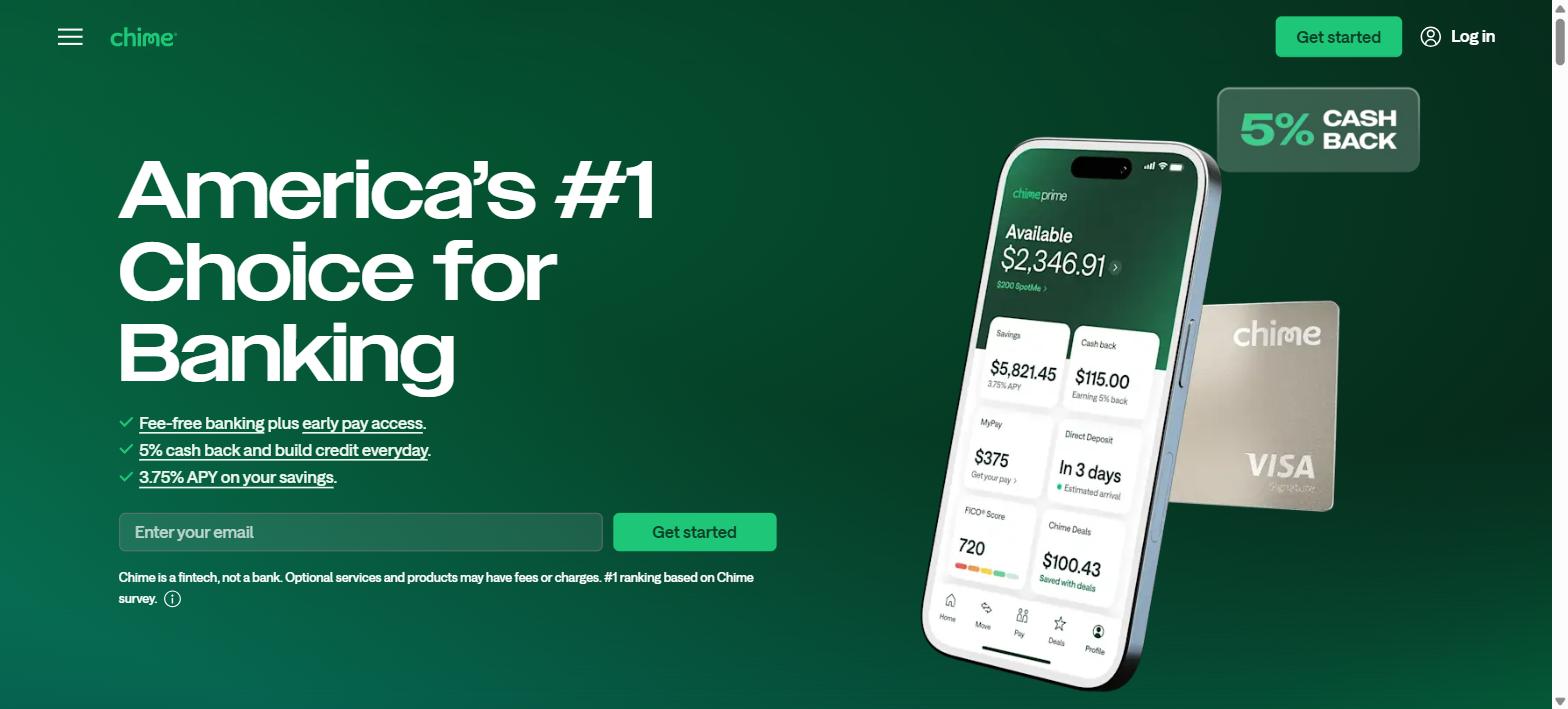
Chime homepage advertising fee-free banking, cash back and savings APY
The Chime homepage on 5 August 2026.

Chime holds the highest StartupHub Score in this comparison at 77, and it is not close. Founded in 2012 in San Francisco, it has raised roughly $12.7 billion, more than every other company here except none: that is the largest funding total in this group by a wide margin. It runs on about 1,500 employees, which is a strikingly small team for that scale and tells you how much of the banking stack sits with partners.

Its pitch today is fee-free banking with early access to your pay, cash back on spending, credit building, and interest on savings. It markets itself as "America's #1 Choice for Banking" based on its own survey, and the card is a Visa.

The catch to understand: Chime is a fintech, not a bank, by its own statement. Deposits sit with partner banks.

Best for: US customers who want no monthly fees, early payday and credit building in one app. Not usable for sending money abroad.

2. Monzo: Best UK Everyday Account

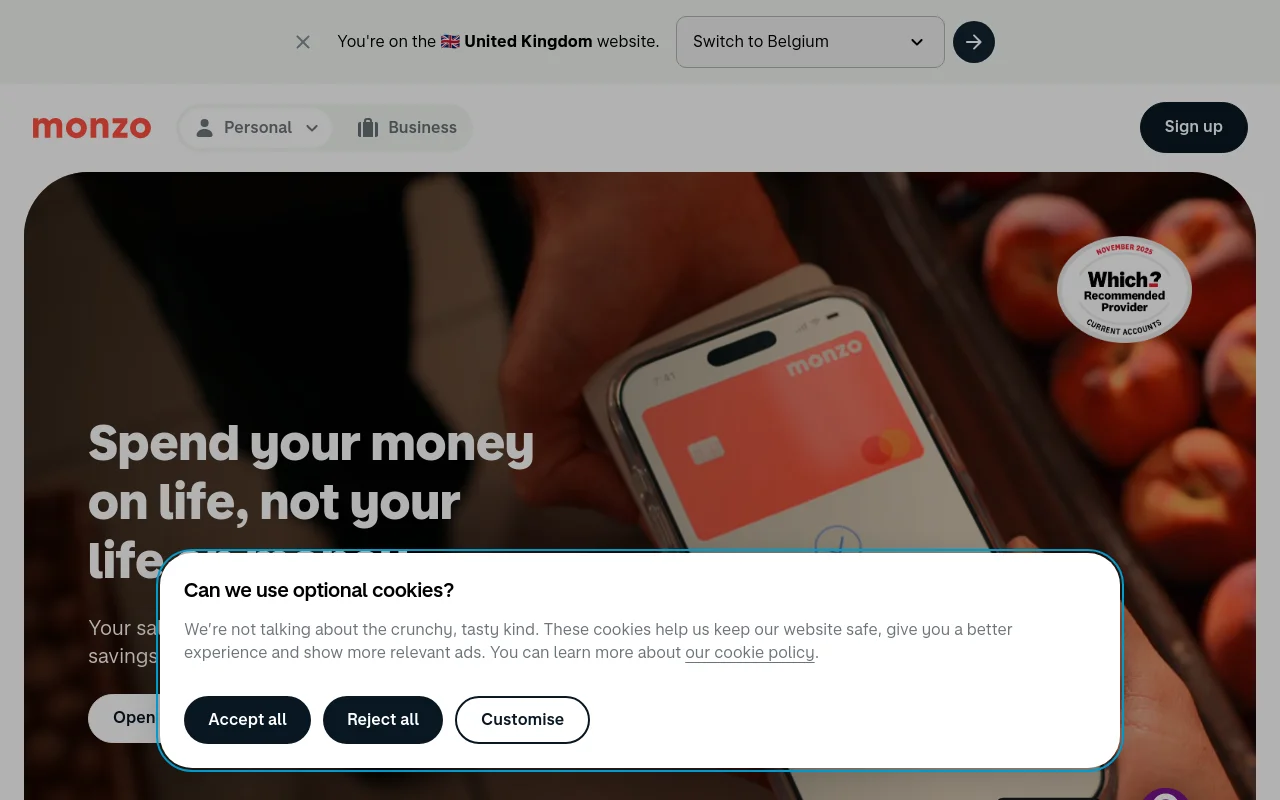
Monzo homepage showing its coral card and Which Recommended Provider badge
The Monzo homepage on 5 August 2026, cookie banner included.

Monzo scores 71, second highest here. Founded in 2015 in London, roughly 2,800 employees, about $1.78 billion raised. It carries a Which? Recommended Provider badge for current accounts on its homepage, which is a meaningful independent signal in a category full of self-declared awards.

Monzo's strength has always been the everyday experience: instant spending notifications, budgeting, savings pots and a genuinely good app. It runs both personal and business accounts.

Best for: UK residents who want their main current account to be pleasant to use, with real budgeting built in rather than bolted on.

3. Varo: Best US Alternative to Chime

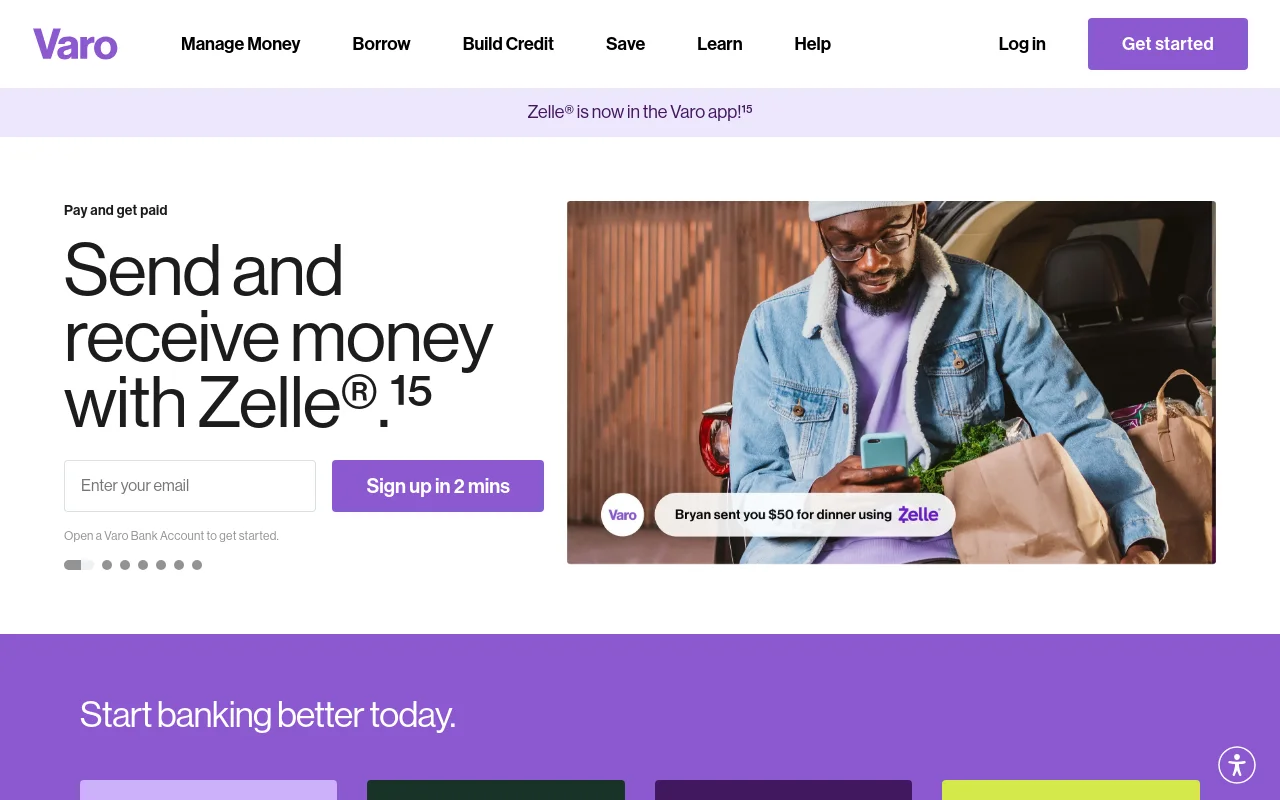
Varo homepage promoting sending and receiving money with Zelle
The Varo homepage on 5 August 2026.

Varo scores 70, a whisker behind Monzo, on a much smaller base: about 431 employees, founded 2015, headquartered in Salt Lake City. It covers the same ground as Chime, spending, borrowing, saving and credit building, and its homepage currently leads on Zelle being available in the app for sending and receiving money.

That Zelle integration is exactly why Varo belongs here and not in a money transfer comparison: Zelle is a US domestic network. It is excellent for splitting rent with someone in Ohio and useless for sending money to Manila.

Best for: US customers who want a Chime alternative and use Zelle regularly.

4. N26: Best for Banking Across the Eurozone

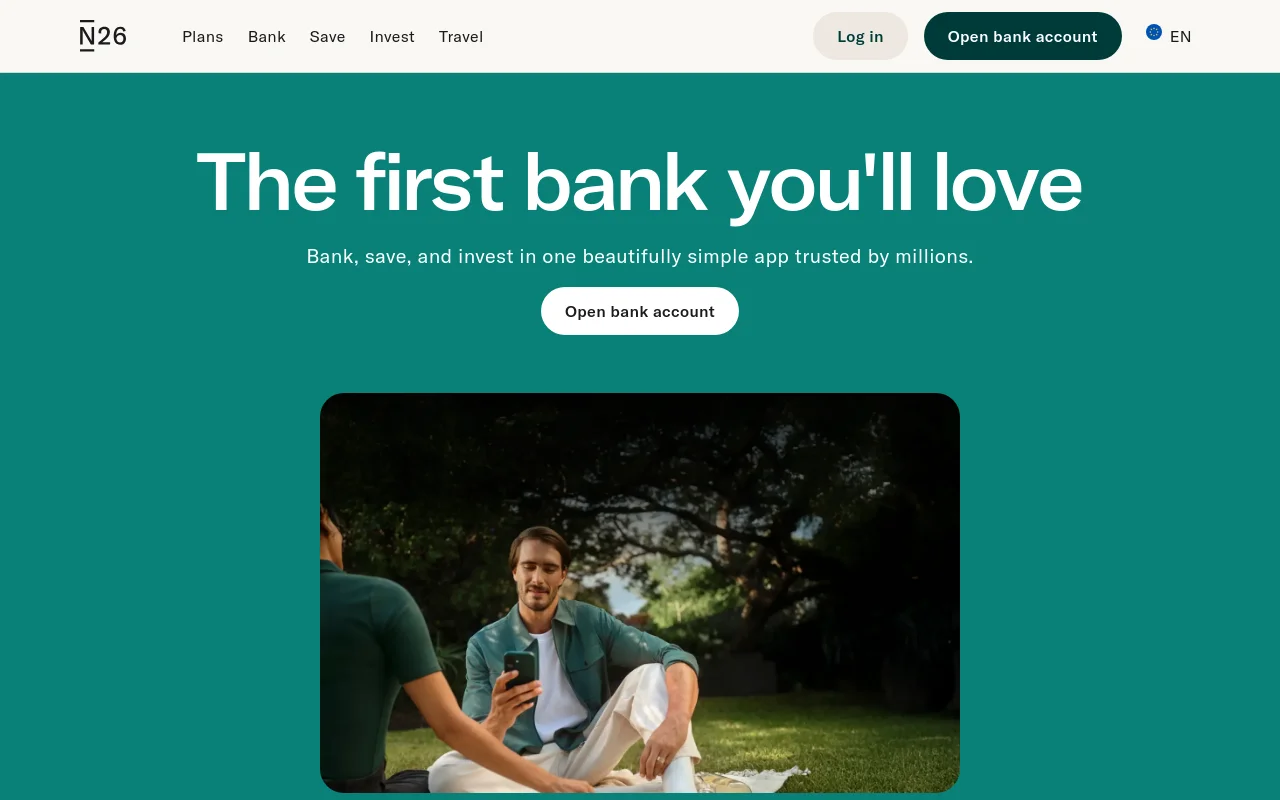
N26 homepage with the tagline The first bank you will love
The N26 homepage on 5 August 2026.

N26 scores 66. Founded in 2013 in Berlin with around 1,851 employees, it is the most established pure digital bank in the eurozone, and unlike Chime it presents itself plainly as a bank. Its current product set spans banking, saving, investing and travel features, sold through tiered plans.

Best for: people living in the eurozone who want a licensed bank account that works the same across borders within Europe.

5. Starling Bank: Best UK Business Banking

Starling Bank also scores 66. Founded 2014 in London, around 1,000 employees, roughly $742 million raised. Its homepage carries a Which? Recommended Provider badge, the Current Account Switch Guarantee and FSCS protection marks, which is the full set of UK trust signals.

Starling's reputation rests heavily on its business accounts, where it consistently rates among the strongest UK options for sole traders and small limited companies.

Best for: UK sole traders and small businesses, and anyone who wants a licensed UK bank with FSCS cover rather than a fintech wrapper.

6. Revolut: Best for Multi-Currency and Travel

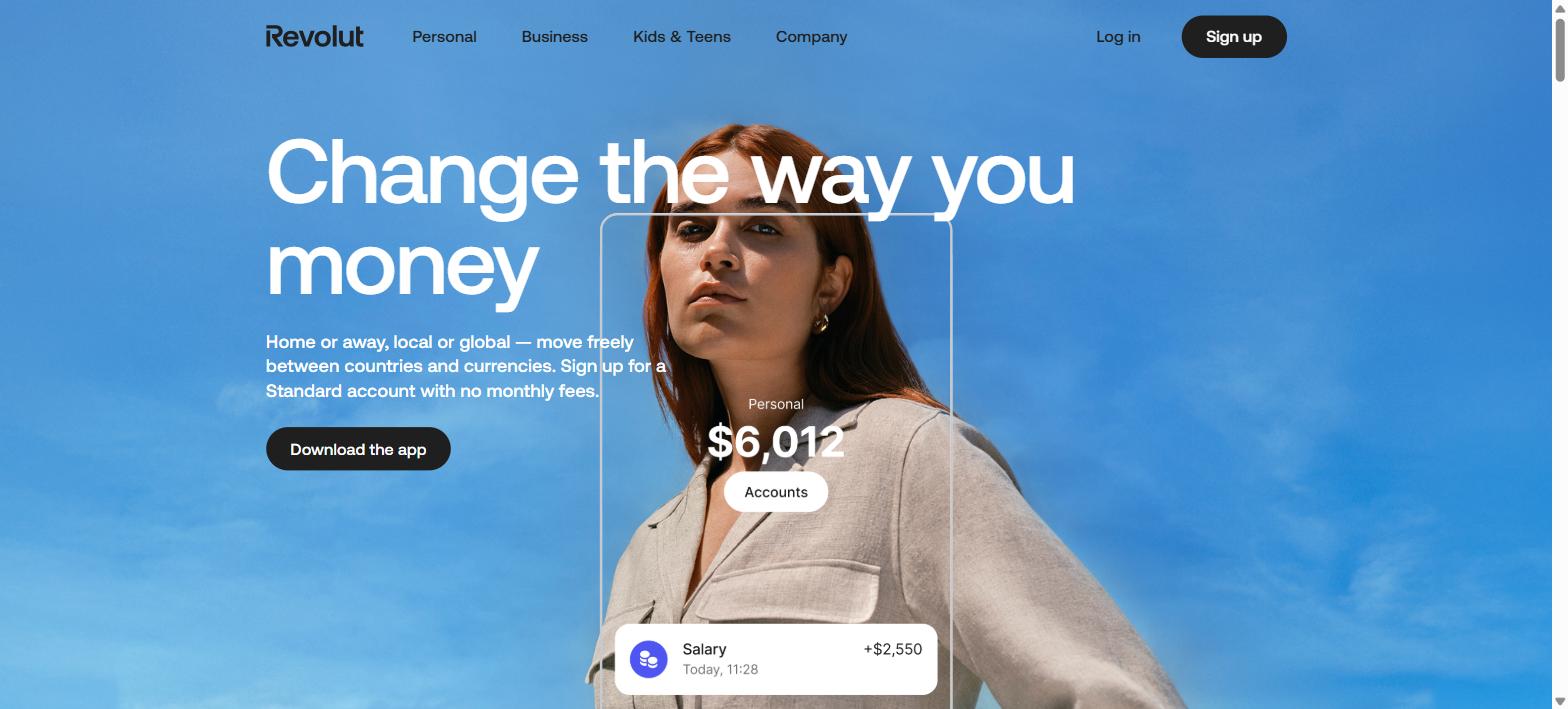
Revolut homepage with the tagline Change the way you money
The Revolut homepage on 5 August 2026.

Revolut scores 62 and has raised about $5.9 billion with roughly 8,000 employees, founded 2015 in London. Its site states more than 75 million customers worldwide. It is the widest product surface here: spending, saving, investing, currency exchange, Kids and Teens accounts for ages 6 to 17, and a separate Revolut Business arm.

Its published US plan structure as of today is Standard at $0 per month, Premium at $9.99 and Metal at $16.99. Currency exchange is capped at $1,000 per month on Standard and $10,000 on Premium, unlimited on Metal. The detail that costs people money: Standard pays an extra 1% on exchanges made outside foreign-exchange market hours, which Revolut defines as 5:00pm Friday to 6:00pm Sunday Eastern Time.

Best for: frequent travellers and anyone holding several currencies. If cross-border transfers are the main job, see our money transfer app comparison, where Wise outranks it.

7. bunq: Best for Location-Independent Europeans

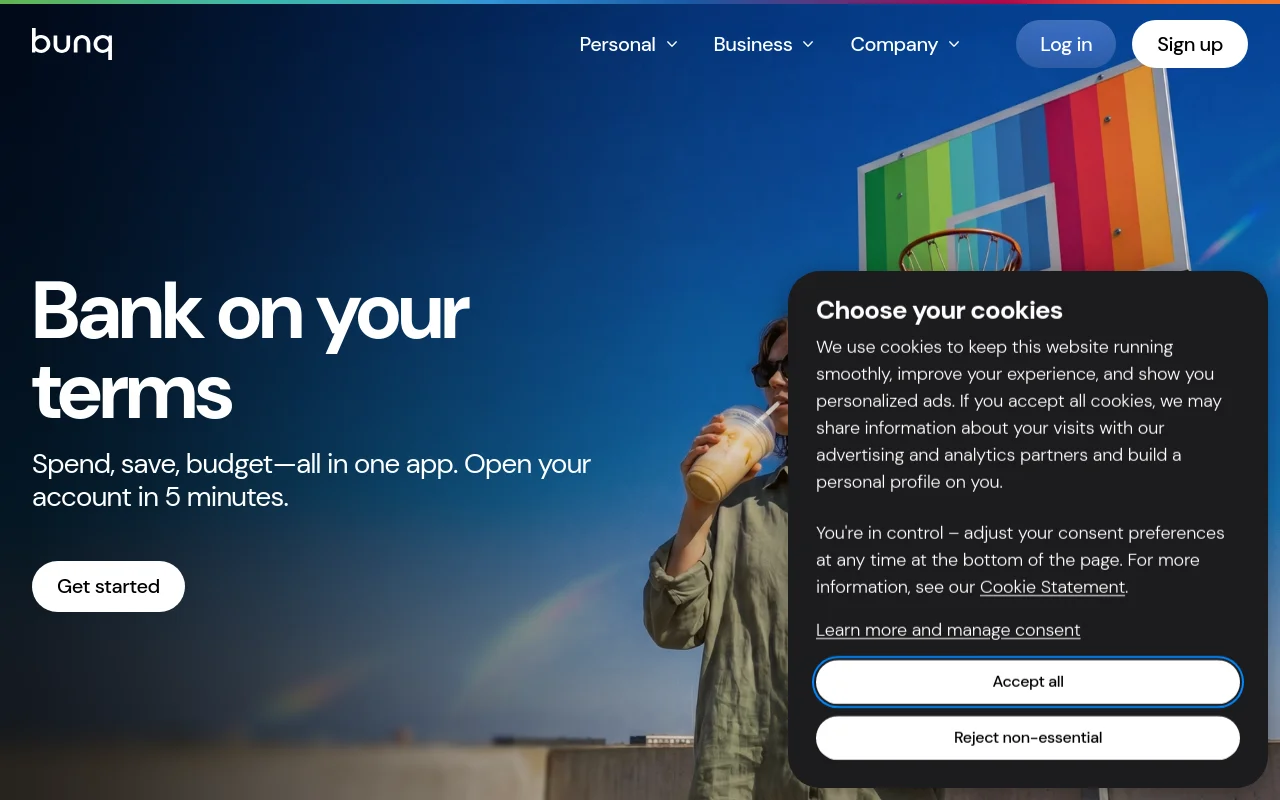
bunq homepage with the tagline Bank on your terms
The bunq homepage on 5 August 2026, cookie banner included.

bunq scores 54, the lowest here, and the reason is instructive: it has raised about $63 million against Chime's $12.7 billion and runs on roughly 400 people. It is the smallest company in this comparison by an order of magnitude. Founded 2012 in Amsterdam, it positions itself around digital nomads and people living across multiple European countries, and advertises account opening in five minutes.

A low score reflects company scale, not product quality. bunq is a licensed European bank and its feature set is genuinely inventive. It is simply a much smaller business than the names above it.

Best for: Europeans splitting life across countries who want a bank that expects that.

Comparison Table

BankStartupHub ScoreBest ForMarketEmployeesFounded
Chime77 / 100Fee-free US banking, early payUS~1,5002012
Monzo71 / 100UK everyday current accountUK~2,8002015
Varo70 / 100US alternative to Chime, ZelleUS~4312015
N2666 / 100Eurozone licensed bank accountEU~1,8512013
Starling Bank66 / 100UK business bankingUK~1,0002014
Revolut62 / 100Multi-currency and travelGlobal~8,0002015
bunq54 / 100Europeans living across bordersEU~4002012

StartupHub Scores and company data as tracked in the StartupHub.ai directory. Employee counts are approximate and move quarter to quarter.

What the Funding Numbers Reveal

Line these companies up by capital raised and the category splits in two.

Chime has taken roughly $12.7 billion and Revolut $5.9 billion. Monzo has raised $1.78 billion, Starling $742 million, and bunq just $63 million. bunq has therefore built a licensed European bank on roughly 0.5% of the capital Chime consumed. That is not a criticism of Chime, which serves a far larger market with a much heavier customer acquisition cost. It is a reminder that funding measures ambition and burn, not product quality.

The headcount ratios say something sharper. Chime supports its scale with about 1,500 people while Monzo runs 2,800 and Revolut 8,000. The difference is how much regulated banking infrastructure each one operates itself rather than renting from a partner. Chime's small team is the direct consequence of being a fintech rather than a bank, which brings the discussion back to the disclaimer at the top of this page.

Frequently Asked Questions

What is a neobank?

A neobank is a bank that operates through an app rather than branches. In practice the label covers two different things: licensed banks that happen to be digital, such as Monzo, Starling, N26 and bunq, and fintech companies that offer bank-like accounts through partner banks, such as Chime. Both can be good products. Only the first holds your deposit directly.

Is Chime a real bank?

No, and Chime says so on its own homepage: "Chime is a fintech, not a bank." Banking services and deposits are provided through partner banks. This is a common and legal structure in US fintech, but it means your deposit insurance comes from the partner bank rather than from Chime, so it is worth knowing which institution is involved.

Which neobank is best for sending money abroad?

None of them are the best tool for that job. Revolut is the strongest of this group for holding and exchanging currency, but a dedicated provider generally beats it on cross-border transfers. Chime and Varo cannot send money internationally at all. See our money transfer app comparison for that.

Why does bunq score lower than the others?

Because the StartupHub Score measures company scale and strength, not product quality. bunq has raised about $63 million and employs around 400 people, making it by far the smallest company here. It is a licensed European bank with a well-regarded app. The score reflects the size of the business behind it, which is a different question from whether you will like using it.

Are neobanks safe?

The established names here are regulated, and the licensed banks among them carry national deposit protection such as FSCS in the UK or its equivalents in the EU and FDIC insurance in the US. The practical checks are the same for any of them: confirm which institution actually holds your deposit, confirm what insurance applies and up to what limit, and confirm it covers your country of residence.

Is Klarna a neobank?

No. Klarna is a buy now, pay later provider: it finances purchases at checkout rather than acting as your everyday account. It is a bank in Sweden and has been broadening into a shopping app with a card, but the core product is credit, not current-account banking. We cover it in our Klarna, Affirm and Afterpay comparison.

Final Verdict

In the US, Chime is the strongest pick on the numbers, with the highest StartupHub Score here at 77 and a fee-free proposition that is hard to argue with, provided you understand it is a fintech rather than a bank. Varo is the closest alternative and worth comparing directly if you use Zelle.

In the UK, Monzo is the better everyday account and Starling is the better business account, and both are licensed banks with FSCS cover. In the eurozone, N26 is the safe default and bunq is the more interesting choice if you live across several countries.

Revolut sits apart from all of them. It is the one to hold if you deal in several currencies or travel constantly, as long as you avoid exchanging on the free plan at a weekend.

© 2026 StartupHub.ai. All rights reserved. Do not enter, scrape, copy, reproduce, or republish this article in whole or in part. Use as input to AI training, fine-tuning, retrieval-augmented generation, or any machine-learning system is prohibited without written license. Substantially-similar derivative works will be pursued to the fullest extent of applicable copyright, database, and computer-misuse laws. See our terms.