

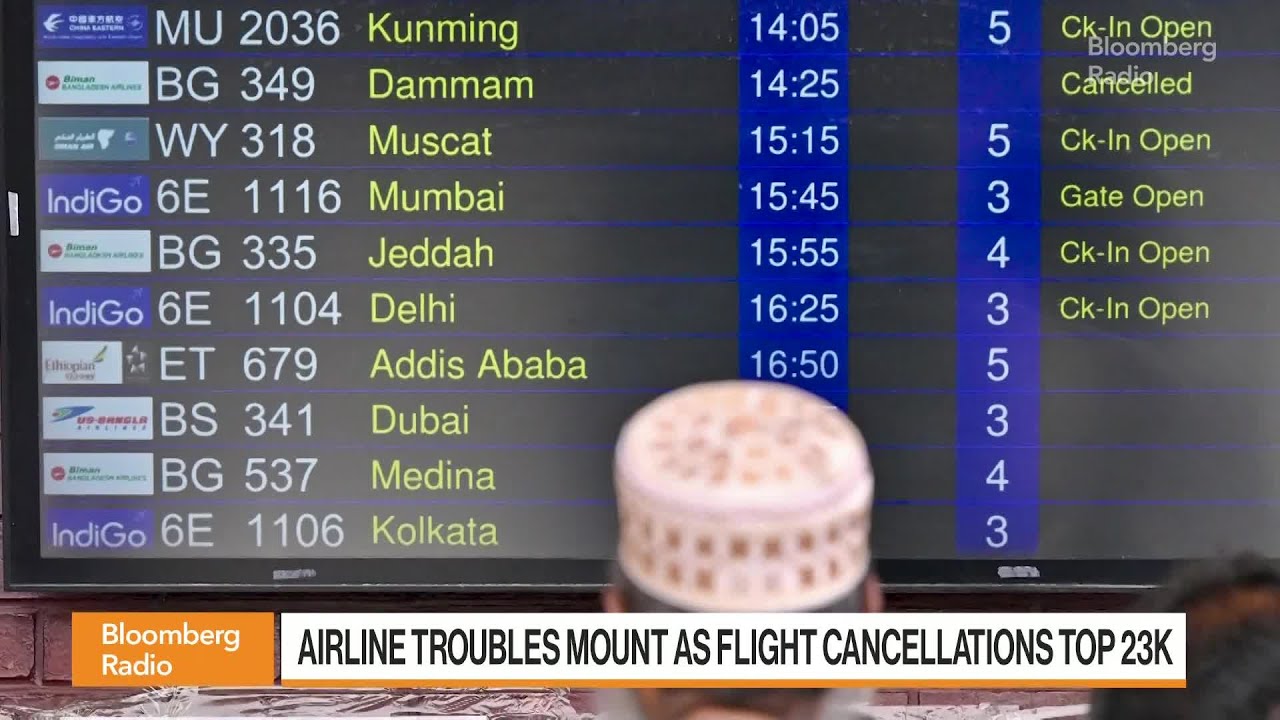
Benedikt Kämmer, Global Aviation Editor for Bloomberg News, provides an insightful analysis of the mounting airline troubles, with flight cancellations exceeding 23,000. The conversation highlights the significant impact of geopolitical events and rising operational costs on global air travel, affecting both airlines and passengers.
Benedikt Kämmer's Expertise
Benedikt Kämmer is a respected voice in the aviation industry, bringing a wealth of knowledge as the Global Aviation Editor for Bloomberg News. His role involves tracking and reporting on the complex dynamics of the airline sector, from financial performance and operational challenges to global trends and regulatory changes. Kämmer's analysis is crucial for understanding the forces shaping the future of air travel.
The Scale of Flight Disruptions
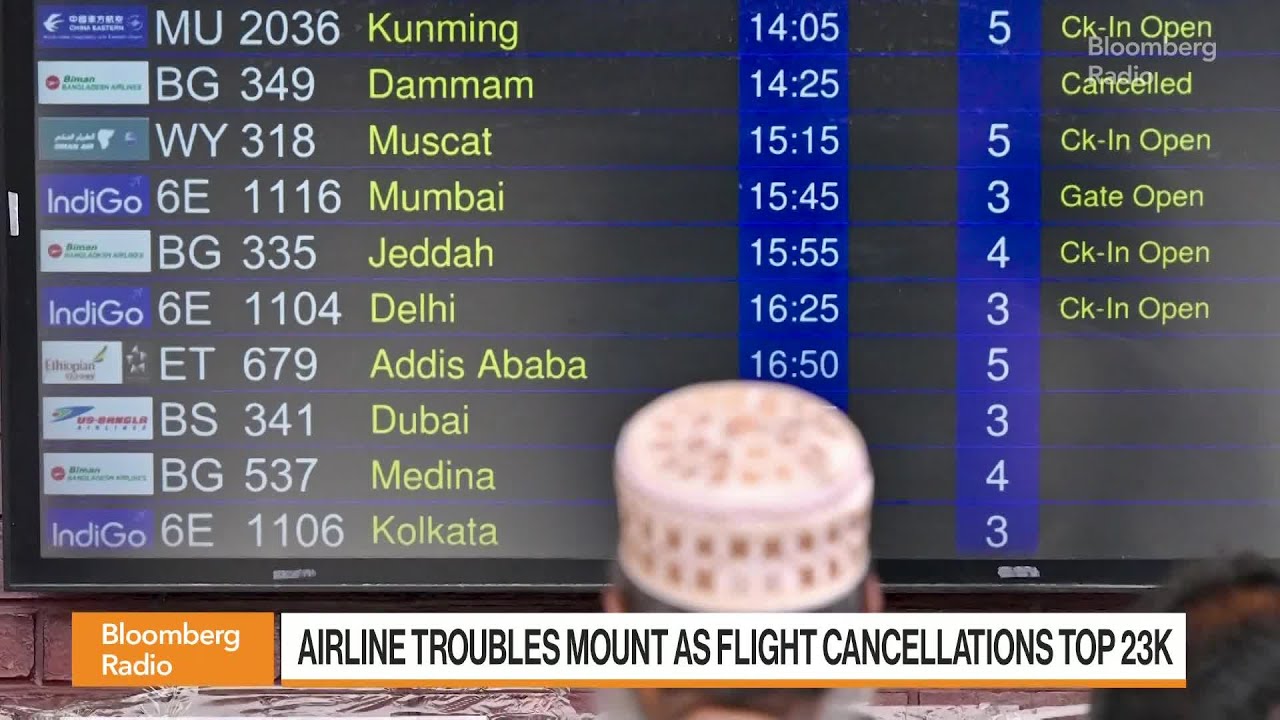
The conversation opens with the stark statistic that over 23,000 flights have been canceled. Kämmer emphasizes that this is not an isolated incident but a persistent issue that began on a Saturday and has continued to affect regular airline service. The impact is widespread, with many carriers experiencing significant disruptions to their schedules. Kämmer notes that the situation is particularly acute for the 'big three' Middle Eastern airlines—Emirates, Qatar Airways, and Etihad Airways—which operate as major international hubs.
The full discussion can be found on Bloomberg Podcast's YouTube channel.
Geopolitical Impact on Aviation
A significant portion of the discussion revolves around the role of geopolitical conflicts in exacerbating flight cancellations. Kämmer points out that the current conflict situation has led to many airlines not being able to operate their normal service, forcing them to suspend routes or reroute flights. This has resulted in the widespread use of charter aircraft for repatriation efforts, as governments attempt to extract their citizens from affected regions. Kämmer predicts that the number of cancellations could rise further, potentially reaching 30,000 in the coming days. He highlights that these disruptions are impacting travel to and from conflict-prone areas, such as those in the Middle East, leading to a squeeze on available capacity.
The Hub Dilemma for Middle Eastern Carriers
Kämmer elaborates on the strategic positioning of Middle Eastern airlines. These carriers have built their business models around connecting passengers between Europe, Asia, and Australia, effectively acting as global transit points. However, with current geopolitical tensions, these routes are becoming increasingly difficult to operate. Kämmer states, "They don't have any regular service, so if you think about the big three, Emirates, Qatar Airways, Etihad Airways, they don't have any regular service." He further explains that this situation forces them to resort to charter flights to evacuate people, a practice that is both costly and logistically challenging. The reliance on these hubs means that any instability in the region has a cascading effect on global air connectivity. Kämmer suggests that travelers may need to reconsider their flight plans, potentially avoiding the Middle East as a transit point altogether, which could impact the airlines' long-term strategies.
Economic Pressures on the Airline Industry
Beyond geopolitical factors, the conversation touches upon the economic pressures facing airlines. Kämmer mentions that the industry is already dealing with rising fuel costs, which are a significant operating expense. This, combined with the increased costs associated with rerouting flights and managing cancellations, puts a strain on airline profitability. He notes that while airlines like United, Delta, and American have seen their stock prices fluctuate, the underlying operational challenges remain. Kämmer observes that airlines are looking at upcoming events like the World Cup as potential drivers of increased travel demand, but the current instability poses a significant risk to these projections.
The Traveler's Perspective
The impact on travelers is a central theme. Kämmer describes the plight of passengers stranded due to cancellations, facing uncertainty and financial burdens. He highlights that travel insurance may not always cover disruptions caused by geopolitical events, leaving passengers to bear the brunt of unexpected expenses. The extended delays and the need to find alternative arrangements create a stressful experience for many. Kämmer also touches upon the broader implications for the airline industry, suggesting that if these disruptions persist, travelers might reconsider using hubs in volatile regions for their journeys.
Future Outlook and Resilience
Kämmer concludes by discussing the resilience of the airline industry. While acknowledging the current challenges, he suggests that the sector has historically shown a capacity to recover from setbacks. However, the current confluence of factors—geopolitical instability, rising fuel costs, and the potential for further disruptions—presents a complex scenario. He posits that the industry's ability to adapt and manage these challenges will be critical in the coming months. Kämmer emphasizes that the long-term viability of certain routes and business models may be tested, and airlines will need to find innovative solutions to navigate this turbulent period.


