



The prevailing political narrative, often framed as a simple left-right dichotomy, drastically understates the complex forces shaping our world. Instead, Balaji Srinivasan, in a recent conversation with Jack Altman, posits a dynamic, four-way geopolitical struggle involving the Internet, Blue America, Red America, and China. This multi-faceted conflict, fueled by twin economic disruptions and the relentless march of technology, is fundamentally reshaping alliances and national interests, leading to what Srinivasan terms "Silicon Valley's ultimate exit" and a world rapidly moving towards a "World minus one" configuration.
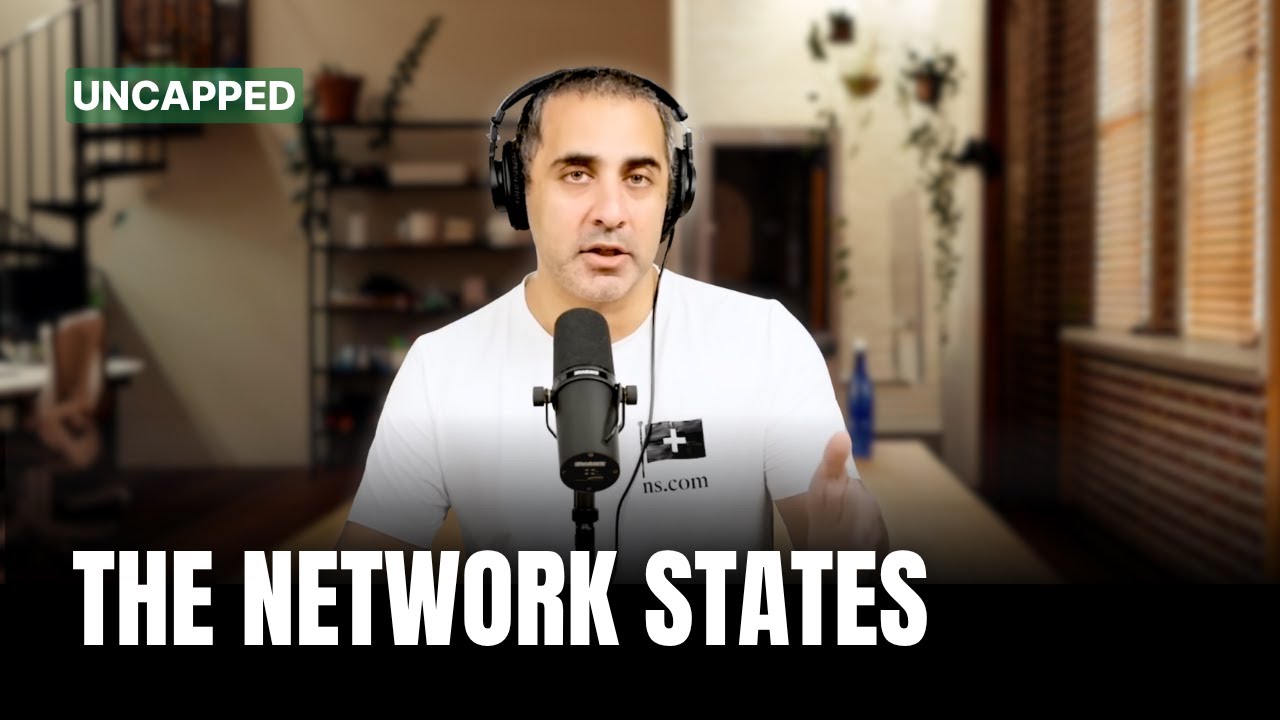
Balaji Srinivasan, the visionary investor and author of *The Network State*, spoke with Jack Altman on the Uncapped podcast about the evolving global political landscape. He outlined his mental map of current power dynamics, emphasizing the profound impact of technology and the internet on traditional political structures and national economies. This sharp analysis, supported by stark economic data, reveals a world in flux, where old allegiances crumble under new pressures.
Srinivasan illustrates these shifts with two pivotal disruptions. First, the Internet's ascendancy decimated the revenue streams of traditional Blue American media. "Brokenness preceded wokeness," he observes, arguing that the financial collapse of legacy media outlets, losing 75% of their advertising revenue to digital giants like Google and Facebook, forced them into ideological conformity to retain relevance and employment. This economic vulnerability, rather than genuine ideological conviction, led to their radicalization.
Simultaneously, China's manufacturing boom profoundly disrupted Red America. As China's share of global manufacturing output surged, surpassing that of the United States around 2010, it triggered a massive decline in American industrial jobs. This economic pain in the heartland, Srinivasan argues, fueled a backlash against both Blue America's perceived cultural dominance and China's economic prowess, culminating in the rise of figures like Donald Trump and the initiation of a trade war. The twin disruptions created a climate of radicalization and resentment across both traditional American political blocs.
Initially, the tech world was largely taken aback by the "Techlash" from Blue America, which saw tech companies, once allies, as rivals for influence and capital. However, tech eventually "counterpunched," as evidenced by events like Elon Musk's acquisition of X (formerly Twitter), marking a new era where technology actively asserts its independence from traditional political control. Meanwhile, China, initially surprised by the trade war, responded by aggressively accelerating its manufacturing capabilities across critical sectors like automobiles, solar energy, and steel, making significant strides in the physical world. "They just absolutely turn on the afterburners and they're just far ahead in the physical world," Srinivasan states, highlighting China's rapid ascent.
These shifts underscore a crucial insight: the future of innovation and governance lies beyond traditional national boundaries and corporate structures. Srinivasan contends that the "ultimate exit" for Silicon Valley isn't merely achieving another billion-dollar valuation. "The ultimate exit is not simply like making another billion... it is a country of a million people. It's not a company of a billion dollars. We've done that. That's old news," he asserts, pointing towards the ambition of creating sovereign network states. This vision represents a profound re-imagining of societal organization, driven by techno-optimists seeking to build new societies from the ground up.
The US response to these global realignments, particularly through economic policy, comes under sharp criticism. Srinivasan argues that tariffs, intended to protect American industries, are often applied in a "stupid way," taxing allies and crucial raw materials, thereby disrupting existing supply chains and hurting American businesses. Furthermore, he explains the "Cantillon effect," stating, "Dollar inflation is global taxation." By printing more money, the US effectively dilutes the purchasing power of every dollar held globally, disproportionately benefiting those closest to the printing press (US government and major banks) and imposing a hidden tax on the rest of the world. This monetary policy, coupled with diplomatic missteps, has pushed many nations towards a "World minus one" scenario, where countries increasingly seek to operate independently of US hegemony.
Srinivasan also delves into the shifting nature of social conflict. He argues that while the 20th century saw violence largely rooted in class warfare, the 21st century's "wokeness" movement, despite ostensibly advocating for marginalized groups, has ironically turned everyone into a potential "oppressor" through the lens of intersectionality. This has created a new form of internal division, where traditional political factions, both Blue and Red America, find themselves united in their resentment towards tech. "Tech isn't a race... Tech is a class," he declares, positing that the current ideological clashes are less about racial or gender identity and more about the power dynamics between the established political class and the rising technological class. This fundamental re-framing suggests that the "unholy alliance" of Blue and Red against tech is a natural outcome of these evolving power structures.
The current global landscape, therefore, is characterized by a complex interplay of technological disruption, economic shifts, and ideological warfare. The traditional American-led world order is giving way to a multi-polar reality, where new entities like network states and emergent global coalitions are vying for influence. As the old guard struggles to adapt, the future promises continued volatility and the emergence of entirely new forms of governance and societal organization.

