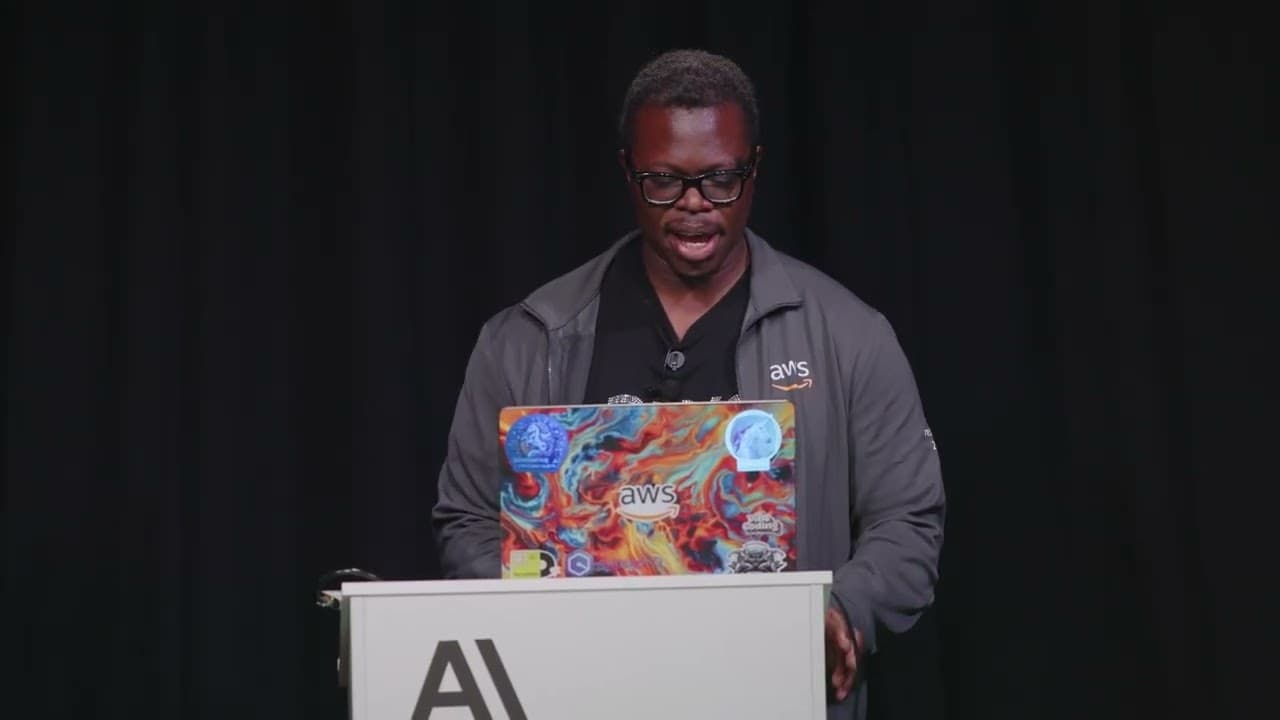
At Anthropic's "Code w/ Claude" event in San Francisco, a team from Amazon Web Services detailed a new framework for creating sophisticated, autonomous AI systems. The presentation, led by AWS developer advocates Du'An Lightfoot and Suman Debnath alongside Solutions Architect Banjo Obayami, centered on building AI agents with Claude on the Amazon Bedrock platform, culminating in the introduction of a new open-source SDK named Strands Agents.
The session established Amazon Bedrock as the foundational layer for this work, a platform described as a "fully managed service that provides you access to powerful foundational models... through a unified API." This service simplifies access to models from leading providers like Anthropic, allowing developers to focus on application logic rather than infrastructure management. Within this ecosystem, the core pursuit is the creation of agentic AI, which represents a significant step beyond simple chatbots or text generators.
The team defined an agent as "an autonomous system that can reason, plan, and take multiple steps to perform an objective like humans." This capability is built around an agentic loop where the system receives a prompt, invokes a model for reasoning and tool selection, executes actions using those tools, and then evaluates the results to determine the next step. This iterative process allows the agent to break down complex tasks into a sequence of manageable actions, mimicking a human thought process to achieve a final goal.
The centerpiece of the presentation was Strands Agents, a new open-source SDK from AWS designed to streamline this development. Suman Debnath emphasized its simplicity, noting that the framework is built on three core pillars. "It's a very simple SDK which needs three things: models, tools, and prompt." This minimalist approach is intended to give developers maximum flexibility, allowing them to leverage the full reasoning power of advanced models like Claude without being constrained by heavy scaffolding.
The framework is designed to be lightweight and flexible. It supports custom model providers and tools, integrating with a growing ecosystem that includes Langfuse and LiteLLM. By providing native support for AWS services and Model Context Protocol (MCP) servers, Strands aims to bridge the gap between local development and scalable production deployment. The presentation then transitioned into a hands-on workshop, guiding attendees through the practical steps of building their first agent using these new tools.