

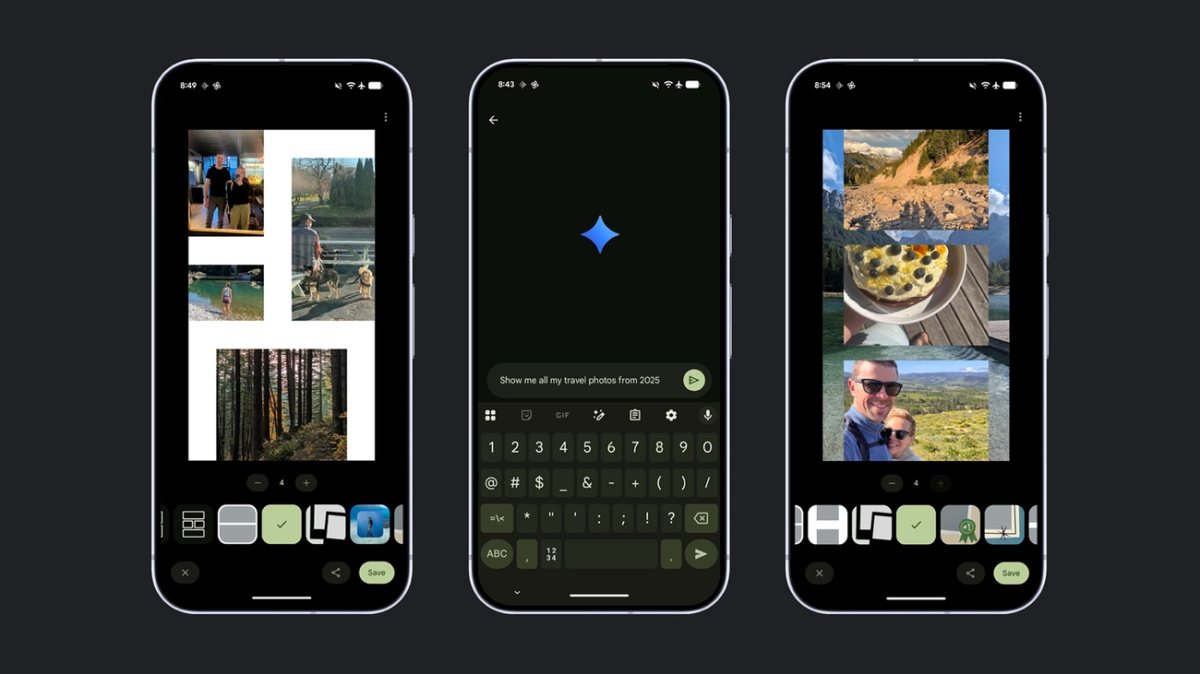
Google Photos is once again pushing the boundaries of personal media management, rolling out a suite of features designed to simplify year-end recaps. Among these, 'Ask Photos' stands out as a significant leap, fundamentally altering how users interact with their vast digital archives. This AI-powered capability moves beyond traditional keyword searches, enabling natural language queries to pinpoint specific memories with unprecedented ease and precision.
The core innovation of Ask Photos lies in its ability to understand conversational requests, not just exact matches. Users can now ask questions like "what desserts did I ate in 2025?" or "show me my landscape photos from 2025," and the system intelligently retrieves relevant images and videos from their entire gallery. This capability transforms a potentially tedious search through thousands of photos into an intuitive conversation, making forgotten moments instantly accessible. According to the announcement, this feature is poised to redefine how individuals rediscover their captured content, moving past the limitations of manual organization.
This development positions Google Photos not merely as a cloud storage solution, but as an intelligent curator of personal history. While many competitors offer basic search functions based on tags or dates, Ask Photos leverages advanced AI to interpret context and user intent, a critical differentiator in a crowded market. It signifies a broader industry trend where generative AI moves from content creation to sophisticated, personalized content retrieval, making digital clutter manageable and meaningful. This shift underscores the growing expectation for AI to provide proactive utility, offering deep insights rather than just reactive responses.
The Evolution of Photo Retrieval
Ask Photos integrates seamlessly with other Google Photos enhancements, amplifying their overall utility. The ability to quickly locate specific photos or videos using natural language directly feeds into creating personalized Recaps, crafting tangible photo books, or assembling multi-image collages. For instance, finding all photos from a specific trip using a conversational query then instantly turning them into a customized photo book streamlines a previously complex, multi-step process. This synergy ensures that the power of AI-driven search isn't isolated but enhances the entire creative and organizational workflow within the platform, making every feature more accessible.
The implications for user experience are profound, particularly for those with extensive photo libraries. No longer are users limited by the metadata they remember to tag or the folders they meticulously create; Ask Photos democratizes access to memories, making the entire gallery searchable through the most natural interface: language. This marks a pivotal moment in consumer AI, demonstrating how intelligent systems can unlock the latent value in personal data, transforming digital hoards into readily accessible narratives and creative assets. It shifts the burden of organization from the user to the AI.