

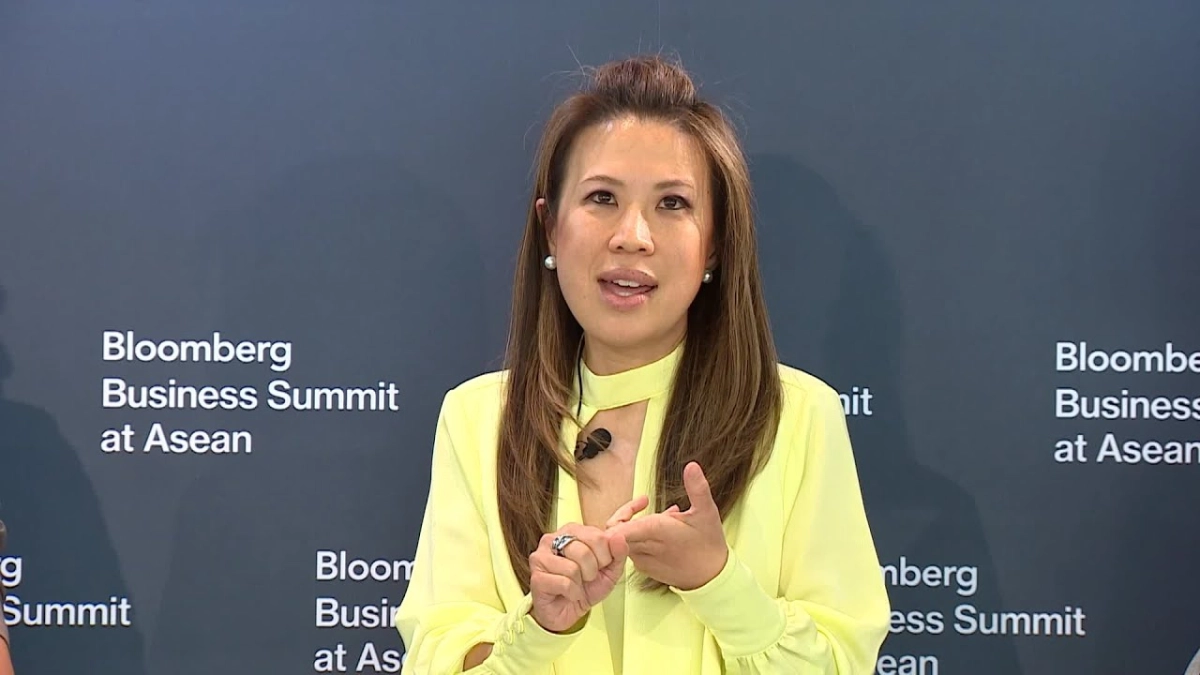
The global surge of artificial intelligence presents both unprecedented opportunities and profound challenges for the diverse nations of ASEAN. At the recent Bloomberg Business Summit at ASEAN in Kuala Lumpur, a panel featuring Khairul Anwar, Founder & CEO of Pandai; Ilaria Chan, Chairperson of Tech For Good Institute and Group Advisor for Tech & Social Impact at Grab; and Gary Leong, Senior Director, Analytics Intelligence Solutions at ViTrox Technologies Sdn Bhd, convened with Bloomberg’s Olivia Poh to dissect how local voices and regional realities are shaping AI's trajectory. Their collective insight highlighted a crucial tension: while global AI models are immensely powerful, they often fall short in understanding and serving the unique linguistic, cultural, and socio-economic nuances of Southeast Asia.
Ilaria Chan opened the discussion by pointing out a fundamental bias inherent in many leading AI systems. She articulated that these models are often built within a "WEIRD" framework – Western, Educated, Industrialized, Rich, and Democratic. This foundational bias means that, as Chan noted, "many fantastic English models out there... are from companies that want to also maximize how they can commercialize their products, which means they're probably less incentivized to reflect a Khmer and a random language in an island out of many thousands of islands in Indonesia." Such a narrow lens risks creating AI solutions that, despite their technological prowess, are inherently misaligned with the everyday realities of a region as vibrant and varied as ASEAN.
Khairul Anwar of Pandai, an edutech platform, echoed this sentiment with practical examples. He emphasized that while AI is undeniably powerful, "it doesn't really get our language... Technically it's right, but contextually maybe not so much." He illustrated this with a science concept like photosynthesis: a global AI might explain it correctly in English, but it would likely miss the specific pedagogical approach of a national curriculum. Similarly, a simple math problem involving names like "John and Jessica" and objects like "basketballs" might not resonate with students in a rural Malaysian village, where local names and common sports like sepak takraw would be far more relatable. This highlights that effective AI for education, or any sector, demands a deep dive into local curricula, cultural references, and even religious sensitivities, beyond mere linguistic translation.
The challenge extends beyond direct language translation to encompass the "unspoken language" of culture. Chan shared a poignant anecdote about "sumpong," a Filipino expression for a cranky mood. When queried, ChatGPT mistakenly identified it as a "very serious mental instability condition" rather than a passing feeling. This stark misinterpretation underscores the potential for grave consequences if AI is deployed in sensitive areas like mental health without a nuanced understanding of cultural context. Such errors could lead to inaccurate assessments, inappropriate treatments, and even serious legal ramifications, as seen in cases where mental health diagnoses impact custody rights.
Therefore, building truly responsible and impactful AI for ASEAN necessitates a holistic approach that recognizes and addresses these intricate layers of local context.
The conversation then shifted to how AI can bridge, rather than widen, existing societal gaps. Khairul Anwar acknowledged that historically, new technologies have often exacerbated inequalities, creating a divide between the "haves" and "have-nots." Pandai's strategy to counteract this includes offering a perpetually free version of its platform and developing an "offline mode" to serve students in rural areas with intermittent or no internet access. This commitment to accessibility ensures that the benefits of AI-powered education are not exclusive to urban, privileged populations.
The panelists stressed that achieving "AI for good" requires more than just a slogan; it demands concerted, strategic partnerships. Ilaria Chan presented a compelling framework: "If you want to go fast, you go with the private sector. If you want to go wide, you go with the government. And if you want to go deep, you go with NGOs or civil society organizations." This approach recognizes the unique strengths and motivations of each sector. Private companies offer speed and innovation, governments provide the scale and regulatory framework, while civil society organizations bring the deep, grassroots understanding of community needs. She emphasized that successful collaboration hinges on understanding what drives each stakeholder, appealing to their respective goals, and finding ways to align their efforts for a collective, transformative impact.
Related Reading
- ASEAN's Digital Destiny: Blockchain, AI, and the Global South's Opportunity
- Malaysia's National AI Vision: Beyond Chatbots to Societal Transformation
Gary Leong elaborated on this from an industry perspective, highlighting ViTrox’s “Tech for Good” initiative, which he succinctly defined as contributing "to the advancement of society and the well-being of humankind through compassionate innovation." This includes establishing the ViTrox College, which trains 150 students, 90% in STEM fields, fostering a culture of continuous learning and practical application. Leong emphasized that true skill-building transcends formal certifications, extending to the everyday actions that contribute to a community, such as students washing plates after lunch or cutting vegetables for the next day's meal. This inculcation of "in-built through time" skills, coupled with curiosity and humility, forms the bedrock for locally relevant innovation.
Ultimately, the consensus was clear: the future of AI in ASEAN will not merely be written in algorithms and code, but in the languages, cultures, and communities it serves. It demands a proactive, collaborative effort to listen to local voices, understand their unique challenges, and co-create solutions that are not just technically sound, but culturally intelligent and equitably accessible.



