

ARK Invest: AI's Compute Race and Enterprise Lock-In

ARK Invest's experts discuss the AI compute race, enterprise lock-in, and the product vs. compute power debate in the evolving AI landscape.

5 min read
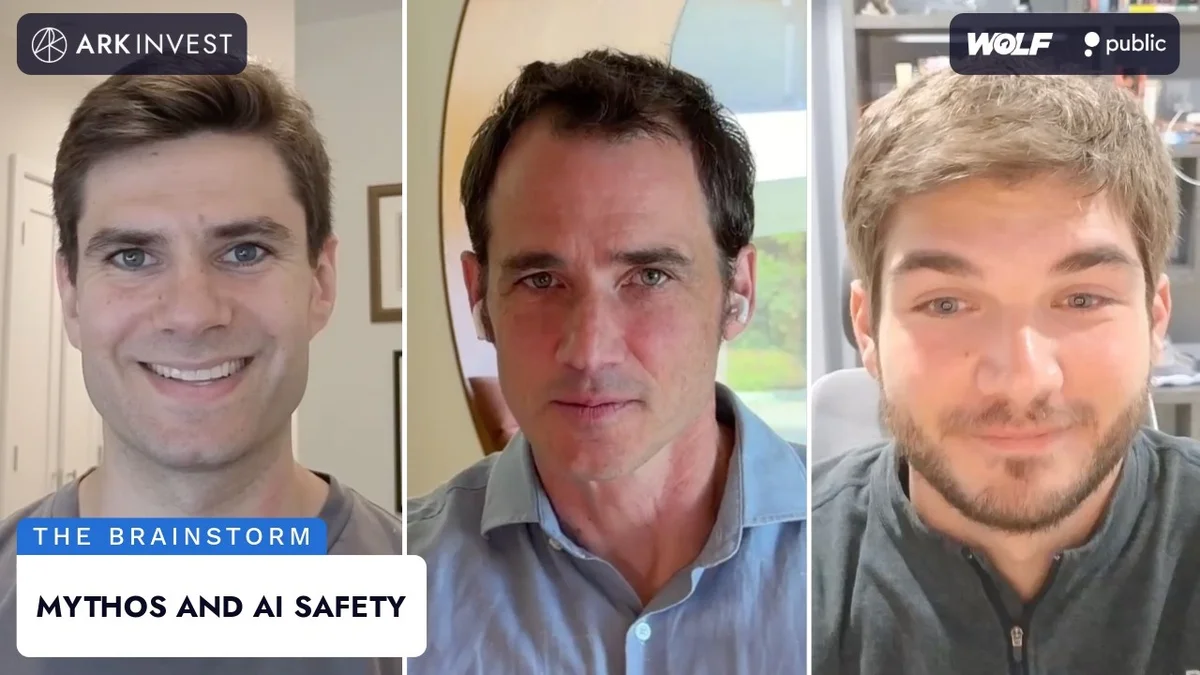
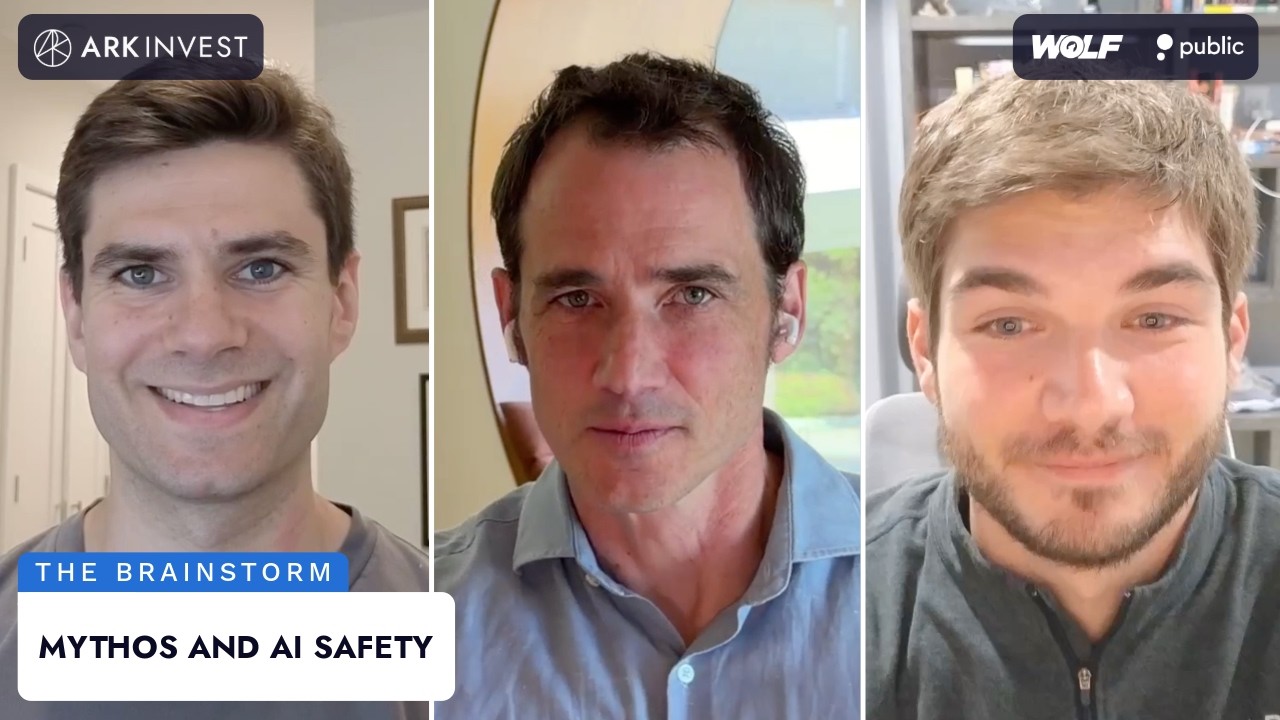
Three men on a video call discussing AI, with ARK Invest branding.
Image credit: ARK Invest· ARK Invest

In a recent discussion hosted by ARK Invest, a panel of experts, including Brett Winton, Nick Grous, and Sam Korus, delved into the intricate dynamics shaping the current AI landscape. The conversation, titled "The Brainstorm: Mythos Delay, Fear, Enterprise Lock-In," offered a nuanced perspective on the challenges and opportunities within the rapidly evolving field of artificial intelligence.
ARK Invest: AI's Compute Race and Enterprise Lock-In - ARK Invest
ARK Invest: AI's Compute Race and Enterprise Lock-In — from ARK Invest

The Speakers

Brett Winton, Director of Research at ARK Invest, is a prominent voice in the investment firm's analysis of technological innovation. He is known for his deep dives into disruptive technologies and their potential impact on markets. Nick Grous, also from ARK Invest, contributes to the firm's research on artificial intelligence and its applications. Sam Korus, a member of the ARK Invest team, provides insights into the practical adoption and integration of AI technologies.

Mythos Delay and Enterprise Lock-In

The discussion began by addressing the phenomenon of "mythos delay" in AI, where the perceived timeline for AI's widespread impact often outpaces actual development and deployment. Winton highlighted how the rapid advancements in AI models, such as those from OpenAI, create a sense of urgency and can lead to overestimation of immediate capabilities. This is compounded by what the panel termed "enterprise lock-in," where businesses are hesitant to adopt new AI solutions if they cannot be seamlessly integrated into their existing infrastructure. This inertia, while a barrier to rapid adoption, also signifies a strategic imperative for AI developers to focus on interoperability and demonstrable value within established enterprise ecosystems.

Related startups

Korus elaborated on this point, stating, "Enterprises are looking for solutions that don't just offer incremental improvements but fundamentally change their operational calculus. The challenge is that integrating new AI tools often requires significant re-engineering of existing systems, which can be a costly and time-consuming process." This suggests that the most successful AI companies will be those that can demonstrate a clear return on investment and a smooth integration path for their enterprise clients.

Compute Power and the AI Race

A significant portion of the conversation revolved around the critical role of compute power in the AI race. Grous emphasized the increasing demand for specialized hardware and the ongoing competition among major tech players to secure and optimize compute resources. "The ability to train and deploy increasingly sophisticated AI models is directly tied to the availability of compute power," Grous noted. "This is creating a bottleneck for some companies and a strategic advantage for those with access to cutting-edge hardware and optimized cloud infrastructure."

The panel discussed how companies are forced to make difficult trade-offs in their AI development strategies. They can either invest heavily in building their own compute infrastructure, which is capital-intensive and requires specialized expertise, or rely on cloud providers, which can lead to concerns about data privacy and vendor lock-in. This dynamic is shaping the competitive landscape, with companies like Meta investing heavily in their own AI research and infrastructure, while others are exploring more flexible, multi-cloud strategies.

Product vs. Compute Power: A Debate

A key theme that emerged was the debate between prioritizing product development versus prioritizing compute power. Winton argued that while compute power is foundational, the ultimate success of AI will depend on the creation of truly compelling products that solve real-world problems. "You can have all the compute power in the world, but if you don't have a product that resonates with users and offers a clear value proposition, it won't translate into market success," Winton stated. "The companies that will win are those that can effectively bridge the gap between advanced AI capabilities and tangible user benefits."

Korus added that the distinction between product and compute is becoming increasingly blurred. "The most advanced AI models are, in themselves, products," he explained. "The ability to access and utilize these models is a key differentiator, and companies are increasingly offering access to their models as a service, effectively productizing their compute capabilities." This suggests a future where the lines between AI models, compute infrastructure, and end-user products will continue to blur.

Trust Networks and AI Adoption

The discussion also touched upon the importance of trust in AI adoption. As AI systems become more integrated into daily life, concerns about bias, transparency, and reliability are paramount. The panelists agreed that building trust networks, where users and businesses have confidence in the AI systems they interact with, will be crucial for widespread adoption. This involves not only technical robustness but also ethical considerations and clear communication about the capabilities and limitations of AI.

Winton concluded by emphasizing the rapid pace of innovation and the need for continuous adaptation. "The AI space is moving at an unprecedented speed," he said. "Companies that can stay agile, invest strategically in both compute and product development, and build trust with their users will be the ones that define the future of this technology." The conversation underscored the complex, multi-faceted nature of the AI revolution, highlighting the critical interplay of technological advancement, market dynamics, and user adoption.

© 2026 StartupHub.ai. All rights reserved. Do not enter, scrape, copy, reproduce, or republish this article in whole or in part. Use as input to AI training, fine-tuning, retrieval-augmented generation, or any machine-learning system is prohibited without written license. Substantially-similar derivative works will be pursued to the fullest extent of applicable copyright, database, and computer-misuse laws. See our terms.