

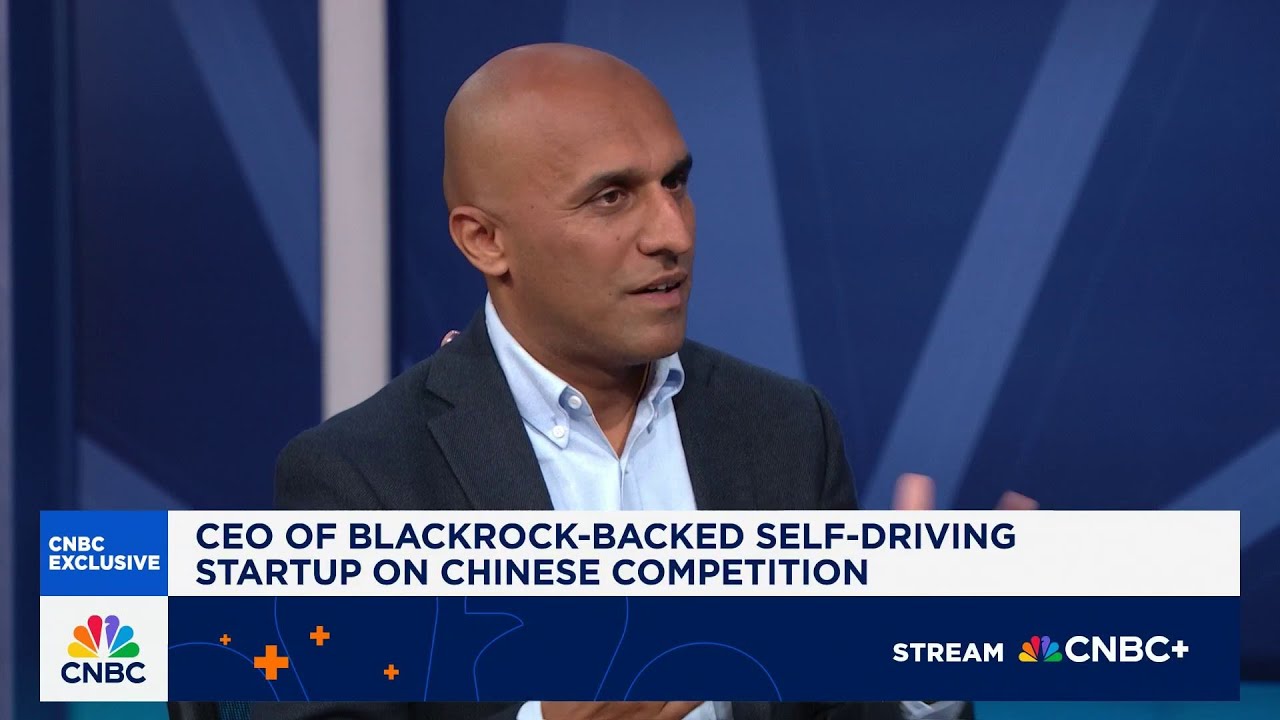
Qasar Younis, Co-Founder and CEO of Applied Intuition, recently joined CNBC’s Sara Eisen on "Closing Bell Overtime" to discuss the company's latest product launch and the evolving state of self-driving artificial intelligence. The interview highlighted Applied Intuition's strategic position as a critical enabler of autonomy across various sectors, from automotive to defense, while also touching on the geopolitical dynamics shaping the industry.
Applied Intuition, which Younis describes as a "vehicle intelligence company," specializes in creating the AI infrastructure for autonomous systems. Unlike consumer-facing AI, their focus is on "physical AI" for moving platforms, encompassing everything from passenger cars to heavy-duty trucks and military tanks. The core of their recent announcement is the launch of SDS, a self-driving system designed for automakers, akin to Tesla's FSD but offered as a comprehensive solution for multiple manufacturers.
The self-driving industry is currently experiencing a significant moment of maturation. Younis observed that the technology has transitioned from a research endeavor to a tangible reality, pointing to Waymo's driverless rollouts in cities like San Francisco and Los Angeles. He confidently stated that within the next five to ten years, autonomy will become "very, very common," not just for passenger vehicles but also in diverse fields such as defense, construction, and mining. This widespread adoption signals a broader trend where "this concept of smart vehicles is really becoming a thing."
Applied Intuition’s business model extends beyond commercial applications into the defense sector, making them a dual-use technology company. Younis noted a "surprising overlap" in building intelligence for disparate systems like cars and tanks, explaining that the fundamental process of integrating sensors and computing to enhance vehicle capabilities remains similar. This dual-market approach not only diversifies their revenue streams but also accelerates innovation, as advancements in one domain can often be applied to the other.
The conversation also delved into the competitive landscape, particularly concerning China. Younis highlighted the unique challenges posed by the Chinese ecosystem, which he described as having "become its own economy" with less transparent economics, including subsidies and protectionism. He emphasized that for global automakers, competing against China necessitates robust technological capabilities. Applied Intuition's goal, in part, is to empower Western automotive companies to remain competitive by providing advanced FSD or ADS-like (Advanced Driver-Assistance Systems) solutions, which he believes will soon be "table stakes." China remains the only market where Applied Intuition does not operate, a strategic decision driven by these geopolitical and economic considerations.