

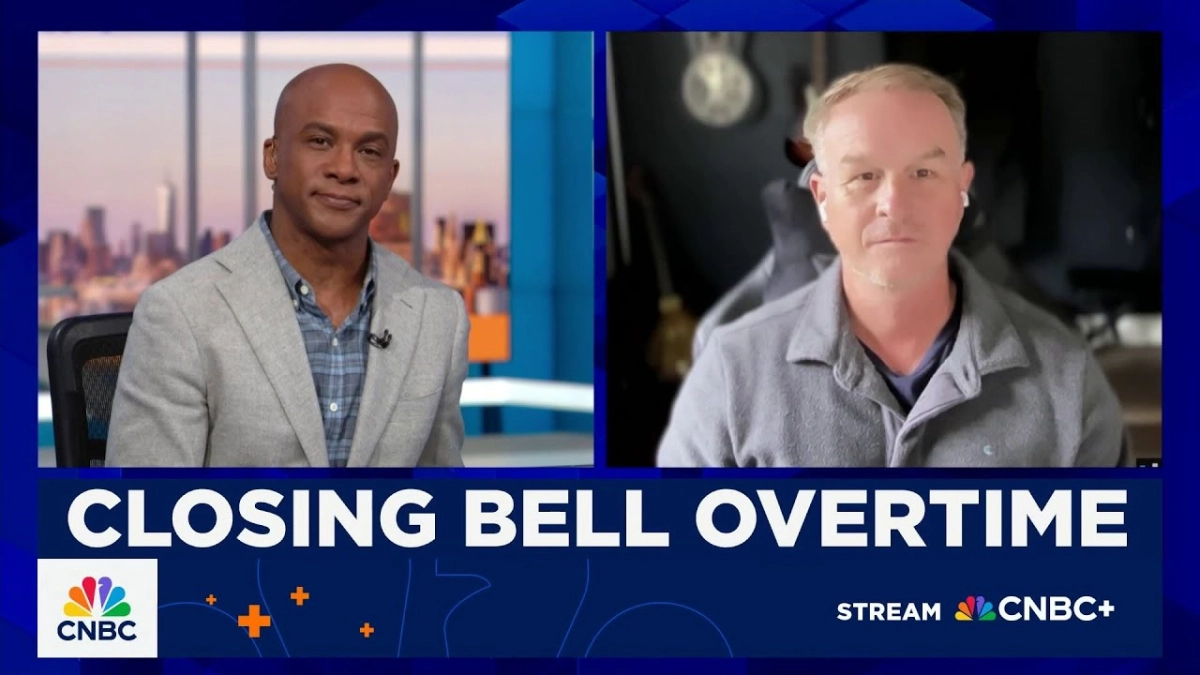
The imminent future of technology, particularly for industry titans like Apple, will be defined by the seamless integration of AI software with novel hardware, a perspective underscored by Ben Bajarin, CEO of Creative Strategies. Speaking on CNBC's 'Closing Bell Overtime,' Bajarin offered incisive commentary on two pivotal subjects: NVIDIA's sustained dominance in the AI infrastructure market and Apple's strategic trajectory, including the eventual succession of CEO Tim Cook. His analysis highlighted the foundational shifts occurring in both data center construction and consumer device innovation, all pointing towards artificial intelligence as the central driving force.
Bajarin first addressed the burgeoning demand for AI infrastructure, emphasizing NVIDIA's robust position. He observed the transition from the Hopper to the Blackwell GPU era, noting that a significant portion of this infrastructure is earmarked for entirely new data center builds. This represents "greenfield growth," a substantial expansion beyond merely upgrading existing facilities. He highlighted the staggering "50+ gigawatts of IT load capacity that's either planned or under review for the next five years," all designed to accommodate the escalating computational demands of AI. This massive investment in new data centers, he argued, solidifies NVIDIA's role as a primary beneficiary, as "NVIDIA remains one of the best positioned as we don't see demand slowing down." The ongoing investment by hyperscalers, driven by returns from their AI endeavors, ensures a continued pipeline for NVIDIA's advanced GPUs and associated technologies.
The conversation then pivoted to Apple, a company under the long-standing leadership of Tim Cook, who has now surpassed Steve Jobs in tenure as CEO. The discussion around Cook’s eventual succession is gaining traction, though Bajarin believes Cook will likely remain involved in some capacity, perhaps as chairman. He praised Apple's "deep bench" of potential successors, mentioning names like John Ternus and Craig Federighi, noting that these internal candidates are highly regarded within the company.
Apple’s next stage of growth, Bajarin posited, is not merely incremental updates to existing product lines but a transformative hardware cycle deeply intertwined with AI. This vision extends beyond innovations in smartphones or even foldables. Instead, it encompasses "AI wearables, smart glasses, [and the] evolution of Vision Pro to something like an AR glasses." This signifies a strategic move towards entirely new form factors and user experiences, where AI is not just a feature but the core operating principle.
Related Reading
- AI Chip Spending: The Looming Depreciation Cliff
- AI's New Moats: Beyond the Hype, the Hard Work Pays Off
- Private AI Losses Fuel Big Tech's Public Gains
The critical differentiator for Apple’s future leadership, according to Bajarin, will be the ability to merge profound hardware and software expertise, with AI at the epicenter. He articulated that the next CEO will require "a lot of hardware chops and then again, a lot of software chops." This dual mastery is essential because the fundamental driver for Apple's continued expansion will be the integration of advanced AI capabilities directly into these next-generation devices. The company's well-established supply chain and manufacturing prowess, honed under Cook, will remain a strong asset.