

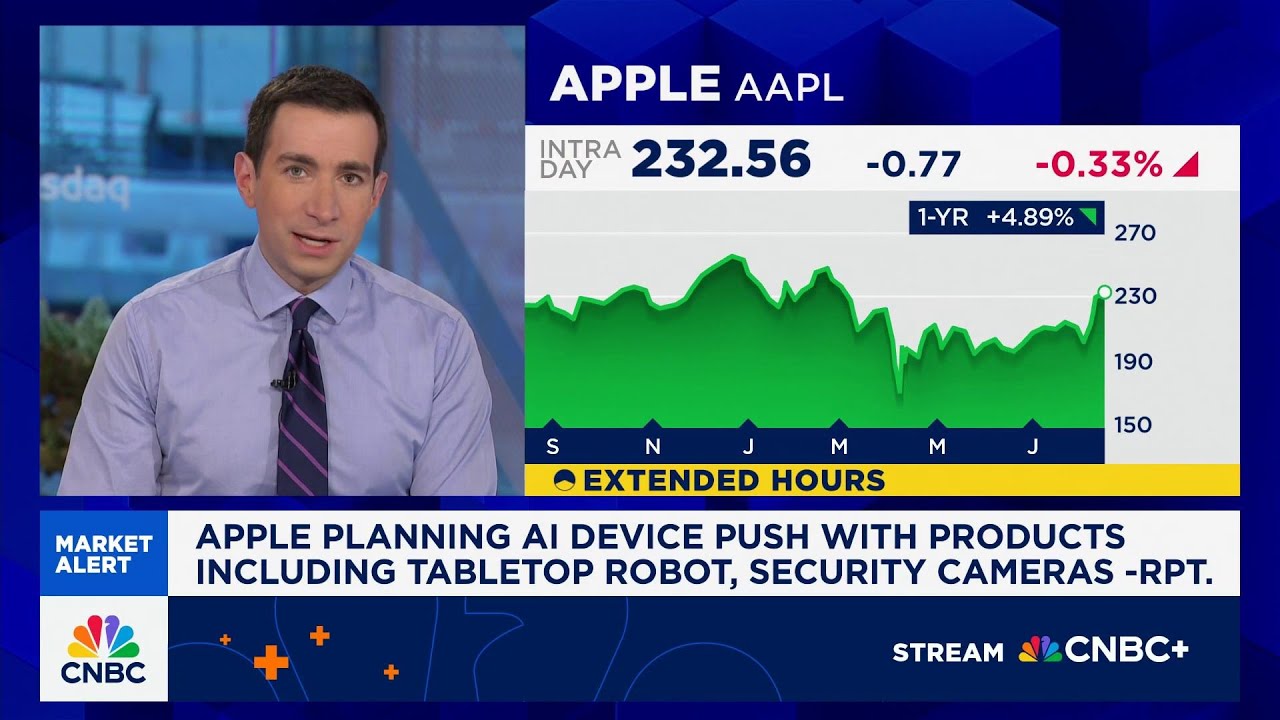
Apple is reportedly gearing up for a significant foray into advanced artificial intelligence hardware, signaling a strategic pivot beyond its established mobile and computing devices. On CNBC's "Executive Edge," Andrew Ross Sorkin reported on a Bloomberg account detailing Apple's plans to integrate AI more deeply into an array of household products.
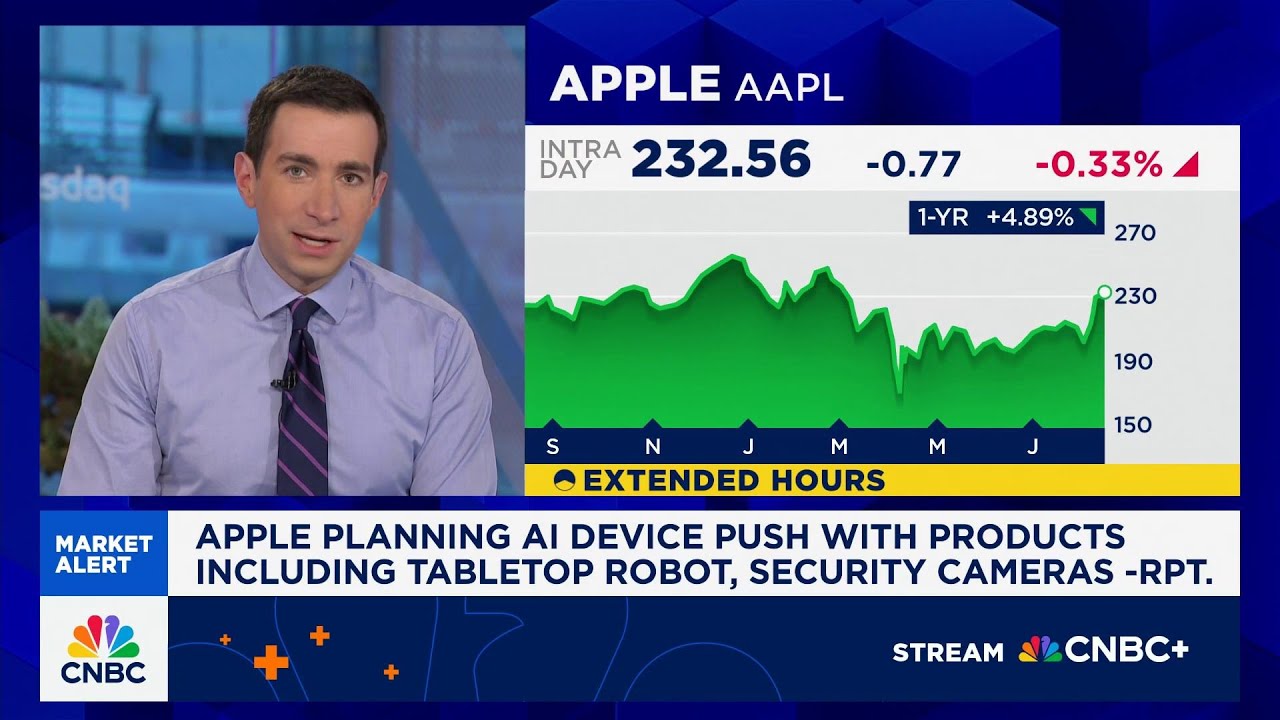
According to the report, Apple is looking to "beef up its AI offerings with an assortment of household products," including a tabletop robot, a smart speaker, and enhanced security cameras. A key focus is the tabletop robot, an intriguing concept described as an "iPad on a movable arm, which would allow it to effectively shift position to pay attention to someone talking." This design suggests Apple's ambition to create a more dynamic, interactive AI companion, moving beyond mere voice commands to offer a more ambient and personalized user experience. For founders and VCs, this signals a potential new frontier in consumer robotics, where form factor and intuitive interaction could unlock significant market value previously elusive to general-purpose robots.
The planned introduction of new cameras for an Apple security system further underscores the company’s intent to broaden its smart home ecosystem. This strategic expansion positions Apple to compete more directly with established players like Ring and Nest, while integrating these new devices seamlessly into the existing Apple user experience. It's a clear signal that Apple views the home as a critical battleground for AI integration, aiming to leverage its robust privacy framework and hardware-software synergy to gain a competitive edge.
The potential for a "new visual representation of its assistant Siri" also indicates a push towards more intuitive and multimodal AI interactions within the Apple environment. This isn't just about a refreshed interface; it suggests a deeper integration of visual AI capabilities, potentially allowing Siri to interpret context from its surroundings and respond in more sophisticated ways. For AI professionals, this implies Apple is investing heavily in on-device AI processing and advanced perception models to deliver a truly responsive personal assistant.
However, the core challenge remains the sophistication of the underlying artificial intelligence that powers these devices. As Sorkin noted, "none of that really gets at the underlying issue about the AI piece and what ultimately is going to be powering Siri and how that's going to work." The success of these hardware initiatives will hinge on Apple's ability to develop and deploy cutting-edge large language models and AI capabilities that truly differentiate its offerings in a crowded and rapidly evolving generative AI market. This represents a critical juncture for Apple, as it seeks to redefine its role in the intelligent home and personal AI landscape. The company's historical reliance on third-party AI for certain functionalities has often placed it behind competitors in generative AI. These new hardware products will demand robust, Apple-native AI solutions to deliver on their promise.