

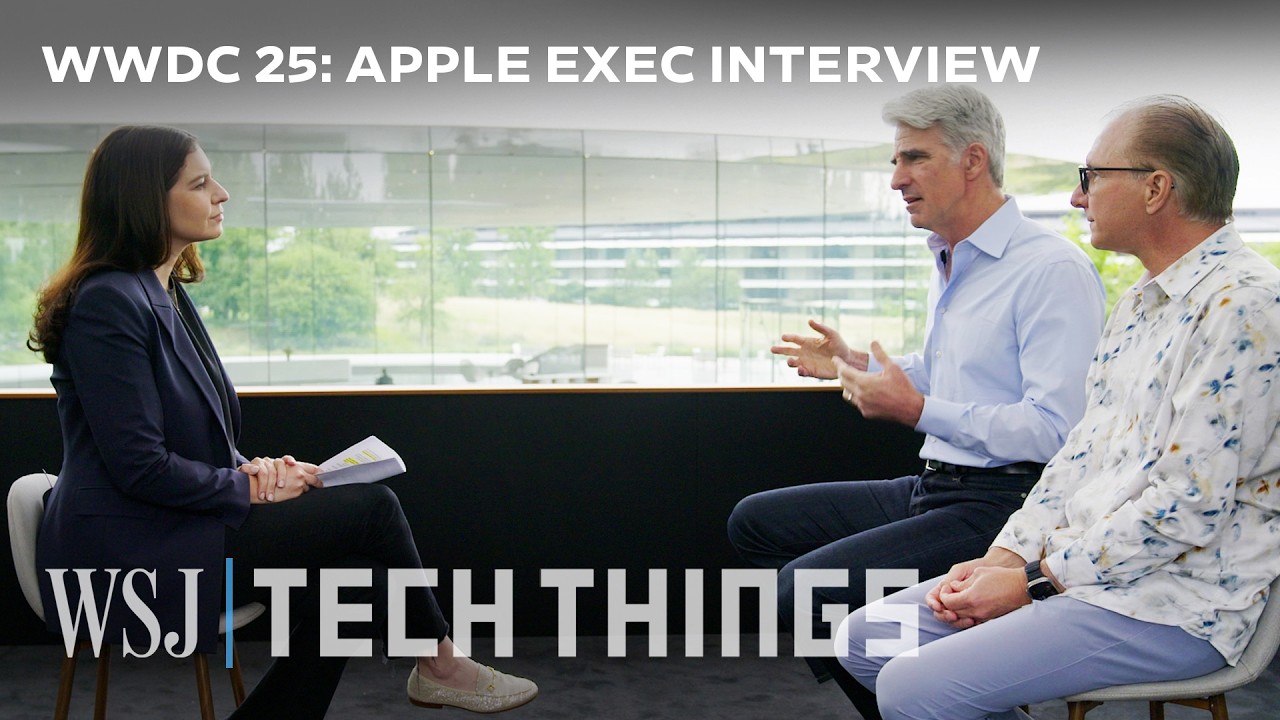
The prevailing narrative surrounding Apple's artificial intelligence endeavors often circles back to Siri's perceived stagnation. In a recent interview at Apple Park in Cupertino, Joanna Stern of The Wall Street Journal pressed Apple executives Craig Federighi, SVP of Software Engineering, and Greg "Joz" Joswiak, SVP of Worldwide Marketing, on this very point, alongside their broader AI strategy, termed Apple Intelligence.
Their responses painted a picture not of technological lag, but of a deliberate, long-term commitment to a fundamentally different approach to AI than many competitors.
Stern directly challenged the executives on the absence of a "smarter, AI-driven Siri" announced last year, questioning its whereabouts. Federighi acknowledged a "two-phase plan" for a new Siri architecture, admitting that while an initial version was working, it “didn't converge in the way quality-wise that we needed it to.” He elaborated that as they began "living on it internally," it became clear the product "just doesn't work reliably enough to be an Apple product." This candid admission underscores Apple's unwavering, almost zealous, dedication to a high bar for user experience, even if it means significant delays in a rapidly evolving tech landscape.

Joswiak echoed this sentiment, stating, “It would've been more disappointing to ship something that didn't hit our quality standard, that had, you know, an error rate that we felt was unacceptable.” This stance highlights a core insight into Apple's strategy: they are willing to cede early market share in emerging technological waves if the product isn't up to their exacting standards. For founders and VCs accustomed to "move fast and break things," Apple’s cautious approach offers a stark counterpoint, prioritizing enduring user trust over fleeting novelty.
Apple's vision for AI, as articulated by Joswiak, is distinctly integrated, not a standalone chatbot. He clarified, "Our idea of Apple Intelligence is using generative AI to be an enabling technology for features across our operating system." This means AI is woven into the fabric of the user experience, often operating invisibly in the background to enhance existing functionalities rather than requiring users to open a dedicated AI app. This approach emphasizes personalization and privacy, with much of the processing occurring on-device, a critical differentiator in a data-hungry AI world.
Federighi further contextualized this strategy by drawing parallels to past technological shifts. He posited that AI is "a long-term transformational wave, as one that's going to affect our industry and of course our society for decades to come." Just as the internet and mobile computing weren't single applications but pervasive technologies that empowered countless new experiences, Apple views AI as a foundational layer. The company believes its role is to make these complex AI capabilities accessible and seamlessly integrated, rather than simply offering a "bolt-on chatbot."
Despite the interviewer's suggestion that Apple might be "on its back foot" in the AI race, the executives conveyed a quiet confidence. Their collective six decades of experience at Apple have seen the company navigate numerous technological paradigm shifts. They believe their enduring success stems from a consistent focus: "We create great products and we think our products are exceptionally great right now and keep getting better." This long-term perspective suggests Apple is betting that a meticulously crafted, deeply integrated, and highly reliable AI experience will ultimately win over users, even if it takes more time to perfect. The true measure of Apple Intelligence will be its ability to deliver on this promise, making AI an indispensable, yet often invisible, part of everyday digital life.

