The debate surrounding Apple’s generative AI strategy, particularly its potential acquisition of Perplexity, reveals a fundamental tension between the tech giant’s historical M&A philosophy and the imperative to innovate in a rapidly evolving field. Alex Kantrowitz, founder of Big Technology, emphatically argues that a Perplexity deal remains "a no-brainer" for Apple, an assertion that underscores the market’s view on the company’s lagging AI capabilities.
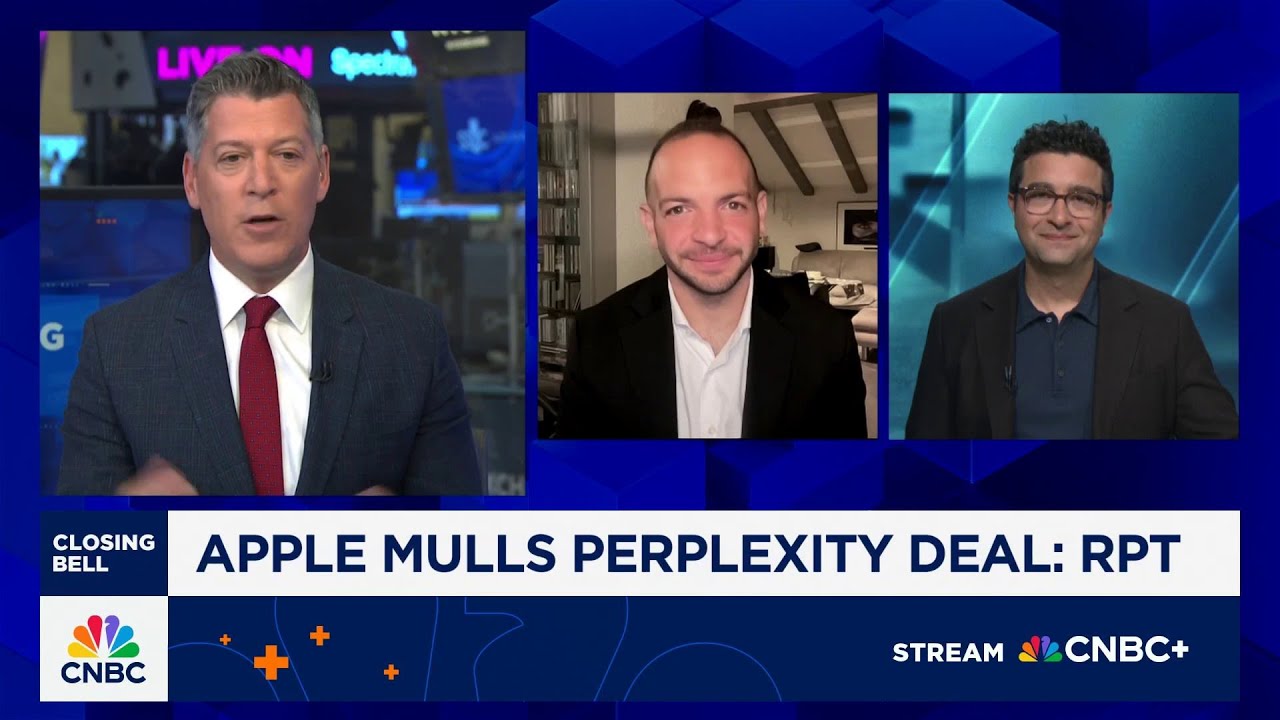
During a segment on CNBC’s "Closing Bell," Kantrowitz and CNBC Senior Technology Correspondent Steve Kovach discussed Apple’s AI ambitions with host Scott Wapner, focusing on the company’s perceived need for significant acquisitions to bolster its generative AI efforts. Kantrowitz highlighted Perplexity's unique strength in transforming leading AI models into user-facing products across search, assistive functions, and voice interactions. He posits that foundational AI models are destined to commoditize, shifting the competitive edge to companies adept at product integration.
For Apple, this means a cultural shift. "Apple’s culture is the common factor holding back its ability to do these big deals," Kantrowitz stated, advocating for a more agile, software-company-like approach. This perspective challenges Apple's long-standing preference for organic growth and smaller, strategic acquisitions, a practice that has defined its M&A landscape for years.
However, Steve Kovach provided a counter-narrative, noting that Apple’s M&A team constantly evaluates such opportunities, yet rarely executes large-scale deals. "Apple does not like to do that," Kovach asserted, adding, "this doesn't seem to be the direction they're going in." Apple's largest acquisition to date remains Beats, a relatively modest purchase compared to the potential valuation of a generative AI leader. Kovach pointed out that Apple appears to be leaning towards partnerships or licensing agreements with major Large Language Model (LLM) providers like OpenAI, Anthropic, or Google Gemini, rather than outright acquisitions. This preference is partly due to the sub-par performance of Apple’s own internal intelligence models.
The clock is ticking for Apple. The ongoing Department of Justice antitrust case against Google, which could impact Google’s lucrative search deal with Apple, adds another layer of urgency. Despite internal pushes for a bold AI acquisition, as reportedly championed by Apple’s SVP of Services Eddy Cue, CEO Tim Cook’s public stance remains consistent. Cook stated, "We’re very open to M&A that accelerates our roadmap. We are not stuck on a certain size company, although the ones that we have acquired thus far this year are small in nature." This signals a continued cautious approach, even as the generative AI landscape demands rapid, decisive action.