

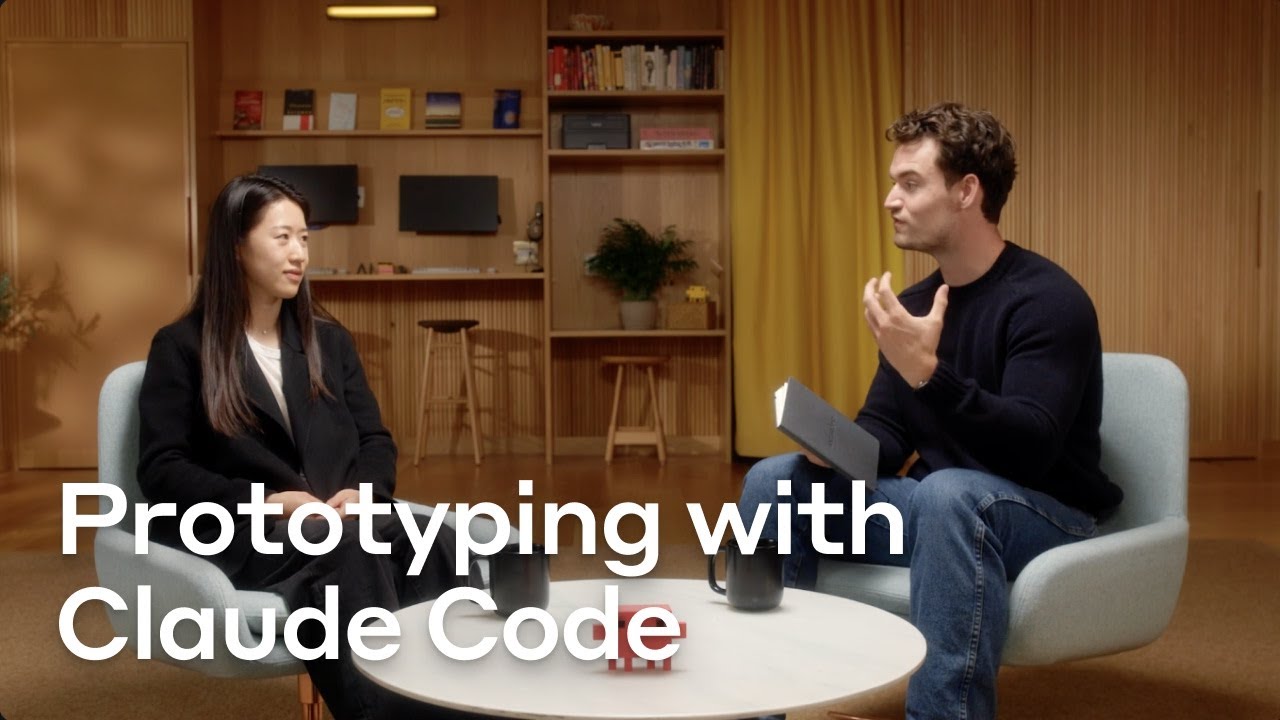
Developer productivity is paramount, and Anthropic’s Claude Code emerges as a potent tool, built on a unique "dogfooding" philosophy that promises unparalleled agility and user-centric design. Alex Albert, who leads Claude Relations at Anthropic, sat down with Catherine Wu, Product Manager for Claude Code, to discuss the rapid pace of development and the core principles driving their latest offering. Multi-clauding is the new baseline for developers using Claude Code. This interview sheds light on how Anthropic is not merely building an AI assistant but crafting an extensible platform tailored for the modern engineering workflow.
The remarkable speed of feature deployment in Claude Code is a testament to Anthropic's internal development culture. Catherine Wu highlighted that "a lot of these features are just built bottom-up. It's like, you're a developer and you really wish you had this thing, and then you build it for yourself." This organic, engineer-driven approach fosters a continuous feedback loop, ensuring that new functionalities directly address real-world developer needs. Alex Albert further emphasized this, noting, "I've never seen a product have as strong of like a dogfooding loop as Claude Code." This internal validation process is critical; features are prototyped and used by Anthropic employees ("ants") before external release, providing a strong signal of their utility.
This rapid prototyping cycle means less time spent on theoretical documentation and more on tangible, usable solutions. As Catherine explained, it's often faster to "prototype a feature... then they ship it internally to ants. And if the reception is really positive, then that's a very strong signal that the external world will like it too." This lean methodology significantly reduces time-to-market for valuable developer tools.
A core insight into Claude Code's success lies in its inherent flexibility and customizability, designed to integrate seamlessly into diverse developer workflows. The terminal-based interface, familiar to most engineers, lowers the barrier to entry for new features. Catherine noted, "Because everyone, every developer knows how to write a script... you don't need to learn a new technology to customize Claude Code." This emphasis on leveraging existing developer skills, rather than imposing new paradigms, ensures widespread adoption and empowers users to adapt the tool to their specific needs.
The versatility extends to "multi-Clauding," a common pattern where developers run multiple Claude sessions simultaneously, each potentially in a different Git workspace or focused on distinct tasks. This unexpected but valuable usage pattern underscores the adaptability of the tool. Furthermore, the Claude Code SDK is positioned as a general-purpose toolkit for building specialized agents. It provides fundamental building blocks like system prompts, custom tools, and a robust agentic loop, allowing developers to craft sophisticated agents for diverse domains beyond coding, including legal, compliance, and incident response. This focus on composability and extensibility is a strategic move, enabling an ecosystem of tailored AI agents.
The SDK's ease of use is also a significant draw. Developers can get a powerful agent up and running within 30 minutes, a testament to the year-long effort spent perfecting its underlying harness. This rapid onboarding, coupled with the ability to easily swap out or add custom components, makes the SDK a compelling choice for both rapid prototyping and robust agent development. Ultimately, Claude Code aims to meet developers where they are, offering a powerful, customizable, and rapidly evolving platform that is shaping the future of AI-assisted engineering.

