

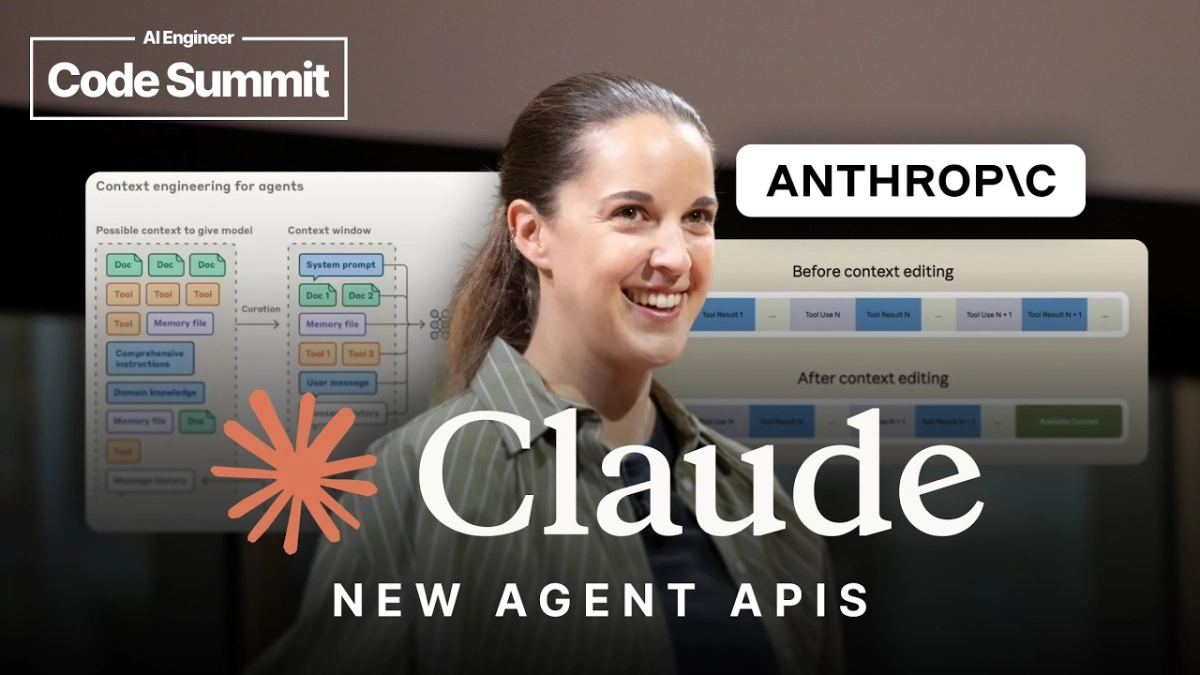
"Raising the ceiling of intelligence" is Anthropic's driving mantra, as articulated by Katelyn Lesse, Engineering Leader for the Claude Developer Platform, during her presentation at the AI Engineer Code Summit. Lesse detailed how Anthropic is evolving its Claude APIs to empower developers building increasingly complex, long-running, and agentic systems, emphasizing a tripartite approach to maximizing AI performance.
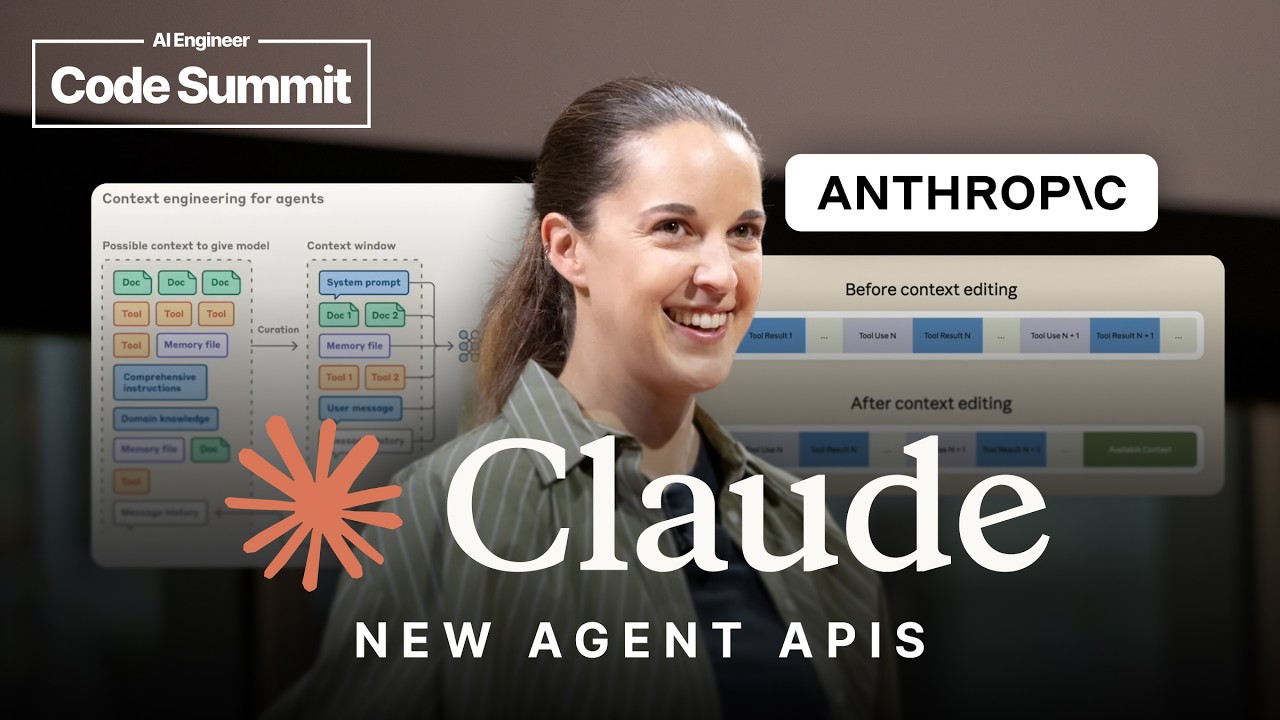
Katelyn Lesse, Engineering Leader at Anthropic, presented at the AI Engineer Code Summit, outlining the strategic advancements in the Claude Developer Platform. Her talk focused on how these new capabilities are designed to help developers harness Claude's intelligence, manage its operational context effectively, and ultimately enable it to act more autonomously, akin to "giving Claude a computer and letting it cook."
The first pillar of Anthropic’s strategy centers on harnessing Claude’s inherent capabilities through refined API features. One such innovation is "Extended Thinking," a mechanism that allows developers to control the depth of Claude's reasoning. By setting a `budget_tokens` parameter, developers can instruct Claude to deliberate longer on intricate problems or provide rapid responses for simpler queries. This granular control is particularly beneficial for applications like Claude Code, Anthropic’s agentic coding product, where debugging complex systems often requires deeper, more considered thought processes from the AI, contrasting with the need for quick answers in other scenarios.
Another foundational capability is enhanced tool use. Claude has demonstrated significant proficiency in reliably calling external tools. The API now exposes both Anthropic’s built-in tools, such as web search, and allows for the creation of custom tools. Developers simply define a tool's name, description, and input schema, and Claude intelligently determines when to invoke these tools and with what arguments. This is crucial for Claude Code, which frequently interacts with numerous tools to perform actions like reading, searching, or writing files, and even rerunning tests within a development environment. The ability to seamlessly integrate and manage these diverse tools greatly expands Claude's practical utility.
The second critical area of platform evolution is context management, a notoriously complex challenge in agentic AI. For a coding agent like Claude Code, the sheer volume of relevant information—technical designs, codebases, instructions, and past tool calls—can quickly overwhelm a model's context window. Anthropic has introduced several features to address this. The "Model Context Protocol (MCP)," introduced a year ago, provides a standardized way for agents to interact with external systems like GitHub or Sentry, ensuring that pertinent information is brought into Claude's operational view precisely when needed. This protocol ensures that Claude has access to relevant external data, leading to significantly improved performance compared to relying solely on direct prompting.
To further refine context management, Anthropic offers a "Memory" tool, functioning as a client-side file system. This allows Claude to store information outside its immediate context window and retrieve it intelligently only when relevant. For instance, Claude can store codebase patterns or Git workflow preferences, pulling them back into active consideration as needed. Complementing this is "Context Editing," a feature designed to clear out irrelevant or redundant information from the context window. Lesse highlighted that old tool results, which can be voluminous, are often not critical for subsequent responses in a session. By combining the Memory tool with Context Editing, Anthropic observed a "39% bump in performance" on their internal evaluations, underscoring the importance of maintaining a lean and relevant context. This capability is being further enhanced with larger context windows, including models supporting up to a million tokens, allowing Claude to intelligently manage vast amounts of information.
Related Reading
- Claude.ai: Amplifying Human-AI Collaboration Through Intelligent Context and Customization
- Claude.ai's Projects Feature Elevates Enterprise AI Interaction
- Claude's Research Feature Redefines Information Synthesis for Elite Professionals
The third, and arguably most exciting, aspect of Anthropic's platform evolution is the ability to "give Claude a computer and let it cook." This encapsulates the vision of enabling AI agents to operate with a high degree of autonomy. Lesse emphasized that if Claude can write and run code, it can accomplish virtually anything, leading to professional-grade outputs. The primary challenge here lies in providing the necessary infrastructure, security, and expertise. Anthropic addresses this through its "Code Execution Tool," which allows Claude to write and execute code within a secure, sandboxed environment. The platform manages the underlying containers and security, abstracting these complexities from the developer. This means Claude can be tasked with creative and practical challenges, such as "make the animation more sparkly," and autonomously generate and test solutions.
Building on this, Anthropic has introduced "Agent Skills." These are essentially curated folders containing scripts, instructions, and resources that Claude can access and decide to utilize within its sandbox. Skills provide domain-specific expertise. For example, a "web-design-system" skill could equip Claude with the knowledge to build landing pages that adhere to specific design guidelines and patterns. Claude intelligently determines when to pull in and apply these skills based on the user's request and the skill's description. The combination of Code Execution and Agent Skills, alongside robust context management, positions Claude as a highly capable and adaptable agent for a wide array of development tasks. Anthropic's ongoing commitment is to continuously evolve its platform and APIs, ensuring developers can always leverage the cutting edge of Claude's capabilities to build high-performing, intelligent systems.

