

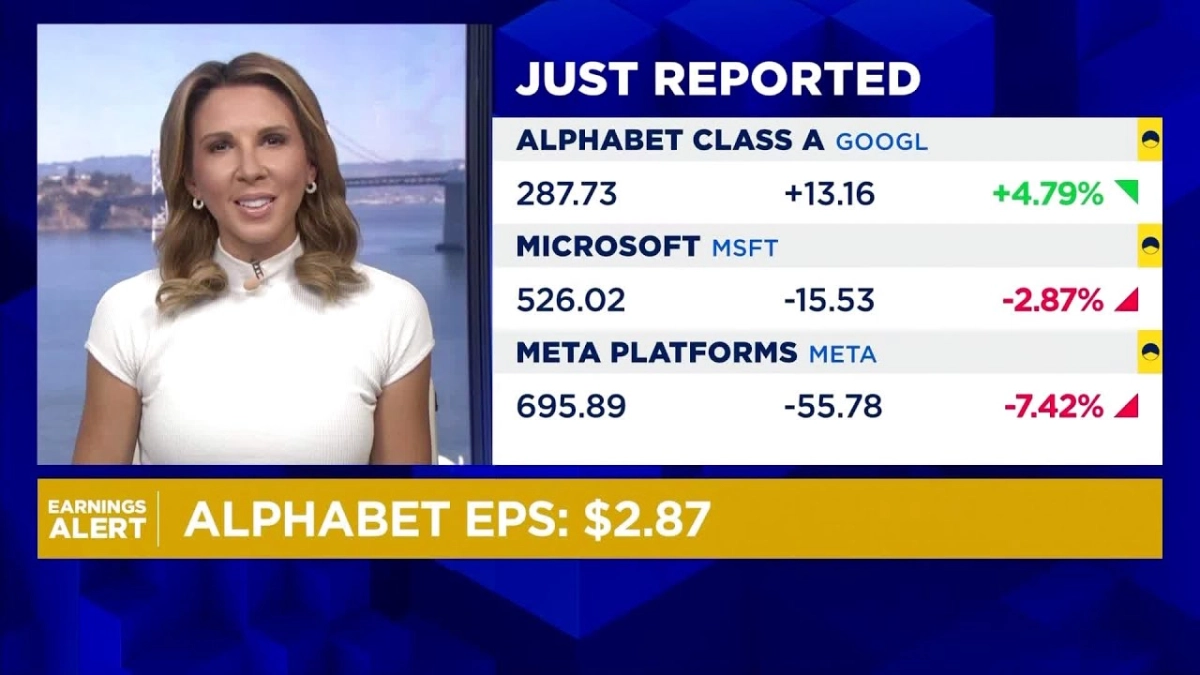
Alphabet's recent third-quarter results have sent a clear message to the market: far from cannibalizing its foundational search business, generative AI appears to be bolstering it, contributing to a robust financial performance that surpassed expectations. This narrative, delivered by CNBC's MacKenzie Sigalos on 'Closing Bell Overtime' to anchor John, highlights Alphabet's strategic positioning and significant investments in the evolving artificial intelligence landscape. The company's impressive earnings report, particularly the unexpected strength in core search revenue, has assuaged widespread investor concerns about the disruptive potential of AI on its advertising engine.
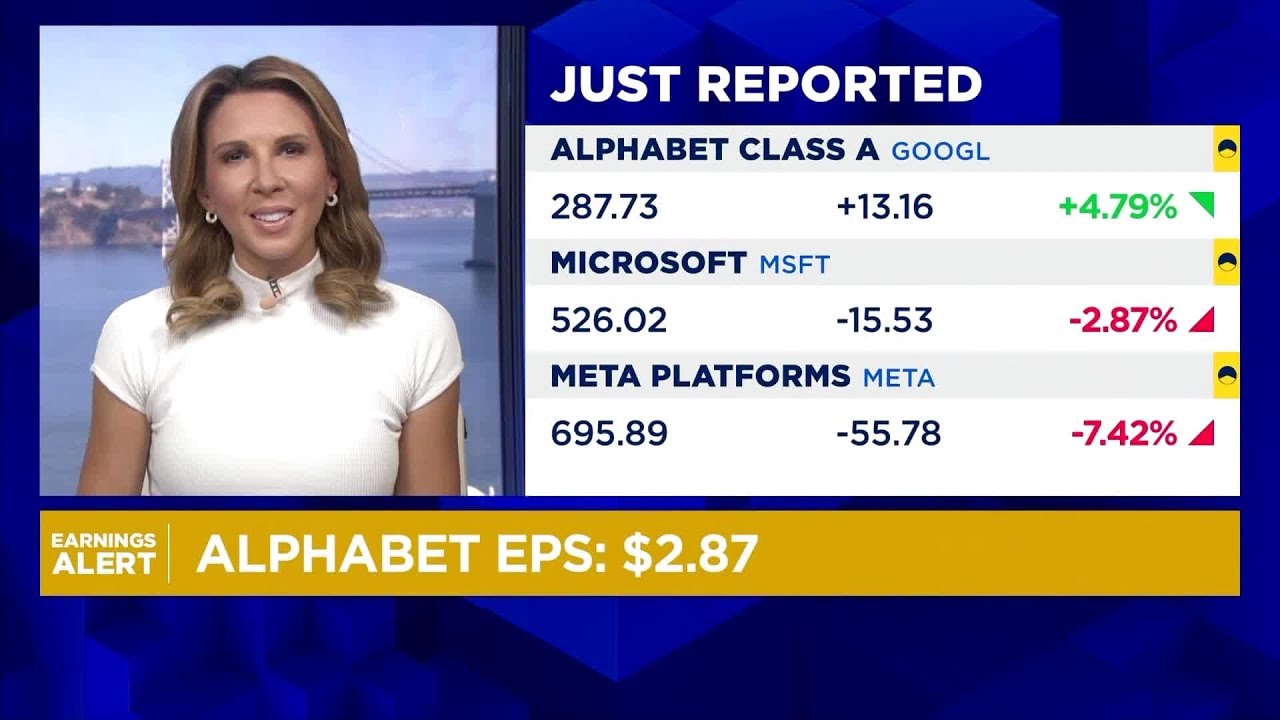
MacKenzie Sigalos, reporting live, detailed how Alphabet's "cash cow," its core search and other revenue segment, delivered a substantial beat. The segment recorded $56.57 billion, significantly exceeding the estimated $55.10 billion. This $1.5 billion surplus in core search revenue is a pivotal insight, demonstrating that Google's integration of AI, rather than diminishing its primary revenue stream, is currently enhancing user engagement and advertiser value. For founders and VCs closely watching the AI space, this performance underscores the potential for AI to act as an augmentative force, rather than solely a disruptive one, within established business models.
The discussion also brought to light Alphabet's aggressive capital expenditure plans, signaling its commitment to leading the AI race. The company’s full-year CapEx guidance for 2025 is now projected to range "between 91 billion and 93 billion dollars," placing it squarely in competition with the likes of Microsoft and Amazon, the dominant spenders in the cloud and AI infrastructure arena. This substantial investment is not merely about maintaining parity; it is a clear strategic move to build out the necessary computing power and data centers to support advanced AI models and cloud services, ensuring Google Cloud's continued growth and competitive edge.
Indeed, Google Cloud’s performance was another bright spot, with revenue growing an impressive "34% higher from a year earlier" to reach $15.16 billion, comfortably beating the $14.74 billion estimate. This growth trajectory is critical, as cloud infrastructure forms the bedrock for scalable AI development and deployment. For tech insiders, this segment's robust expansion validates Alphabet's multi-pronged approach, diversifying its revenue base beyond advertising and cementing its position as a serious contender in the enterprise AI solutions market. The symbiotic relationship between AI advancements and cloud infrastructure is undeniable, and Google's investment here is a testament to its long-term vision.
The competitive intensity in the generative AI application space was also a key theme. Sigalos noted the performance of Google's Gemini app, which "goes head-to-head with OpenAI’s ChatGPT," reporting "monthly active users of 650 million versus OpenAI’s 800 million." This direct comparison highlights the intense rivalry for user adoption in the consumer-facing AI market. While Gemini's user base is substantial, the gap with ChatGPT indicates that the battle for AI supremacy is far from over, requiring continuous innovation and strategic user acquisition efforts.