

Alphabet's recent earnings call revealed a pivotal moment for the tech giant: the tangible monetization of its extensive AI infrastructure bets, validating a long-term strategy that is now driving unprecedented growth across its core businesses. This robust performance underscores a critical shift in the AI landscape, where strategic investments are now yielding significant, measurable returns, rather than merely representing future potential.
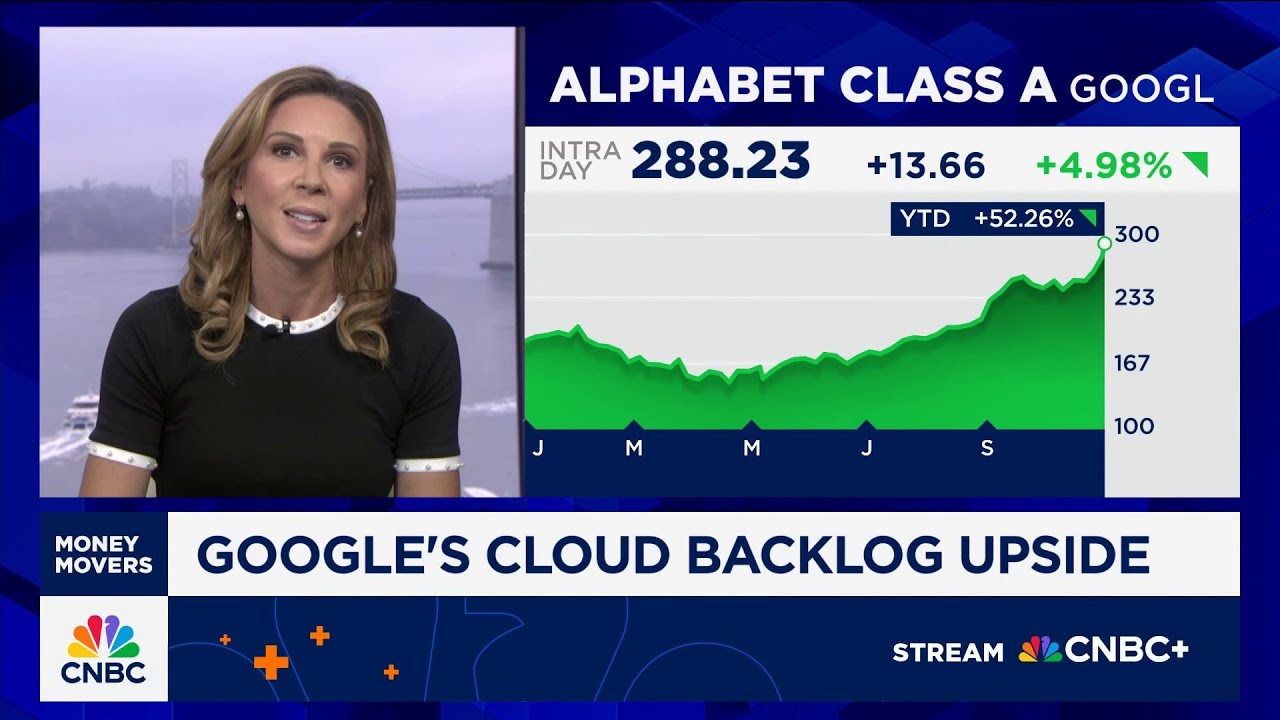
In a recent CNBC segment, MacKenzie Sigalos reported on Alphabet's impressive first $100 billion quarter, dissecting how the company's "full-stack AI strategy" is translating into accelerating growth across search, YouTube ads, and Google Cloud. This discussion provided a sharp analysis of Alphabet's financial health and its strategic positioning within the fiercely competitive artificial intelligence arena.
Alphabet's third-quarter results were nothing short of a blowout, with every major business line reporting accelerating growth. Google Search revenues jumped 14% year-over-year, YouTube Ads saw a 15% increase, and Google Cloud surged by an impressive 34%, handily beating street expectations. This broad-based acceleration across diverse segments indicates a healthy underlying demand for Alphabet's offerings, significantly bolstered by AI integration. As Sigalos succinctly put it, "They were firing on all cylinders."
A core insight emerging from the report is Alphabet's successful translation of its deep AI research into revenue-generating products and services. CEO Sundar Pichai attributed this success directly to the company's comprehensive approach, noting that it was "Alphabet's full-stack AI strategy" that drove the impressive beat. This strategy encompasses everything from foundational AI models to consumer-facing applications and enterprise cloud solutions, creating a synergistic ecosystem where AI enhances existing products and unlocks new opportunities.
The impact of AI on consumer engagement is particularly evident in Google Search. New features like "Overviews" and "AI Mode" are driving meaningful query growth, especially among younger users. The rapid adoption of these AI-powered tools is striking; "AI Mode now has 75 million daily actives in the US, with usage doubling over the quarter." This illustrates not just the technical prowess of Google's AI, but also its ability to deeply integrate into user workflows and expectations, transforming how people interact with information.
Furthermore, Google is actively exploring new monetization avenues within these AI advancements. Early tests are underway for integrating ads within AI Mode, a crucial step toward ensuring that AI-driven search remains a significant revenue engine. While it's still too early for definitive results, the proactive exploration of this space signals a clear path to profitability for these innovative features.
In the consumer chatbot domain, Google's Gemini is rapidly gaining traction, boasting over 650 million monthly active users. While still chasing OpenAI's ChatGPT in terms of weekly users, this significant user base demonstrates Google's strong competitive position and its capacity to quickly scale AI-powered conversational agents. The company's persistent investment in this area suggests a long-term play for market leadership.
Perhaps the most compelling evidence of Alphabet's AI monetization success lies within its Google Cloud division. The cloud business, a critical battleground against Microsoft and Amazon, is experiencing explosive demand for its AI capabilities. Google Cloud's backlog, a key indicator of future revenue, has surged to $155 billion, an increase of nearly 80% year-over-year. This growth is further underscored by the fact that Google has signed more $1 billion-plus cloud deals in the first three quarters of this year than in the past two years combined. This clearly demonstrates the enterprise sector's immense appetite for Google's AI-enabled cloud infrastructure.
Related Reading
- Alphabet's AI Gamble Pays Off in Q3, Fueling Search and Cloud Growth
- Microsoft's Profitable AI Play: A Strategic Masterclass
- AI's Second Inning: Decoding Big Tech's Investment Spree and Market Reactions
The strategic importance of this investment is not lost on investors. Google's decision to raise its full-year capital expenditure guidance to as much as $93 billion, with an even "bigger step up coming in 2026," is being rewarded by the market. This increased spending is a direct response to the escalating demand for AI infrastructure and a commitment to maintaining a competitive edge. It is "a clear sign that it is racing to meet surging AI demand and close the gap with Microsoft and Amazon," as Sigalos noted, highlighting a confident investment strategy in a high-stakes environment.
Crucially, Alphabet has managed to address a pervasive concern among investors: the potential for AI to cannibalize its highly profitable search advertising business. The Q3 results have effectively "proved otherwise," demonstrating that AI is, in fact, enhancing rather than detracting from its core revenue streams. This ability to integrate AI as an additive force, rather than a disruptive one, differentiates Alphabet's approach and provides a strong foundation for sustained growth. The company's custom silicon approach, validated by major wins with industry leaders like Meta and OpenAI, further solidifies its technological advantage and future prospects in the AI arms race.

