


Alphabet’s Q2 earnings call ignited a significant after-hours rebound for its shares, as CEO Sundar Pichai’s commentary on artificial intelligence driving increased search queries assuaged initial market jitters. CNBC’s MacKenzie Sigalos, reporting on the earnings, highlighted Alphabet's robust performance across its core segments, a sentiment echoed by the 'Fast Money' traders who dissected the implications for the tech giant.
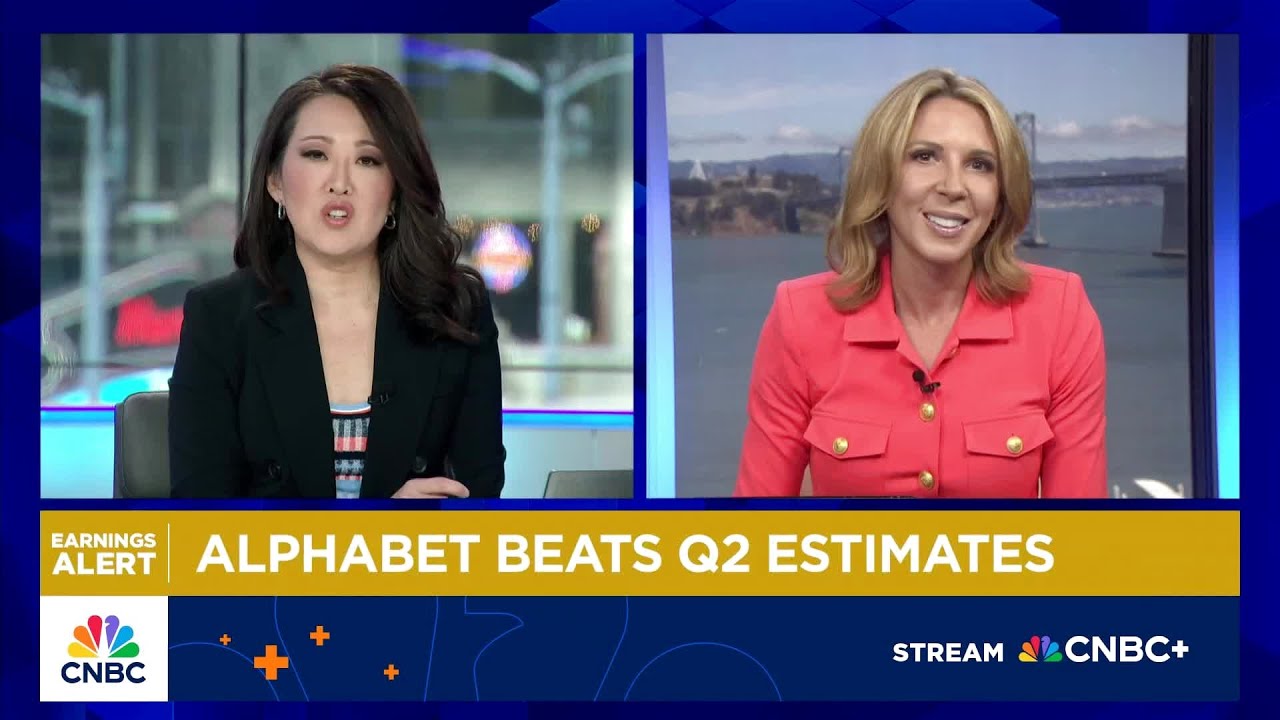
MacKenzie Sigalos, speaking on CNBC’s 'Fast Money,' detailed how Alphabet beat both top and bottom-line estimates, with strong results across its Search, Cloud, and YouTube divisions. Search revenue grew 12%, YouTube was up 13%, and Google Cloud surged an impressive 32%, significantly exceeding expectations. This performance prompted an upward revision of capital expenditure for 2025, from $75 billion to $85 billion, specifically earmarked for data centers to power initiatives like Gemini and other enterprise AI tools, aimed at narrowing the gap with cloud rivals AWS and Azure.
A pivotal insight from the earnings call, and a key driver of the stock's positive reaction, was Pichai’s assertion that “AI features are actually driving more search activity.” This directly countered prevailing market anxieties that generative AI could cannibalize Google’s lucrative search advertising business. Instead, the company positioned AI as an accelerant, enhancing user engagement and, by extension, ad impressions.
YouTube’s performance was also notable. Ad revenue nearly hit $10 billion, just $1 billion shy of Netflix's figures, with subscription growth bolstered by Shorts now matching or even exceeding in-stream ad revenue per watch in some regions.
Despite these strong results, the 'Fast Money' panel engaged in a lively debate about the enduring "existential threat" to Google's search dominance. Guy Adami, invoking Mark Twain, declared, "The reports of my death greatly exaggerated," referring to the robust search growth. He suggested that previous concerns about search's decline were overblown, potentially making Alphabet's valuation attractive.